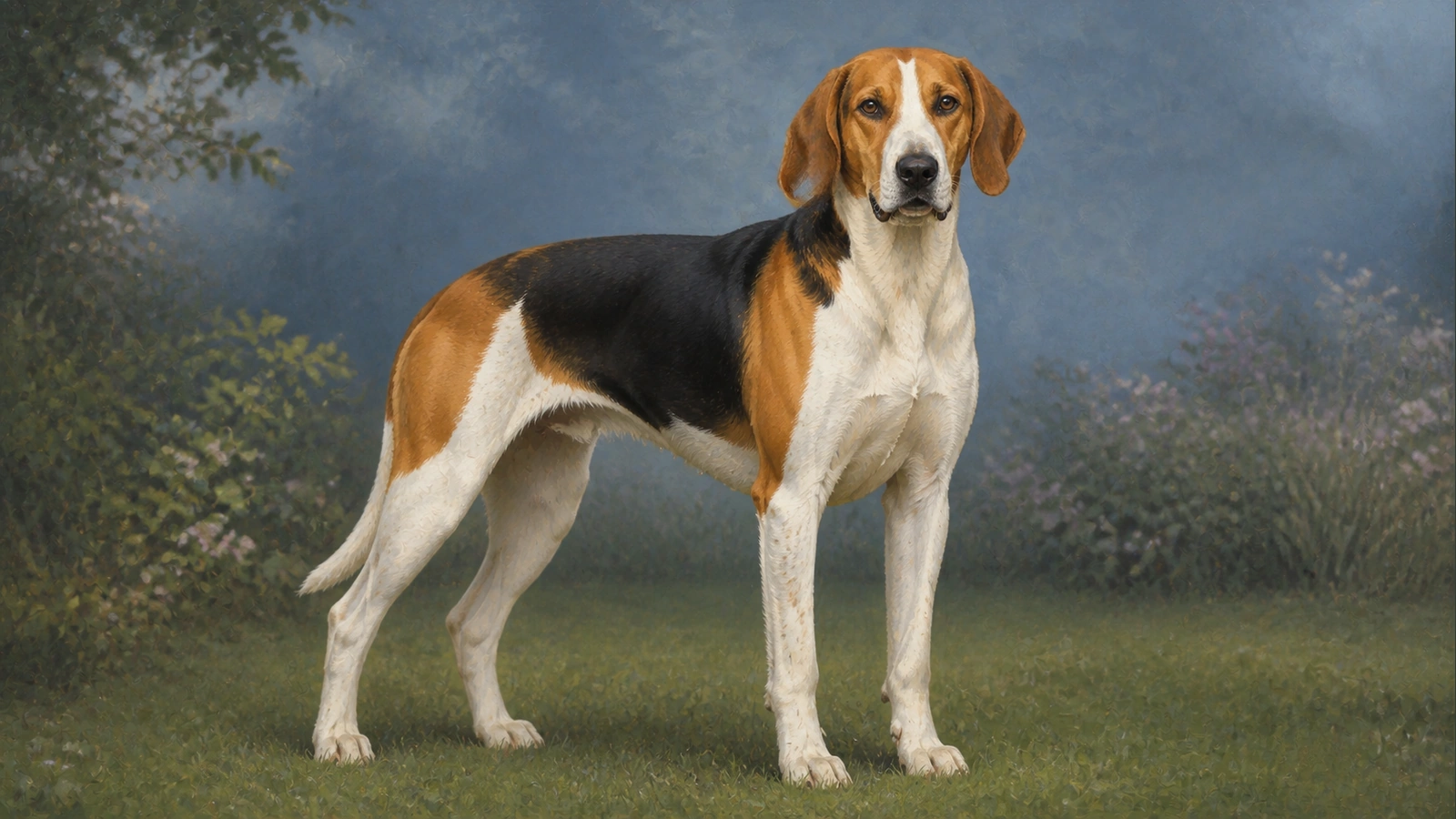
English Foxhound - MAIN HUB
BREED GROUP
Hound Dogs
Country of origin
United Kingdom
BREED SIZE
Large
BREED HEIGHT
23 -
25 IN
58 -
64 cm
BREED WEIGHT
60 -
75 LB
27 -
34 KG
WHAT YOU NEED TO KNOW
american kennel club (AKC) recognition
Yes
Breed was recognized in 1909.

International Canine Federation (FCI) recognition
No
Breed was recognized in 1954.
WHAT DO OWNERS WANT TO KNOW?
Are English Foxhounds good family dogs?
Great
9 out of 10
English Foxhounds make excellent family dogs because they are exceptionally social, gentle with children, and loyal. However, they are best suited for active families who can provide the two hours of vigorous daily exercise these high-energy pack hounds require.

Are English Foxhounds good with kids?

Great
9 out of 10
English Foxhounds are generally excellent with children, known for their gentle, patient, and sociable nature. Due to their high energy and large size, all interactions with younger children should be closely supervised to prevent accidental injury during play. They thrive as part of a "pack" and enjoy the lively company of an active family.
Are English Foxhounds good dogs for first time owners?
Not Recommended
1 out of 10
English Foxhounds are generally not recommended for first-time owners due to their exceptionally high energy, independent nature, and strong prey drive. They require a significant commitment to vigorous daily exercise and firm, consistent training to manage their stubborn streak. Novice owners may find their vocal baying and intense need for physical activity challenging to handle without prior experience with active hound breeds.
Are English Foxhounds good apartment dogs?
Not Recommended
1 out of 10
English Foxhounds are generally not recommended for apartment living due to their exceptionally high energy levels, immense stamina, and vocal nature. They thrive in rural settings with ample space to roam and require vigorous daily exercise that is difficult to satisfy in a confined urban environment. Without significant physical activity and space, they can become restless and prone to loud, disruptive baying.
Do English Foxhounds need a yard?
Highly Recommended
2 out of 10
English Foxhounds are high-energy pack hounds that thrive with access to a large, securely fenced yard where they can run and play safely. While they are noble and gentle companions, they require significant space to manage their immense stamina and are generally not recommended for apartment living without a dedicated area for vigorous daily outdoor activity.
Can English Foxhounds be left at home alone?
Not Recommended
1 out of 10
English Foxhounds are highly social pack animals that thrive on companionship and may struggle if left alone for long periods. They are prone to separation anxiety, which can lead to vocal baying or destructive behaviors. They do best in households with other dogs or where someone is frequently present to provide the social interaction and vigorous exercise they require.
Do English Foxhounds tolerate cats well?
Below Average
3 out of 10
English Foxhounds generally get along well with cats, especially when raised together from a young age. Their social, pack-oriented nature makes them friendly companions, but their strong scent-driven prey drive means they may be inclined to chase. Early socialization and supervised introductions are recommended to ensure a harmonious multi-pet household.
Are English Foxhounds known to be aggressive?
Gentle
9 out of 10
English Foxhounds are not inherently aggressive and are typically renowned for their friendly, social, and gentle nature. As pack-oriented hounds, they get along exceptionally well with other dogs and people, making them poor guard dogs. While they possess a high prey drive that may trigger chasing of small animals, it is extremely rare for them to exhibit aggressive behaviors like growling or snapping toward humans. Consistent training and early socialization are recommended to ensure they remain well-adjusted companions.
Do English Foxhounds have a lot of energy?
High
9 out of 10
English Foxhounds are exceptionally high-energy athletes bred for endurance and long-distance hunting. They require at least two hours of vigorous daily activity, such as running, hiking, or brisk walks, to satisfy their immense stamina. Without significant physical and mental stimulation, these active pack hounds can become restless, bored, and prone to loud, disruptive baying or destructive behaviors.
How much exercise do English Foxhounds need?
~90 min a day
8 out of 10
English Foxhounds require at least 1.5 to 2 hours of vigorous daily exercise to satisfy their immense stamina and athletic nature. They thrive on activities like long-distance running, hiking, and scent-based games in large, secure open spaces. Without significant physical activity and mental stimulation, these high-energy pack hounds can become restless and prone to loud, disruptive baying or destructive behaviors.
Do English Foxhounds tolerate hot weather well?
Very Good
7 out of 10
English Foxhounds generally tolerate warm weather well due to their short, dense coats. However, like all active hounds, they can overheat during intense physical activity in high temperatures. Owners should provide constant access to shade and fresh water, and schedule vigorous exercise during the cooler morning or evening hours to prevent heat exhaustion.
Are English Foxhounds good with cold weather?
Very Good
7 out of 10
English Foxhounds generally tolerate warm weather well due to their short, dense coats. However, like all active hounds, they can overheat during intense physical activity in high temperatures. Owners should provide constant access to shade and fresh water, and schedule vigorous exercise during the cooler morning or evening hours to prevent heat exhaustion.
Are English Foxhounds sometimes banned from rentals?
Often Restricted
4 out of 10
English Foxhounds are rarely subject to specific breed bans, but their large size and high energy levels can be a challenge for apartment living. While they are not typically labeled as an aggressive breed, they may face restrictions in rentals that enforce weight limits, often capped at 50 pounds. Potential owners should check individual landlord policies and ensure they can meet the breed's intense exercise needs to prevent vocal baying that could lead to noise complaints.
WHAT DO OWNERS WANT TO KNOW?