Dachshund Health and Costs
Breed Group
Companion Dogs
Country of Origin
Germany
Breed Size
Small
AKC Recognition
Yes, recognized in 1885
FCI Recognition
Yes, recognized in 1955
Rarity
Most Common1 / 10
Purchase cost
Moderate6 / 10
Life expectancy
Long Lifespan8 / 10
Health
Notable health concerns3 / 10
Health problem risk
Very high health burden8 / 10
Maintenance cost
Moderate upkeep cost4 / 10
A Veterinarian's Guide
Dachshund Health Problems and Costs
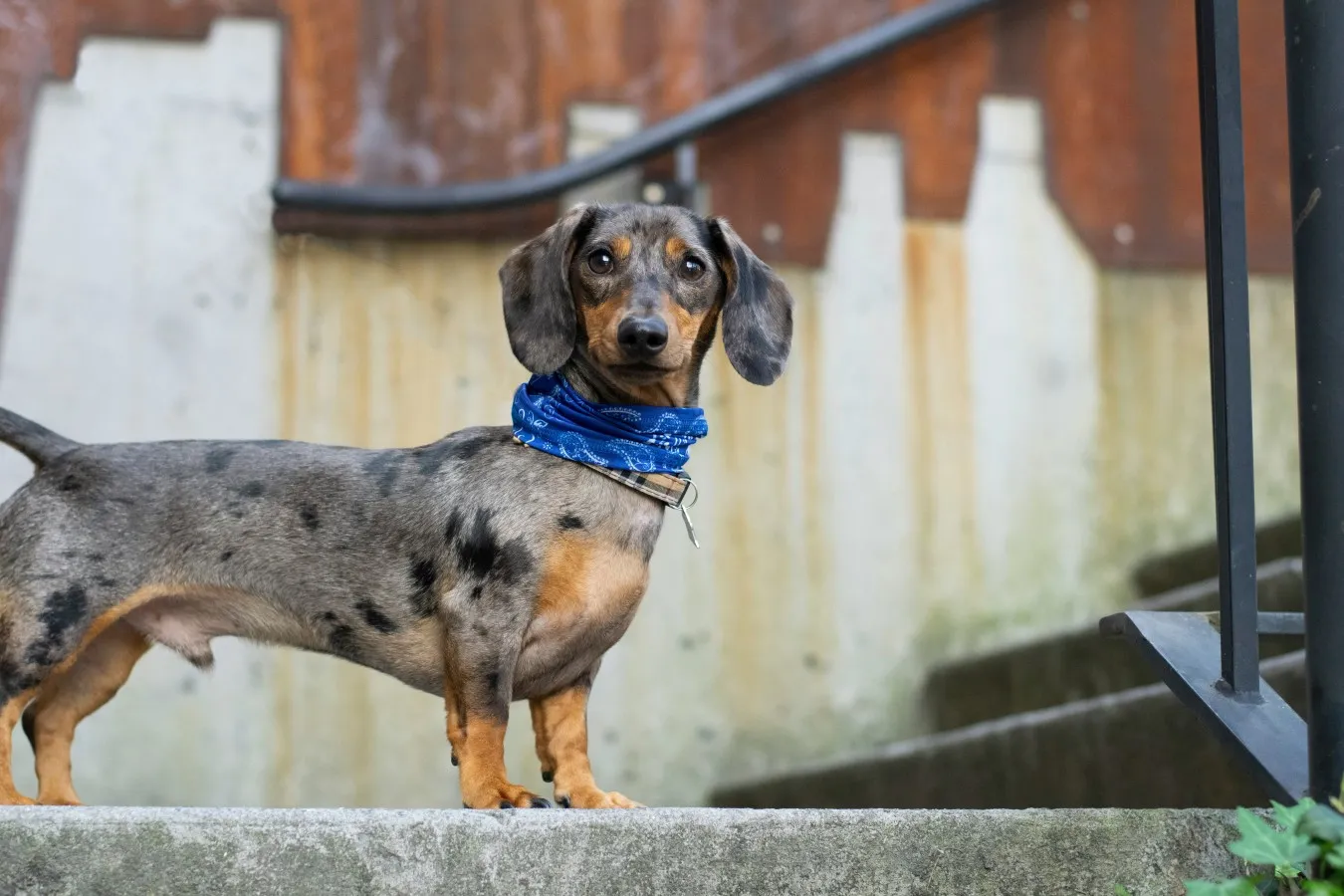
The Dachshund was bred to follow badgers into underground burrows, and that job produced a long, low body with one well-known weak point: the spine. Most of what brings these dogs to the vet comes back to the back, weight, and a few screening checks for the kneecaps, heart, and eyes. Knowing the pattern before a problem starts makes prevention easy and emergencies less frightening.
In this guide

Why Are Dachshunds So Prone to Back Problems?
Dachshunds are a chondrodystrophic breed. The word comes from the Greek chondros, "cartilage," dys, "abnormal," and trophe, "growth." It means short legs and also discs that age early, and the Merck Veterinary Manual notes that in small breeds spinal discs can begin degenerating in the first few months of life.
Intervertebral disc disease, or IVDD, happens when one of the cushioning discs between the vertebrae bulges or bursts and presses on the spinal cord. Intervertebral simply means "between the vertebrae." A herniated disc can occur suddenly as early as one to two years of age. UK Dachshund Breed Council surveys suggest that about one in four Dachshunds has some degree of back disease in its lifetime, and the rate appears to vary by coat type.
What Are the Warning Signs of a Disc Problem?
A Dachshund that suddenly cannot walk, drags its back legs, or cries out in pain needs an emergency veterinarian right away, since outcomes are better when treatment is not delayed.
Disc disease can look mild at first and worsen within hours, so the early signs matter. In the mid-back, the Merck Veterinary Manual describes back pain, reluctance to move, and a range of leg weakness that can progress to paralysis and loss of bladder control. Neck discs cause neck pain and stiffness.
- 01
Yelping or a hunched back
Crying out when touched, lifted, or moving.
- 02
Refusing to move
Not wanting to jump, climb stairs, or be picked up.
- 03
Wobbly or dragging back legs
Stumbling, crossing the legs, or scraping the paws.
- 04
Sudden inability to walk
The dog cannot stand or move the hind legs at all.
Dogs with mild signs who can still feel their toes often recover with strict cage rest and medication, but increased activity can push a disc out further, so rest has to be strict. Surgery is needed promptly for severe signs, and the Merck manual notes that recovery chances decline when it is delayed more than 24 hours after a dog loses the ability to feel pain. Signs return in roughly 30 to 40 percent of dogs, so a recovered Dachshund still needs back protection.
How Can I Protect My Dachshund's Back at Home?
You cannot change the genetics, but you can lower the number of hard landings a back has to absorb. Ramps or steps for the couch and bed remove the repeated jarring that stresses aging discs. Carrying a Dachshund with one hand under the chest and one supporting the hindquarters, rather than lifting it by the front, protects the spine too.
A harness instead of a collar spares the neck on walks, and discouraging jumping and rough play on slippery floors matters more for this breed than for almost any other. Rugs or traction runners on hard floors make a real difference.

Why Do Dachshunds Gain Weight So Easily?
Dachshunds are often food-motivated and less active than their confident personalities suggest, especially as they age or while an injury limits their movement. Extra weight adds direct mechanical load to a spine already working at a disadvantage, so keeping a Dachshund lean is one of the most protective steps an owner can take.
Measured meals work better than free feeding, and the feeding guide explains how to set portions. Low-impact exercise such as steady leash walks keeps muscle tone without the jumping. A hands-on rib check at every routine visit tells you more than the scale alone.
What Other Health Issues Should Dachshund Owners Watch For?
The AKC lists three breed health tests for the Dachshund: a kneecap evaluation, a cardiac exam, and an eye exam by a veterinary ophthalmologist. These point to the conditions most often screened for. Patellar luxation, where the kneecap slips out of its groove, comes from the Latin patella, "small dish," and luxare, "to dislocate." A mild case may show up only as an occasional skip in the stride.
Heart murmurs and inherited eye disease are screened for the same way, so a routine exam with a stethoscope and an eye check is worthwhile. Dental disease is also common in small dogs with crowded teeth, and regular brushing helps. Any new cough, change in vision, or unusual limp deserves a vet visit.

What Does Managing a Dachshund's Health Actually Cost?
| Condition or Need | Typical Cost Range | Notes |
|---|---|---|
| IVDD diagnosis (exam, imaging, referral) | $1,500 to $4,000 | Often needs MRI or CT |
| IVDD surgery | $3,000 to $9,000 | Emergency or referral surgery |
| Non-surgical IVDD care | $500 to $1,500 | Crate rest and medication |
| Dental cleaning | $300 to $700 | Periodic, under anesthesia |
| Cardiac exam | $75 to $250 | Part of routine screening |
| Annual eye exam | $75 to $200 | Ophthalmologist exam |
Figures are typical United States ranges and vary by region and clinic. A single serious disc episode can cost more than several years of routine care, and rehabilitation after surgery adds to the total. That is why many Dachshund owners look closely at pet insurance while their dog is still young and healthy.
Questions to Ask a Breeder Before Buying a Puppy
Ask for the parents' kneecap, cardiac, and eye results, which are the tests on the AKC's hound group list. Also ask how many relatives in the line have had back problems and at what age, since disc disease runs in families and often appears in the middle years. A breeder who answers this openly is usually well informed about the breed.
It also helps to ask which coat type the puppy has and how large the adult dog is expected to be, since the breed comes in two sizes and three coat types.
Daily Life With a Dachshund
Dachshunds are bold, curious dogs, and the personality profile explains how that independence shows up at home. They are clever and can be willful, so early training that teaches calm use of ramps and steps, rather than leaping, protects the spine as well as the furniture.
Coat care depends on the coat type, and the grooming guide covers each one. Weekly nail trims and tooth brushing several times a week are simple habits that prevent bigger visits later.

Keeping Your Dachshund Healthy for the Long Run
Keep your Dachshund lean, give it ramps, limit jumping, and learn the warning signs before you ever need them. Because disc risk is highest in the middle years and signs can return, a hands-on spine and gait check at every annual visit is worth asking for, and many owners move to twice-yearly visits as dogs age. Early arthritis adds to spinal strain, so mention any stiffness early.
Final Thoughts From a Veterinarian
Dachshunds are spirited dogs with one big vulnerability, their long spine. Keep them lean, limit jumping, use ramps, and treat sudden back pain or weak hind legs as an emergency. Your veterinarian can tailor screening and a back-protection plan.
Health & Costs FAQ
How much do Dachshund cost?
The cost of a Dachshund puppy typically ranges from $300 for adoption to $3,500 from reputable breeders, with an average price around $2,200. Owners should budget $1,000 to $2,000 for first-year essentials and approximately $700 to $1,500 annually for ongoing care, food, and veterinary checkups.
Purchase cost: 6 / 10
How long do Dachshund live?
Dachshunds are a long-lived breed that often reaches the early to mid teens. Keeping a healthy weight to protect their backs, using ramps, and keeping up with regular veterinary care helps these spirited little dogs thrive well into their senior years.
Life expectancy: 8 / 10
Are Dachshund healthy dogs?
Dachshunds are generally sturdy, but their long spine makes intervertebral disc disease (IVDD) a real concern: UK breed surveys suggest about one in four has some back disease in its lifetime. The AKC also lists kneecap, heart, and eye screening for the breed. Weight control, ramps, and regular veterinary checkups help protect them.
Health: 3 / 10
What health problems do Dachshund have?
Dachshunds are primarily prone to intervertebral disc disease (IVDD) because of their long-backed build, and obesity makes it worse. Kneecap problems, heart disease, and inherited eye conditions are also screened for, and dental disease is common in small dogs. Regular veterinary checkups are vital for managing these concerns.
Health problem risk: 8 / 10
Are Dachshund expensive to maintain?
Dachshunds generally have moderate upkeep costs. Their small size keeps food expenses low, but their build calls for preventive measures such as ramps to avoid costly spinal injuries. Dental care, and grooming for longhaired or wirehaired varieties, add to ownership costs.
Maintenance cost: 4 / 10
How much does it cost to own a Dachshund per month?
Expect to spend between $145 and $305 per month to own a Dachshund. This covers high-quality food, routine veterinary care, and preventative medications. Additionally, budgeting for pet insurance and enrichment toys is recommended to manage breed-specific health risks like IVDD and keep your dog engaged.
Monthly ownership cost: 4 / 10
How much does pet insurance cost for a Dachshund?
Pet insurance for a Dachshund generally costs between $30 and $60 per month for puppies, while premiums for older dogs can reach $70 to $120 or more. Premiums vary by age, location, and coverage, and a policy that covers back disease such as IVDD is worth pricing while your dog is young and healthy.
Pet insurance cost: 5 / 10
Will homeowners insurance cover a Dachshund?
Yes, most homeowners insurance policies will cover a Dachshund. Because they are a small breed and not commonly classified as aggressive, they are rarely found on restricted lists. However, always confirm with your insurance provider to ensure that your specific policy includes liability coverage for your pet.
Homeowners insurance difficulty: 9 / 10
Are Dachshund on insurance restricted breed lists?
No, Dachshunds are not typically included on insurance restricted-breed lists. These lists generally focus on larger breeds perceived to have higher liability risks or aggressive histories. As a small breed, Dachshunds are usually viewed as standard pets, though individual bite history can still impact your specific coverage.
Insurance restriction risk: 2 / 10
Can you get renters insurance with a Dachshund?
Yes, you can typically get renters insurance with a Dachshund. They are rarely found on restricted breed lists since they are small and not classified as aggressive. Their compact size makes them ideal for apartments, but always verify coverage and pet policies with your provider and landlord.
Renters insurance difficulty: 8 / 10