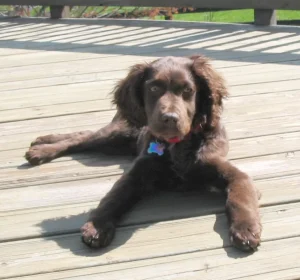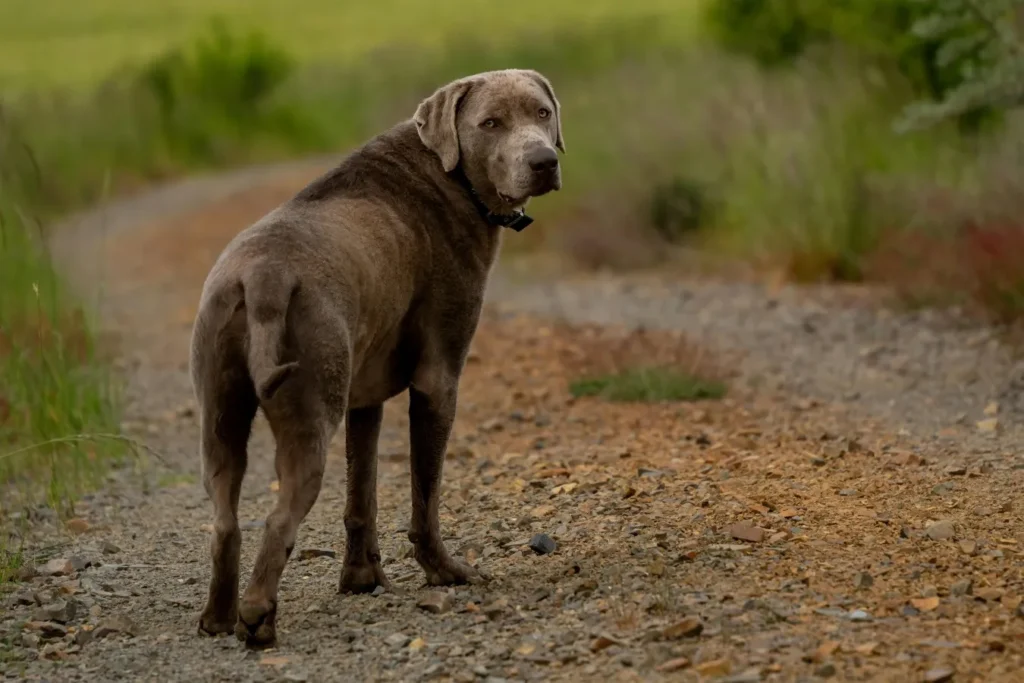
Chesapeake Bay Retriever Health and Costs
Breed Group
Sporting Dogs
Country of Origin
United States
Breed Size
Large
AKC Recognition
Yes, recognized in 1878
FCI Recognition
Yes, recognized in 1964
Rarity
Very Common2 / 10
Purchase cost
Moderate to Expensive6 / 10
Life expectancy
Moderate Lifespan6 / 10
Health
Fairly healthy6 / 10
Health problem risk
Moderate health concerns4 / 10
Maintenance cost
Moderate upkeep cost4 / 10
A Veterinarian's Guide
Chesapeake Bay Retriever Health Problems and Costs
The Chesapeake Bay Retriever is a rugged American retriever, bred to bring back waterfowl from cold, rough water. It is a sturdy, athletic dog, but a few health issues repeat in the breed: bloat, hip and elbow dysplasia, inherited eye and nerve disease, a collapse condition triggered by exercise, and ear infections after swimming. Knowing them before you bring a puppy home, or while you already share your life with one, makes screening and vet visits easier to plan.
In this guide
Why Is Bloat an Emergency for Deep-Chested Dogs?
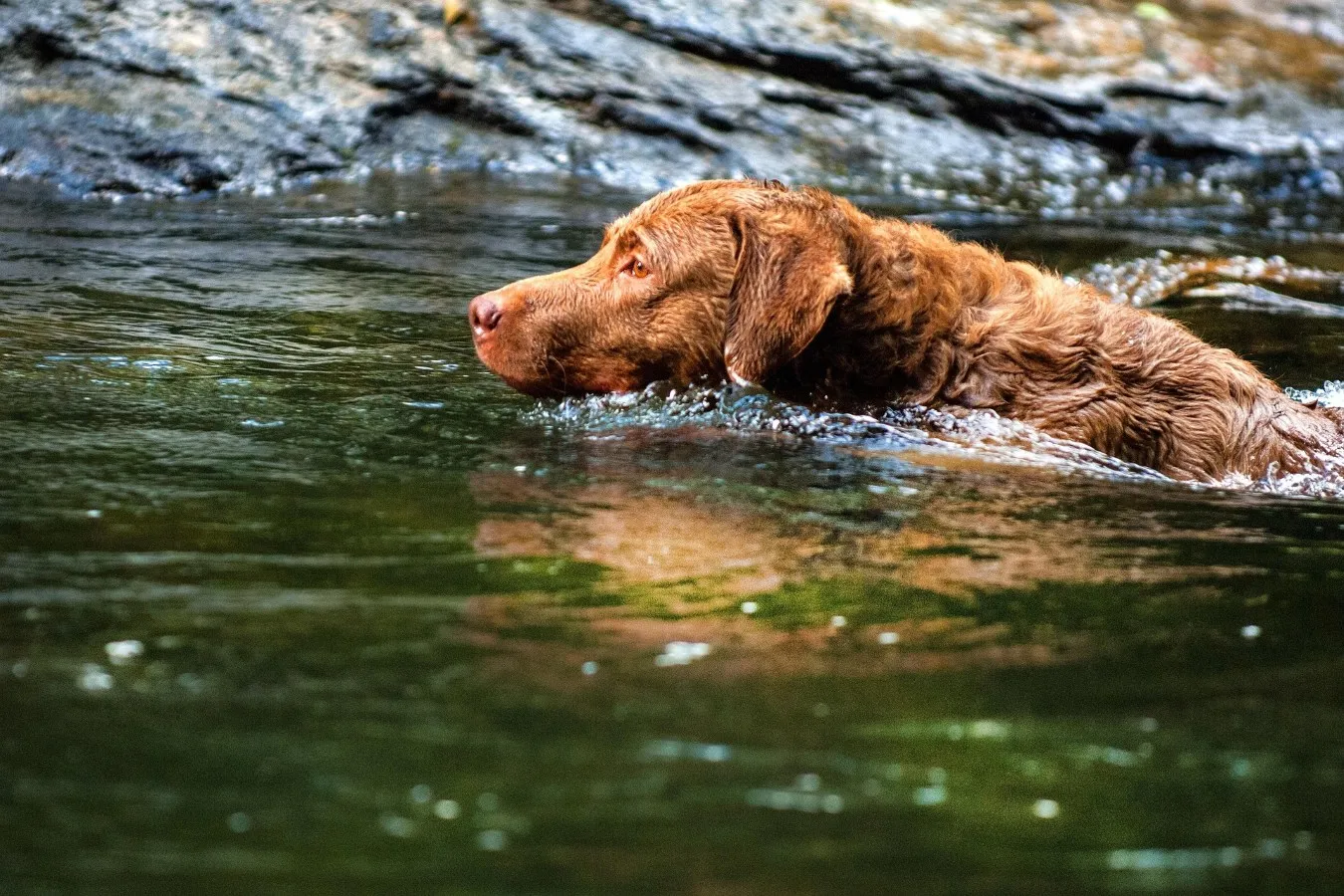
Bloat, medically gastric dilatation-volvulus, happens when the stomach fills with gas and twists on itself, cutting off its own blood supply. Volvulus comes from the Latin volvere, "to twist." Large, deep-chested dogs are at higher risk, there is no home treatment, and surgery is the only way to correct a twisted stomach. Dogs who reach surgery quickly generally do better, so it is worth learning the warning signs before you ever need them.
- 01
Swollen belly
The abdomen looks tight, rounded, or drum-like.
- 02
Unproductive retching
Straining to vomit with little or nothing coming up.
- 03
Restlessness and drooling
Pacing, drooling, or being unable to settle.
- 04
Collapse or pale gums
Weakness, collapse, or pale gums as shock develops.
Feeding several smaller meals and limiting exercise around mealtimes both help, though no precaution removes the risk entirely. Some owners choose a preventive gastropexy. The word comes from the Greek gaster, "stomach," and pexis, "fixing in place." The surgery tacks the stomach to the abdominal wall, often at the same time as a spay or neuter. It does not stop gas from building up, but it should stop the stomach from twisting, which is the life-threatening part.
Why Do Hips and Elbows Need Screening?
Hip dysplasia is an inherited malformation of the hip joint that leads to a loose joint, pain, and arthritis over time. Elbow problems follow a similar pattern. Hip dysplasia is listed as a hereditary disease in the breed, and the national breed club recommends both hip and elbow evaluations, which are on the AKC sporting group health testing list. Screening x-rays are usually done once a dog is fully grown, so ask your veterinarian about timing.
Keeping a Chesapeake lean protects joints that may already carry some structural risk. A hands-on rib check at routine visits catches weight creep that the scale alone can miss, especially under a dense coat.
What Eye and Nerve Conditions Affect the Breed?
Progressive retinal atrophy, or PRA, is an inherited breakdown of the retina's light-sensing cells that can lead to blindness. Retina comes from the Latin rete, "net," and atrophy from the Greek for "without nourishment." A DNA test for the PRA-prcd form can identify carriers and affected dogs before breeding, and the breed club also recommends an eye exam by a veterinary ophthalmologist. Most dogs adjust well to gradual vision loss in a familiar home.
Degenerative myelopathy is a slowly progressive disease of the spinal cord that gradually weakens the hind legs, usually in the senior years. The name comes from the Greek myelos, "marrow" or "spinal cord," and pathos, "disease." The breed is among those more commonly affected, and a DNA test for the common variant is on the breed club's recommended list. Supportive care and physical therapy can help keep a dog comfortable and mobile, though the disease cannot be cured. Type 3 von Willebrand disease, an inherited bleeding disorder, has also been reported in the breed.
What Is Exercise-Induced Collapse?
Exercise-induced collapse, or EIC, is an inherited condition in which intense exercise or high excitement triggers hind-leg weakness or a full collapse in an otherwise healthy-looking dog. A DNA test identifies carriers and affected dogs before an episode ever happens, which is why it is on the breed club's list.
A dog that collapses or becomes wobbly during or after exercise should see a veterinarian promptly. Several serious problems, including overheating and heart disease, can look similar, so do not assume it is EIC without an exam.
Why Do Swimming Dogs Get Ear Infections?
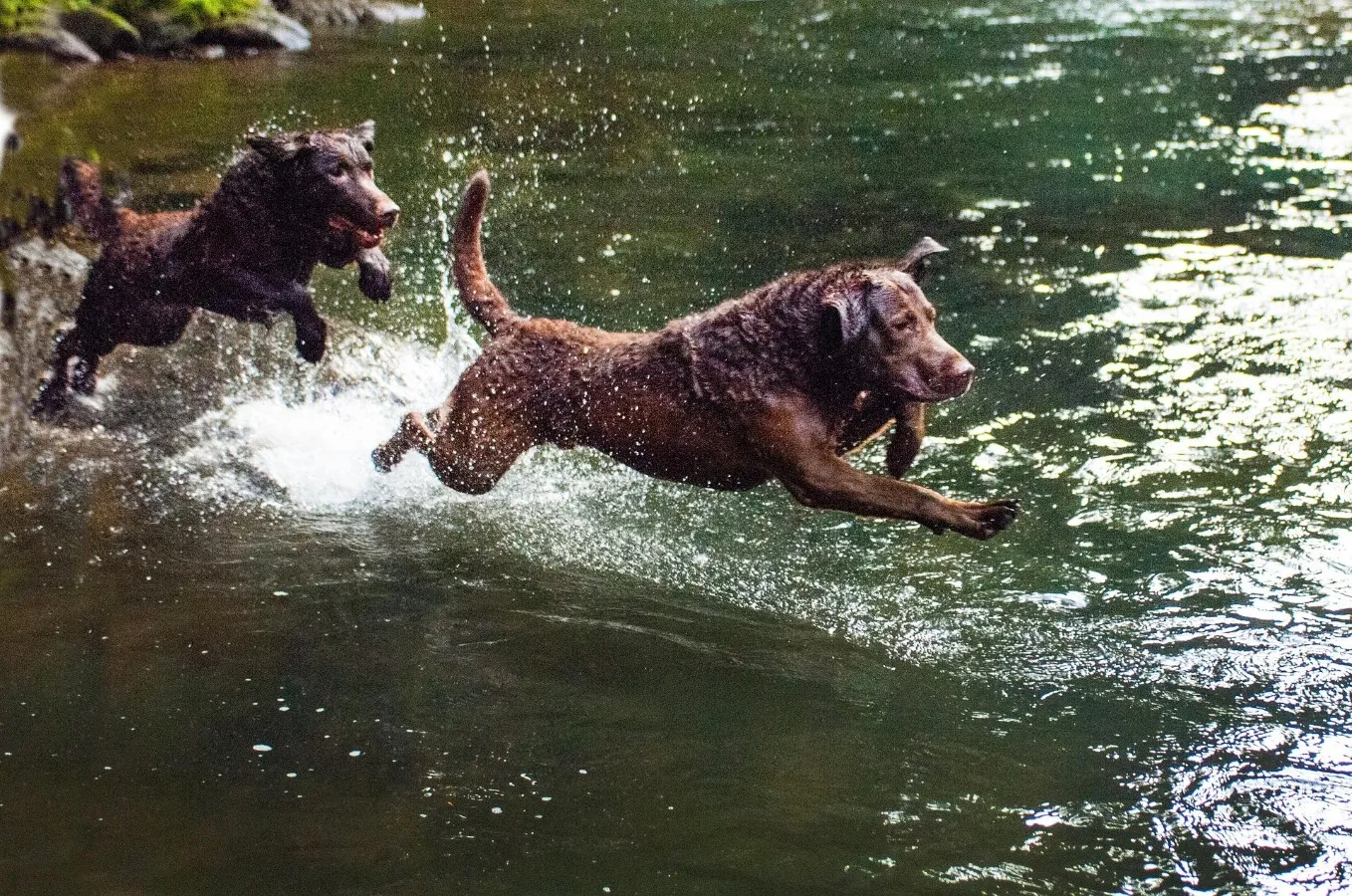
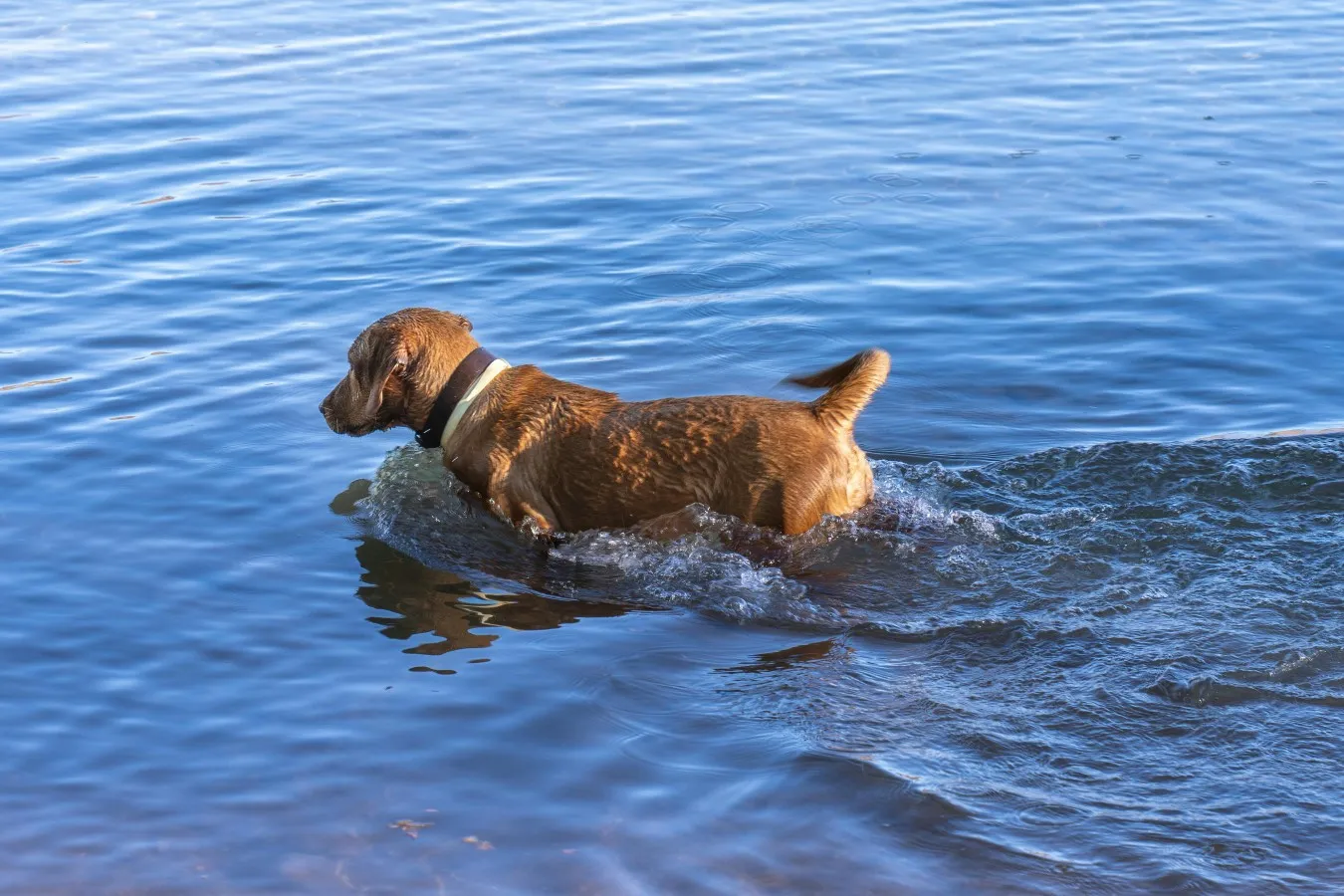
The breed's love of water is a double-edged sword. Moisture trapped in the ear canal of a floppy-eared dog that swims often creates a friendly place for bacteria and yeast to overgrow. Drying the ears gently after every swim is one of the simplest things an owner can do, and a veterinarian can recommend a suitable ear cleaner. Redness, odor, head shaking, or scratching at an ear deserve a check, and recurring infections are worth investigating for an underlying allergy rather than treating each episode on its own.
What Does Managing a Chesapeake's Health Actually Cost?
| Condition or Need | Typical Cost Range | Notes |
|---|---|---|
| Hip and elbow x-ray screening | $200 to $500 | Once fully grown |
| DNA tests (EIC, PRA, DM) | $65 to $150 per test | Ideally before breeding |
| Preventive gastropexy | $800 to $2,500 | Often done with spay or neuter |
| Emergency bloat surgery | $3,000 to $8,000 | Life-threatening, surgical |
| Ear infection treatment | $100 to $300 per episode | More likely in frequent swimmers |
Ranges vary by region and clinic, so ask your veterinarian for an estimate.
Questions to Ask a Breeder Before Buying a Puppy
Ask for the parents' hip and elbow evaluations, an eye exam, and DNA results for DM, PRA-prcd, and EIC. The breed club recommends these six tests for breeding dogs, so ask to see the paperwork. A breeder who shares results openly, and who knows how bloat and ear problems show up in their lines, is usually well informed about the breed's other health needs too.
Daily Life With a Chesapeake Bay Retriever
This is a loyal, protective working retriever that needs one to two hours of vigorous activity a day, with swimming a favorite. The waterproof coat needs only weekly brushing, and bathing too often can strip its protective oil, as the grooming profile explains. Chessies bond deeply with their families and can be reserved with strangers, as the personality profile describes, so early socialization and consistent training matter for a strong-willed dog of this size.
Keeping Your Chesapeake Healthy for the Long Run
Learn bloat's warning signs before you ever need them, and discuss a preventive gastropexy with your veterinarian. Schedule hip and elbow x-rays and regular eye exams, keep your dog lean, and dry the ears after swimming. Pet insurance is worth pricing while your dog is young and healthy.
Final Thoughts From a Veterinarian
Chesapeakes are loyal, hardy dogs whose biggest emergency is bloat. Learn its warning signs, ask breeders for hip, elbow, eye and DNA results, keep your dog lean, and dry the ears after swimming. Your veterinarian can tailor the plan.
Health & Costs FAQ
How much do Chesapeake Bay Retriever cost?
The cost of a Chesapeake Bay Retriever typically ranges from $900 to $5,000 from a reputable breeder, with standard pet quality often between $1,200 and $1,500. Adoption is a more affordable alternative at approximately $300. Prospective owners should also budget for initial supplies and vaccinations.
Purchase cost: 6 / 10
How long do Chesapeake Bay Retriever live?
Chesapeake Bay Retrievers are commonly cited as living about 10 to 13 years. Keeping a lean weight, screening hips and eyes, knowing the warning signs of bloat, and routine veterinary checkups help them stay active into their senior years.
Life expectancy: 6 / 10
Are Chesapeake Bay Retriever healthy dogs?
Chesapeake Bay Retrievers are hardy, athletic dogs that often live 10 to 13 years, but they are not problem-free. Breeders screen for hip and elbow dysplasia, progressive retinal atrophy, degenerative myelopathy and exercise-induced collapse, and the deep chest raises bloat concern. Lean weight and regular veterinary checkups help catch trouble early.
Health: 6 / 10
What health problems do Chesapeake Bay Retriever have?
Chesapeake Bay Retrievers can develop hip and elbow dysplasia, progressive retinal atrophy, degenerative myelopathy and exercise-induced collapse, and type 3 von Willebrand disease has been reported. Bloat is a risk in deep-chested dogs, and swimmers often get ear infections. Screening and DNA tests recommended by the breed club catch many problems early.
Health problem risk: 4 / 10
Are Chesapeake Bay Retriever expensive to maintain?
Chesapeake Bay Retrievers have moderate upkeep costs. The waterproof coat needs mainly weekly brushing, so grooming is inexpensive, while a large, energetic dog needs plenty of good food and sturdy gear. Setting money aside for hip, elbow, eye and DNA screening, and for a possible emergency bloat surgery, is wise because those are the larger bills this breed can face.
Maintenance cost: 4 / 10
How much does it cost to own a Chesapeake Bay Retriever per month?
Typical estimates for owning a Chesapeake Bay Retriever run from about $295 to $515 per month. This covers food, routine veterinary care, preventives, and supplies. Large size and the cost of screening or emergency care, such as bloat surgery, can push a given month higher.
Monthly ownership cost: 7 / 10
How much does pet insurance cost for a Chesapeake Bay Retriever?
Pet insurance for a Chesapeake Bay Retriever typically costs between $47 and $69 per month. Premiums fluctuate based on the dog's age, your location, and chosen coverage levels. Enrolling in a plan early is recommended to help manage potential costs associated with breed-specific conditions like hip dysplasia.
Pet insurance cost: 4 / 10
Will homeowners insurance cover a Chesapeake Bay Retriever?
Yes, most homeowners insurance policies cover Chesapeake Bay Retrievers, as they are not typically classified as a restricted breed. Always disclose your dog to your insurer to ensure full liability protection, since some providers consider individual history or property security.
Homeowners insurance difficulty: 9 / 10
Are Chesapeake Bay Retriever on insurance restricted breed lists?
No, Chesapeake Bay Retrievers are not typically found on insurance restricted-breed lists. As a recognized sporting breed, they are generally viewed as low risk by insurers. Still, always disclose your dog to your provider so liability coverage stays fully in place.
Insurance restriction risk: 2 / 10
Can you get renters insurance with a Chesapeake Bay Retriever?
Yes, you can typically get renters insurance with a Chesapeake Bay Retriever, since the breed is rarely on restricted lists. Some landlords or insurers set weight limits or their own liability terms, so always disclose your dog and confirm the policy and your lease before moving in.
Renters insurance difficulty: 8 / 10