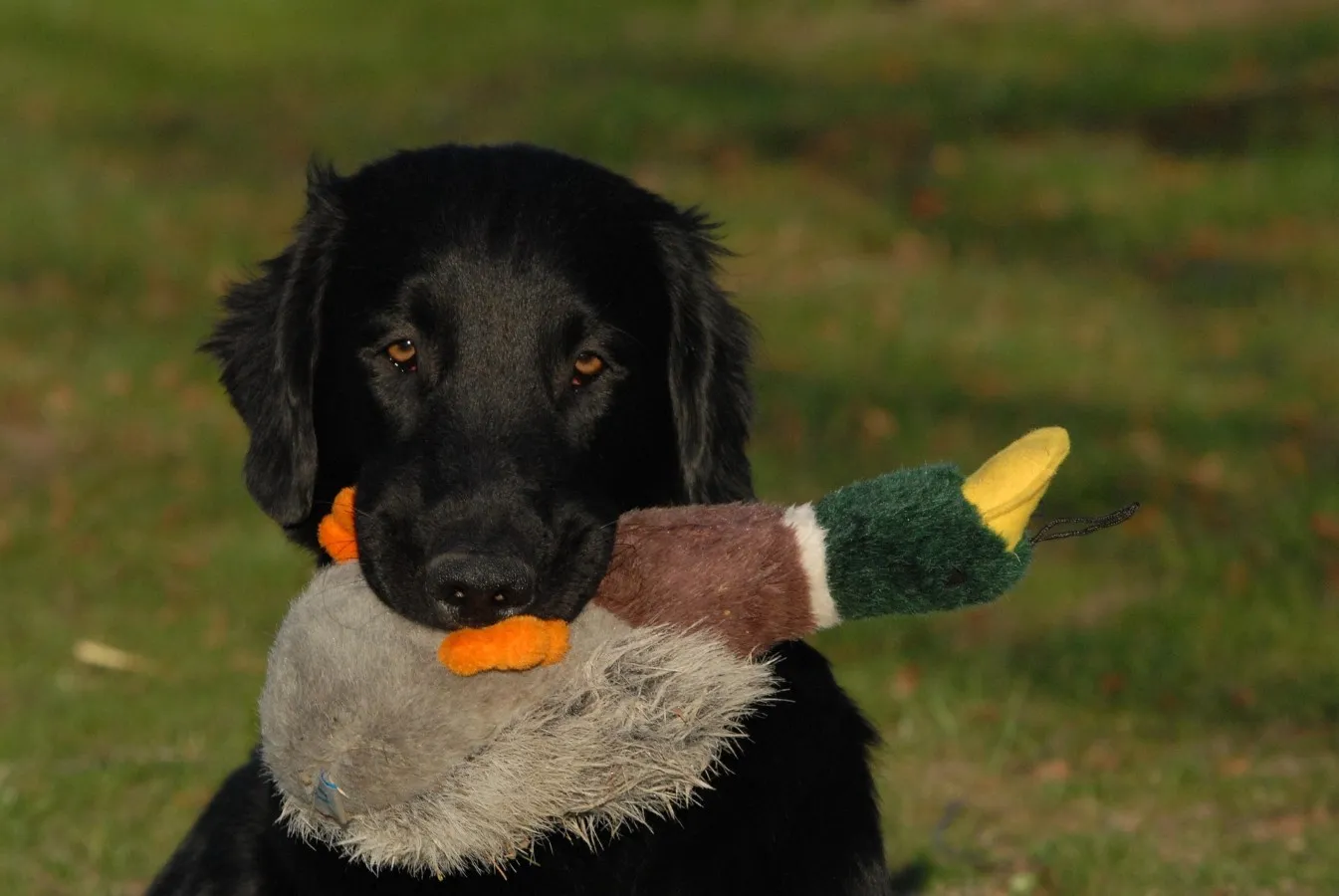
Flat-Coated Retriever - MAIN HUB
BREED GROUP
Sporting Dogs
Country of origin
United Kingdom
BREED SIZE
Large
BREED HEIGHT
22 -
25 IN
56 -
64 cm
BREED WEIGHT
60 -
70 LB
27 -
32 KG
WHAT YOU NEED TO KNOW
american kennel club (AKC) recognition
Yes
Breed was recognized in 1915.

International Canine Federation (FCI) recognition
Yes
Breed was recognized in 1954.
WHAT DO OWNERS WANT TO KNOW?
Are Flat-Coated Retrievers good family dogs?
Excellent
10 out of 10
Flat-Coated Retrievers are excellent family dogs for active households, offering unwavering loyalty and a cheerful, goofy spirit. Their perpetual puppy-like optimism and desire to be central to family life make them devoted and joyful companions.
Are Flat-Coated Retrievers good with kids?
Excellent
10 out of 10
Flat-Coated Retrievers are generally wonderful with children, known for their gentle nature, patience, and love for play. Often called the "Peter Pan" of dogs, they maintain a puppy-like exuberance that makes them excellent playmates for kids of all ages. However, due to their high energy and size, supervision is recommended with very young children to ensure play remains safe and controlled.
Are Flat-Coated Retrievers good dogs for first time owners?
Good
7 out of 10
Flat-Coated Retrievers can be suitable for active first-time owners who can commit to their extensive exercise and training requirements. Their joyful, eager-to-please nature makes them rewarding companions, though their slow maturation and boisterous energy require significant patience. Novices must also be prepared for the breed's predispositions to serious health issues, including a high incidence of cancer.
Are Flat-Coated Retrievers good apartment dogs?
Not Recommended
1 out of 10
Flat-Coated Retrievers are generally not recommended for apartment living due to their large size, high energy levels, and rambunctious nature. Often called the Peter Pan of dogs, they require at least 90 minutes of daily vigorous exercise and thrive best in homes with a yard where they can run and play. While they can adapt to urban life with highly active owners, their need for space and mental stimulation makes them better suited for larger, active households.
Do Flat-Coated Retrievers need a yard?
Strictly Required
1 out of 10
A yard is highly recommended for a Flat-Coated Retriever due to their large size and exceptionally high energy levels. While they can adapt to various living situations if provided with at least 90 minutes of vigorous daily exercise, a securely fenced yard is ideal for this "Peter Pan" breed to safely run, play, and burn off their perpetual puppy-like enthusiasm.
Can Flat-Coated Retrievers be left at home alone?
Poor
2 out of 10
Flat-Coated Retrievers are highly social companions who thrive on human interaction and do not like being left alone for long periods. They are prone to developing separation anxiety, which can lead to destructive behaviors like chewing or barking if they are isolated for too long. While they can manage short absences, they are best suited for households where they can be central to daily family life and receive consistent attention.
Do Flat-Coated Retrievers tolerate cats well?
Very Good
8 out of 10
Flat-Coated Retrievers generally get along well with cats, especially when socialized early and introduced thoughtfully. Their cheerful, outgoing, and gentle nature makes them sociable companions that can adjust their behavior to fit in with other pets. However, because they have a well-developed hunting instinct and high energy, early supervision and consistent training are important to ensure they respect boundaries and coexist peacefully with feline housemates.
Are Flat-Coated Retrievers known to be aggressive?
Very Gentle
10 out of 10
Flat-Coated Retrievers are not naturally aggressive; they are famously cheerful, outgoing companions that typically greet strangers with a wagging tail. While their high energy can lead to boisterous behavior, they are gentle by nature and lack strong guarding instincts. Early socialization and consistent positive reinforcement training ensure their exuberant personality remains well-mannered around people and other animals.
Do Flat-Coated Retrievers have a lot of energy?
Very High
9 out of 10
Flat-Coated Retrievers are exceptionally high-energy dogs that maintain a joyful, puppy-like exuberance well into adulthood. They require at least 90 minutes to two hours of vigorous daily exercise, such as swimming, running, or fetch, to satisfy their athletic nature. Without consistent physical and mental stimulation, these enthusiastic companions can become restless and may engage in destructive behaviors like chewing or digging.
How much exercise do Flat-Coated Retrievers need?
~105 min a day
9 out of 10
Flat-Coated Retrievers are high-energy dogs that require at least 2 hours of exercise daily to reflect breed-specific guidelines for this tireless worker. Originally bred for hunting, they thrive on activities like swimming, running, hiking, and fetching games. Incorporating mental stimulation is essential to manage their exuberant personality.
Do Flat-Coated Retrievers tolerate hot weather well?
Fair
4 out of 10
Flat-Coated Retrievers have a moderate tolerance for heat but are prone to overheating due to their thick, dark coats, which absorb heat quickly. Owners should provide constant access to shade and fresh water during warm weather. It is essential to limit vigorous exercise to the cooler morning or evening hours to prevent heatstroke and keep these active dogs safe.
Are Flat-Coated Retrievers good with cold weather?
Fair
4 out of 10
Flat-Coated Retrievers have a moderate tolerance for heat but are prone to overheating due to their thick, dark coats, which absorb heat quickly. Owners should provide constant access to shade and fresh water during warm weather. It is essential to limit vigorous exercise to the cooler morning or evening hours to prevent heatstroke and keep these active dogs safe.
Are Flat-Coated Retrievers sometimes banned from rentals?
Often Restricted
4 out of 10
Flat-Coated Retrievers are rarely subject to specific breed bans due to their famously friendly and optimistic nature. However, they frequently face apartment restrictions based on their size, as they typically exceed common 50-pound weight limits. Because they are high-energy sporting dogs, prospective owners must be prepared to provide significant daily exercise to ensure these joyful companions remain well-behaved and satisfied in smaller living spaces.

WHAT DO OWNERS WANT TO KNOW?