Portuguese Water Dog
Breed Group
Sporting Dogs
Country of Origin
Portugal
Breed Size
Medium
AKC Recognition
Yes, recognized in 1983
FCI Recognition
Yes, recognized in 1955
Family dog
Excellent10 / 10
Good with kids
Excellent10 / 10
First-time owner
Good7 / 10
Apartment dog
Average5 / 10
Yard need
Strictly Required1 / 10
Can be left alone
Not Recommended1 / 10
What Do Owners Want to Know?
Are Portuguese Water Dog good family dogs?
Portuguese Water Dogs are ideal for active families due to their friendly, adventurous nature and their tendency to bond intensely with their owners. They are generally excellent with children, though their high energy and athletic build mean they require supervision around younger kids. As social Velcro dogs, they thrive in households where they are integrated into daily activities and not left alone for long periods.
Family dog: 10 / 10
Are Portuguese Water Dog good with kids?
Portuguese Water Dogs are generally excellent with children, known for their playful, patient, and affectionate nature. They thrive in active households where they can participate in family adventures. However, their high energy and exuberance mean they should be supervised around very young children to prevent accidental knock-overs.
Good with kids: 10 / 10
Are Portuguese Water Dog good for first-time owners?
Portuguese Water Dogs can be a good choice for committed first-time owners due to their intelligence and eagerness to please. However, their high energy levels and intense grooming requirements can be challenging. New owners must be prepared to provide significant daily exercise and consistent, positive training.
First-time owner: 7 / 10
Are Portuguese Water Dog good apartment dogs?
Portuguese Water Dogs can adapt to apartment life if their high physical and mental energy needs are met. While athletic and spirited, they are relatively quiet indoors. They require vigorous daily exercise and mental challenges to prevent boredom-induced destructive behaviors in smaller living spaces.
Apartment dog: 5 / 10
Do Portuguese Water Dog need a yard?
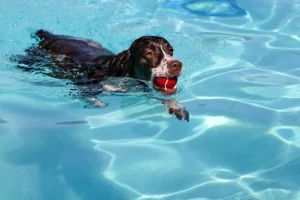
Portuguese Water Dogs are happiest with a securely fenced yard to explore. While they can adapt to apartments with extensive daily exercise and mental stimulation, their high energy and athletic nature thrive in a safe outdoor space where they can run, play fetch, and burn off steam.
Yard need: 1 / 10
Can Portuguese Water Dog be left alone?
Portuguese Water Dogs are social Velcro dogs that bond intensely with their families and generally do not tolerate being left alone for long. Excessive isolation often leads to separation anxiety, boredom, and destructive behaviors. They thrive best in households where someone is home frequently to provide companionship.
Can be left alone: 1 / 10
Are Portuguese Water Dog good with cats?
Portuguese Water Dogs generally get along well with cats, especially if raised together. Their friendly and social nature makes them adaptable to multi-pet households. However, their high energy and boisterous play style can be overwhelming for some felines, so early socialization and supervised introductions are highly recommended.
Good with cats: 7 / 10
Are Portuguese Water Dog aggressive?
Portuguese Water Dogs are not naturally aggressive; they are typically friendly, loyal, and affectionate companions. While they are spirited and can be protective or mouthy if not properly trained, they are generally sweet-natured. Consistent exercise, mental stimulation, and early socialization ensure they remain well-behaved and devoted family pets.
Aggression tendency: 9 / 10
Are Portuguese Water Dog high-energy dogs?
Portuguese Water Dogs are high-energy, athletic working dogs that require significant daily physical and mental stimulation. Originally bred to assist fishermen, they possess remarkable stamina and thrive on activities like swimming, long hikes, and agility sports. Without adequate outlets for their energy, they can become bored and develop destructive behaviors.
Energy level: 8 / 10
How much exercise does a Portuguese Water Dog need?
Portuguese Water Dogs are high-energy athletes that require approximately 1 to 2 hours of vigorous daily exercise to stay healthy and avoid destructive behaviors. As natural-born swimmers, they thrive on water activities like retrieving nets or dock diving, but they also excel at hiking, running, and agility training. Because of their high intelligence, physical activity must be paired with mental stimulation, such as puzzle toys or advanced obedience training, to satisfy their "Velcro dog" nature and working-group stamina.
Exercise need: 8 / 10
Can Portuguese Water Dog live in hot weather?
Portuguese Water Dogs often struggle in heat and humidity due to their dense coats and are prone to overheating. Owners should keep their hair clipped short during summer, provide constant access to shade and water, and limit vigorous activities to the cooler morning or evening hours.
Hot weather tolerance: 2 / 10
Can Portuguese Water Dog live in cold weather?
Portuguese Water Dogs handle cold weather well due to their dense, waterproof coats, which were originally developed for working in chilly Atlantic waters. They are generally comfortable in moderate cold but require monitoring in extreme temperatures. After cold-weather activities or swimming, ensure they are thoroughly dried to prevent their thick coat from trapping moisture against the skin.
Cold weather tolerance: 9 / 10
Are Portuguese Water Dog banned in apartments or rentals?
Portuguese Water Dogs are rarely subject to breed-specific bans, as they are generally not categorized as an aggressive breed. However, they may face apartment restrictions due to their size, with weight reaching up to 60 pounds, which can exceed common 50-pound limits. Because of their high energy and social nature, owners should also ensure they can meet the breed's exercise needs to avoid potential noise or property damage complaints.
Rental restriction risk: 5 / 10
Vet Insights
Portuguese Water Dogs are generally healthy, but as a veterinarian, I focus on screening for several inherited conditions. They are predisposed to hip dysplasia and several eye disorders, most notably Progressive Retinal Atrophy (PRA), which requires both DNA testing and annual ophthalmologist exams. A critical concern for the breed is Juvenile Dilated Cardiomyopathy (JDCM), a fatal heart condition in puppies that can be avoided through genetic testing of parents. We also monitor for Addison’s disease, GM-1 Gangliosidosis (a neurological storage disease), and follicular dysplasia. Maintaining a lean weight and ensuring breeders provide CHIC-certified health clearances for these conditions are essential steps for any prospective owner.