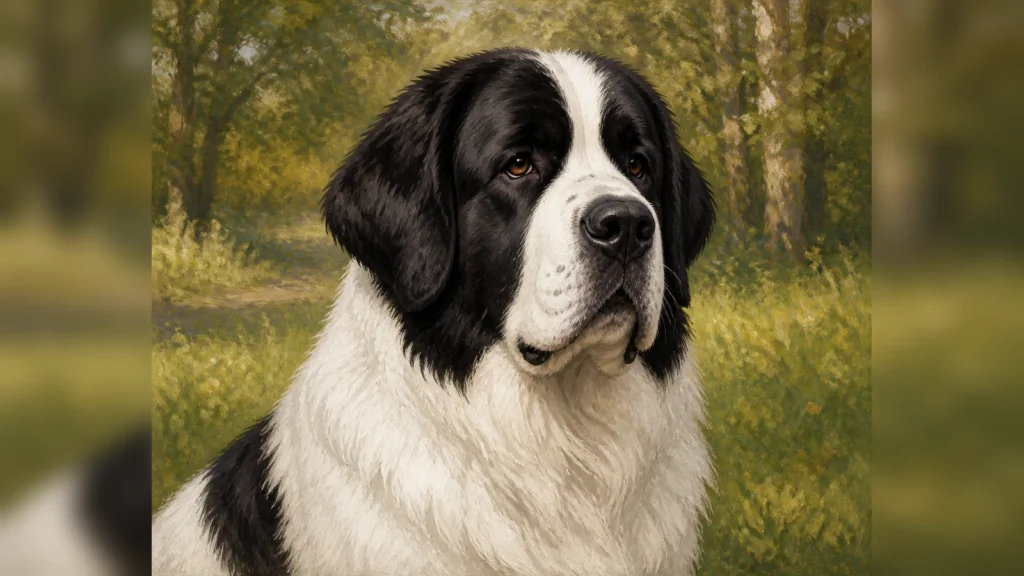
Landseer Training Profile
Breed Group
Working Dogs
Country of Origin
Canada / Switzerland
Breed Size
Giant
AKC Recognition
No
FCI Recognition
Yes, recognized in 1960
Mental stimulation needs
Average Needs5 / 10
Trainability
7 / 10
Picky eater
Selective4 / 10
Easy to train
Willing7 / 10
Training stubbornness
Willing7 / 10
Puppy training
Above Average7 / 10
Training FAQ
Are Landseer easy to train?
Landseers are intelligent and naturally eager to please, making them generally willing and cooperative participants in training. They typically respond well to gentle, positive reinforcement and are capable of learning complex tasks with consistency. Because of their giant size, early socialization and patient leadership are essential to ensure these gentle giants become well-mannered companions.
Easy to train: 7 / 10
Are Landseer stubborn to train?
Landseers are generally sweet-tempered and willing to please, making them cooperative partners during training. While they are intelligent and responsive, their massive size and occasionally independent nature mean they require consistent, gentle guidance from an early age. They respond best to positive reinforcement and clear communication, rarely showing the stubbornness often found in other large working breeds.
Training stubbornness: 7 / 10
How do you train a Landseer puppy?
Training a Landseer puppy requires early socialization and consistent positive reinforcement. Focus on basic obedience and gentle guidance to manage their giant size as they grow. Because they are intelligent and eager to please, they respond well to patient leadership. Ensure sessions are short and engaging to match their development.
Puppy training: 7 / 10
How difficult is potty training in Landseer?
Potty training a Landseer typically takes 4 to 6 months to achieve full reliability. While they are cooperative and intelligent, their giant size and occasional stubbornness require extreme patience and a consistent routine. Success relies on frequent outdoor breaks, especially after meals and play, and using positive reinforcement to overcome their independent nature.
Potty training difficulty: 7 / 10
How many walks does a Landseer need?
Landseers are active giant dogs that typically require one to two hours of daily exercise. Aim for at least one long, brisk walk of 60 minutes or two shorter 30-minute sessions. They especially love swimming, which provides excellent low-impact movement to protect their developing joints.
Walking need: 6 / 10
What is the best daily routine for a Landseer?
A Landseer's daily routine should balance their need for physical activity with their gentle nature. Provide one to two hours of exercise daily, such as a 60-minute brisk walk or two shorter 30-minute sessions, ideally including low-impact swimming to protect their giant joints. Feed adults twice daily and puppies three to four times to manage growth and prevent bloat. Essential daily care includes brushing their dense, water-resistant coat and checking ears for moisture, plus short training sessions to satisfy their cooperative intelligence. Ensure they have plenty of space to rest in a cool, temperature-controlled environment.
Routine need: 2 / 10
Vet Insights
Landseers are intelligent, gentle giants eager to please, making them cooperative and relatively easy to train with positive reinforcement. These active dogs require one to two hours of daily exercise, specifically enjoying swimming. While housebreaking takes consistency, their sweet nature makes them excellent family companions. Their care routine includes weight management, regular grooming, and joint protection for their massive frame.