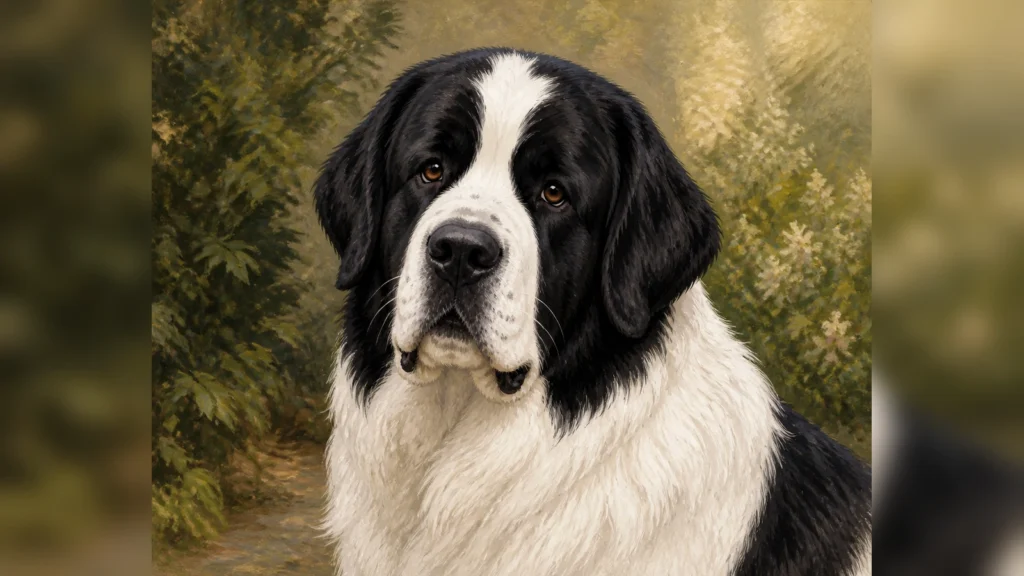
Landseer Grooming Profile
Breed Group
Working Dogs
Country of Origin
Canada / Switzerland
Breed Size
Giant
AKC Recognition
No
FCI Recognition
Yes, recognized in 1960
Allergy-friendly
Worst Choice; the breed is a heavy shedder with a dense double coat and is not hypoallergenic1 / 10
Shedding
High3 / 10
Grooming need
1.5 hours/week4 / 10
Low-maintenance
Hard2 / 10
Size
Large8 / 10
Growth timeline
4-5 years10 / 10
Grooming FAQ
Are Landseer hypoallergenic or allergy-friendly?
Landseer are considered to have moderate allergy-friendly tendencies. They possess a double coat coat that has high shedding. Their grooming needs are high.
Allergy-friendly: 1 / 10
Do Landseer shed?
To maintain a healthy Landseer, brush their dense double coat daily or at least every other day to prevent painful mats and manage shedding. They require a bath every four to eight weeks. Regularly clean their ears and trim nails monthly to ensure their overall comfort.
Shedding: 3 / 10
How often should you groom a Landseer?
To maintain the Bouvier des Flandres’ thick double coat, commit to thorough weekly brushing using a steel comb and slicker brush to prevent painful mats. Professional grooming is recommended every six to eight weeks, while beards and paw pads may require more frequent cleaning to ensure hygiene and comfort. The text refers to the Bouvier des Flandres; it should be updated to describe Landseer grooming (daily to weekly brushing of the double coat.
Grooming need: 4 / 10
Are Landseer low-maintenance dogs?
Bouviers des Flandres are not considered low-maintenance dogs. While they are low-shedding, their thick double coats require extensive weekly brushing to prevent mats. Additionally, their high intelligence and heritage as working dogs demand significant daily exercise and mental stimulation to prevent destructive behaviors and keep them satisfied. The text refers to the Bouvier des Flandres; it should be updated to describe the Landseer as high maintenance due to its size and heavy shedding.
Low-maintenance: 2 / 10
How big do Landseer get?
Bouviers des Flandres are large, powerful dogs with a rugged build. Males typically stand 24.5 to 27.5 inches tall and weigh 70 to 110 pounds, while females are slightly smaller. Their sturdy frame makes them excellent working dogs and loyal companions for active families. The text refers to the Bouvier des Flandres; it should be updated to reflect Landseer dimensions (approx. 26-32 inches and 100-176 lbs.
Size: 8 / 10
When do Landseer stop growing?
Adult Bouviers des Flandres typically require 3 to 5 cups of high-quality dry food daily, divided into two meals. Due to their large size and susceptibility to bloat and obesity, portion control is vital. Adjust intake based on their age, weight, and activity level. The text refers to feeding Bouviers des Flandres; it should be updated to discuss Landseer growth patterns (reaching full physical maturity by 18-24 months, though some sources suggest filling out up to 4-5 years.
Growth timeline: 10 / 10
How much should a Landseer eat?
Adult Bouviers des Flandres typically require 3 to 5 cups of high-quality dry food daily, divided into two meals. Due to their large size and susceptibility to bloat and obesity, portion control is vital. Adjust intake based on their age, weight, and activity level. The text refers to the Bouvier des Flandres; it should be updated to discuss Landseer-specific feeding needs.
Feeding amount: 8 / 10
How often should a Landseer puppy eat?
Landseer puppies require frequent, small meals to fuel their rapid growth and high energy levels. It is generally recommended to feed them three to four times daily until they reach six months of age. Consistent mealtimes help regulate digestion and simplify the house-training process for new owners.
Puppy feeding frequency: 1 / 10
Vet Insights
Landseers are large, powerful dogs reaching full size by age five. They are heavy shedders with water-resistant double coats, requiring significant daily brushing and weekly maintenance. Known for their gentle nature and swimming ability, they need ample space and moderate daily exercise. Owners must manage their high-quality diet of 3-5 cups carefully to prevent obesity.