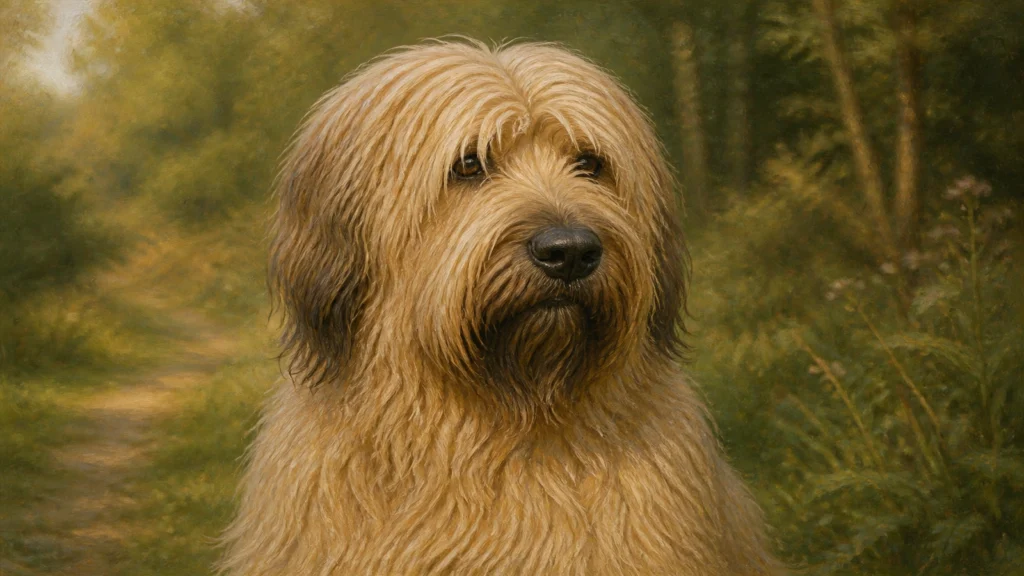
Briard Grooming Profile
Breed Group
Herding Dogs
Country of Origin
France
Breed Size
Large
AKC Recognition
Yes, recognized in 1928
FCI Recognition
Yes, recognized in 1954
Allergy-friendly
Fair7 / 10
Shedding
Low8 / 10
Grooming need
1-2 hours/week2 / 10
Low-maintenance
Hard5 / 10
Size
Large; the breed is consistently described5 / 10
Growth timeline
18-24 months8 / 10
Grooming FAQ
Are Briard hypoallergenic or allergy-friendly?
While they are low-shedding, they are not considered a truly hypoallergenic breed due to the potential for trapped dander in their long coats.
Allergy-friendly: 7 / 10
Do Briard shed?
Briard have a double coat coat with low shedding. Overall, their shedding level is considered low. Regular grooming is recommended to manage loose hair.
Shedding: 8 / 10
How often should you groom a Briard?
Daily brushing is recommended to prevent mats in their long, coarse double coat.
Grooming need: 2 / 10
Are Briard low-maintenance dogs?
Briards are considered hard to maintain. With high grooming needs and low shedding, prospective owners should be prepared for this level of commitment.
Low-maintenance: 5 / 10
How big do Briard get?
The Briard is a large breed. They typically weigh 55-100 lbs and stand 22-27 in tall when fully grown.
Size: 5 / 10
When do Briard stop growing?
Briards typically reach their full adult height by 12-18 months of age, and full weight and maturity by 2 years.
Growth timeline: 8 / 10
How much should a Briard eat?
Adult Briards generally require 3 to 5 cups of high-quality food per day. Adjust portions based on their activity level and age to maintain a healthy weight.
Feeding amount: 4 / 10
How often should a Briard puppy eat?
Briard puppies require 3 meals per day to manage growth rates. Standard large-breed puppy guidelines typically suggest 3 meals per day to manage growth rates.
Puppy feeding frequency: 3 / 10
Vet Insights
Briards are large, athletic herding dogs that reach full maturity by age two. They possess a long, low-shedding double coat requiring at least one to two hours of weekly brushing to prevent mats. Known for their intelligence and devotion, they need significant daily exercise and mental stimulation to thrive as affectionate, protective family companions.