Skip to content

Briard - MAIN HUB

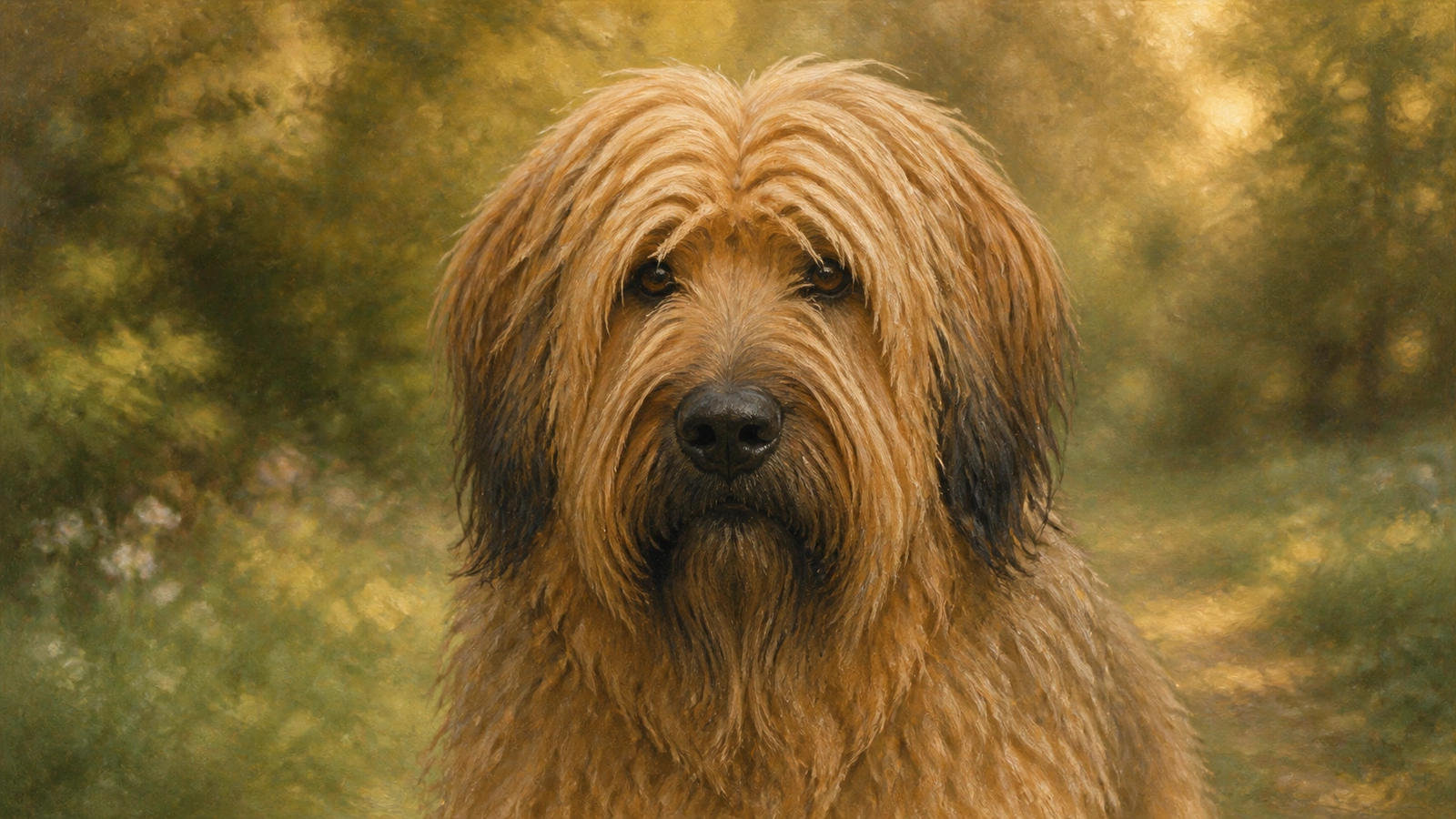
A shaggy heart wrapped in fur! The Briard is a loyal, smart, and athletic French companion perfect for active owners seeking a devoted protector.

BREED GROUP

Herding Dogs

Country of origin

France

BREED SIZE

Large

BREED HEIGHT

24 -

27 IN

61 -

69 cm

BREED WEIGHT

55 -

100 LB

25 -

45 KG

WHAT YOU NEED TO KNOW

The Briard is an ancient French herding breed known for its intelligence, loyalty, and distinctive shaggy appearance. Standing up to 27 inches and weighing up to 100 pounds, these powerful dogs feature a long, wavy coat requiring regular grooming. They are devoted family companions, often described as a heart wrapped in fur, but their protective nature and independent spirit necessitate a confident owner and early socialization. With high energy levels, Briards need at least two hours of daily exercise and mental stimulation to prevent destructive behaviors. They are generally healthy but prone to hip dysplasia and bloat.
american kennel club (AKC) recognition

Yes

Breed was recognized in 1928.

International Canine Federation (FCI) recognition

Yes

Breed was recognized in 1954.

WHAT DO OWNERS WANT TO KNOW?

Are Briards good family dogs?

Great

9 out of 10

The Briard is a devoted and loyal family companion, often described as a "heart wrapped in fur" due to its deep attachment to its people. While they are protective and excellent with family members, their high energy levels and independent spirit require an owner who can provide consistent training and at least two hours of daily exercise.

Great

9 out of 10

Briards are generally excellent with children, often described as devoted protectors who are especially fond of the kids in their family. Their natural patience and protective instincts make them patient companions, though their large size and high energy mean play should be supervised, particularly with toddlers. Early socialization is key to managing their herding instinct, which may lead them to nudge or nip at heels during play.

Not Recommended

1 out of 10

Briards are generally not recommended for first-time owners due to their large size, high energy, and independent nature. They require a confident handler with a good knowledge base to manage their protective instincts and herding drive. Success with this breed demands a significant commitment to intensive daily exercise, consistent professional training, and extensive early socialization to ensure they become well-adjusted family companions.

Poor

2 out of 10

Briards can adapt to apartment living if their high physical and mental exercise needs are met. While they are calm and relaxed indoors, their large size and high energy levels make them better suited for homes with more space and a yard. Owners must commit to at least two hours of daily activity and frequent outdoor romps to prevent boredom and destructive behaviors in smaller living environments.

Highly Recommended

2 out of 10

A yard is not strictly required for a Briard, as they can adapt to apartment living if their high physical and mental exercise needs are met. However, a large, securely fenced yard is highly recommended to accommodate their high energy levels and provide a safe space for off-leash play and daily romps. Owners must commit to significant daily activity, such as long walks or runs, to prevent boredom and destructive behaviors if a yard is unavailable.

Poor

2 out of 10

Briards are deeply devoted to their families and may develop separation anxiety if left alone for extended periods. While they can manage a few hours of solitude, they thrive on human companionship and prefer to be near their people as much as possible. Without sufficient mental stimulation and exercise before being left alone, they may become bored and engage in destructive behaviors like chewing or excessive barking.

Fair

4 out of 10

They may chase cats and other small animals, as noted in breed personality profiles.

Protective

3 out of 10

Briards are not naturally aggressive but possess strong protective instincts that require early socialization and training to manage. While they are famously loyal and gentle with their families, their history as independent guardians can lead to aloofness or suspicion toward strangers. Consistent, positive reinforcement and early exposure to various people and environments are essential to ensure their natural watchdog abilities do not develop into fearful or territorial aggression.

Very High

9 out of 10

Briards are high-energy herding dogs that require significant daily physical and mental exercise to stay healthy and well-behaved. They thrive on activities like long walks, jogs, and interactive play, typically needing between one and two hours of vigorous activity each day. Without a proper outlet for their athletic spirit and intelligence, they may become bored and develop destructive behaviors or excessive barking.

~90 min a day

8 out of 10

Briards are highly active herding dogs that require a significant commitment to physical and mental exercise, typically needing at least two hours of activity daily. This should include long walks, jogging, or hiking, along with interactive play and mental challenges like agility or obedience training to satisfy their intelligence and prevent destructive behaviors. While some sources suggest 30 to 60 minutes of vigorous activity, their working heritage ensures they thrive best with substantial daily engagement and a consistent routine.

Poor

3 out of 10

Briards have a moderate tolerance for hot weather, but their long, thick double coats make them prone to overheating. Owners should provide plenty of shade and fresh water, and avoid strenuous exercise during peak sun hours. Because their heavy coat can trap heat, it is important to monitor them closely for signs of heat exhaustion and consider swimming or indoor play as cooler alternatives for exercise.

Poor

3 out of 10

Briards have a moderate tolerance for hot weather, but their long, thick double coats make them prone to overheating. Owners should provide plenty of shade and fresh water, and avoid strenuous exercise during peak sun hours. Because their heavy coat can trap heat, it is important to monitor them closely for signs of heat exhaustion and consider swimming or indoor play as cooler alternatives for exercise.

Highly Likely

2 out of 10

They are large (up to 100 lbs) rather than giant (over 100 lbs) dogs.

WHAT DO OWNERS WANT TO KNOW?


Photo
Reviewed by
Dr. Vojtech Gabriel
DVM · PhD · MBA
Veterinarian Researcher Dog breed specialist
Verified

"Briards are devoted protectors, but their large size and deep chests carry specific health risks. As a veterinarian, I prioritize screening for hip and elbow dysplasia, which are prevalent in the breed. They are at significant risk for life-threatening bloat (GDV); I recommend feeding smaller, frequent meals and discussing a preventative gastropexy. Genetic eye conditions like Congenital Stationary Night Blindness and Progressive Retinal Atrophy are also concerns, making regular ophthalmic evaluations essential. To ensure a high quality of life, maintain a lean body weight to protect their joints and provide consistent socialization to manage their strong guarding instincts."


Other Herding Dogs