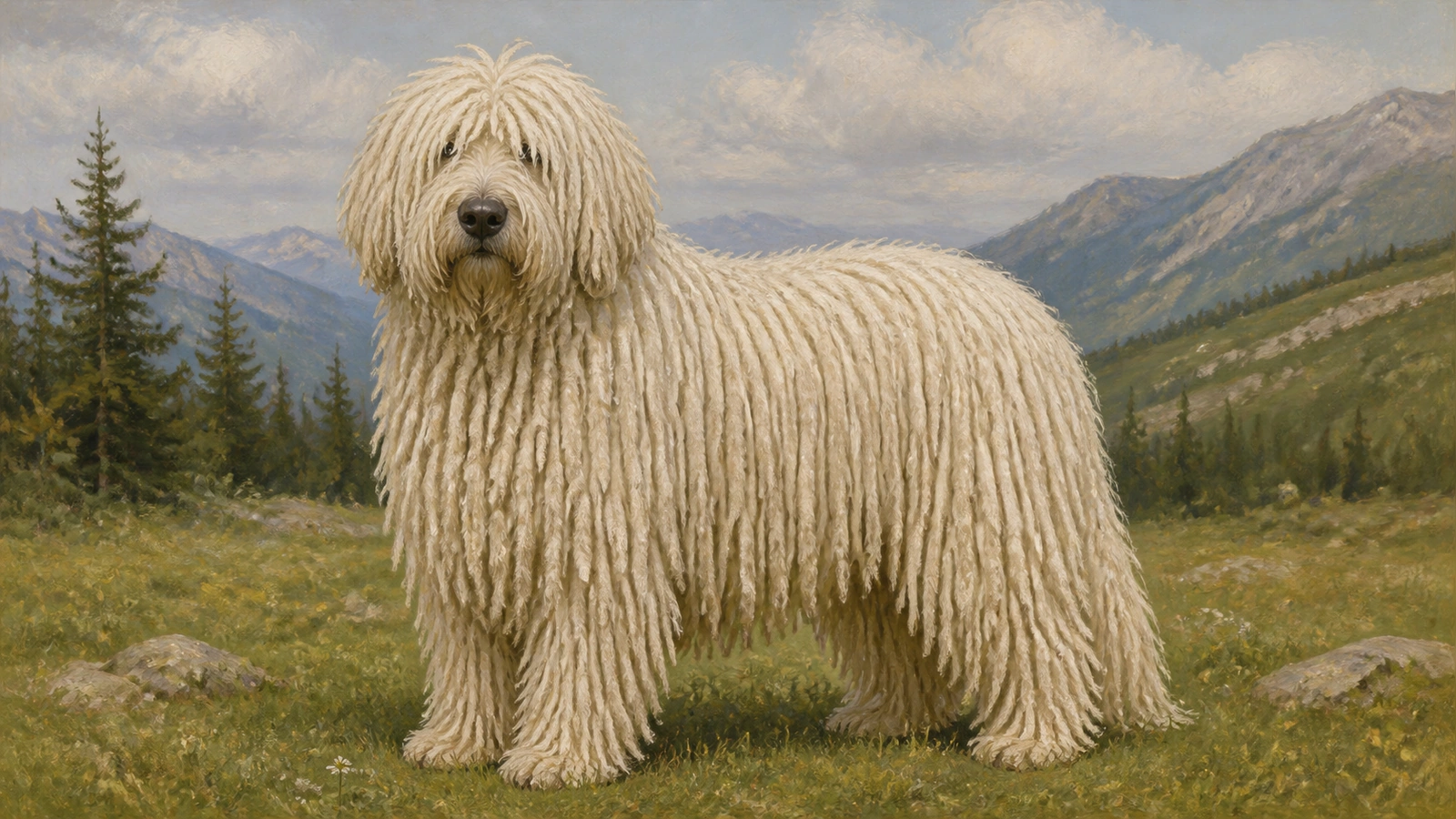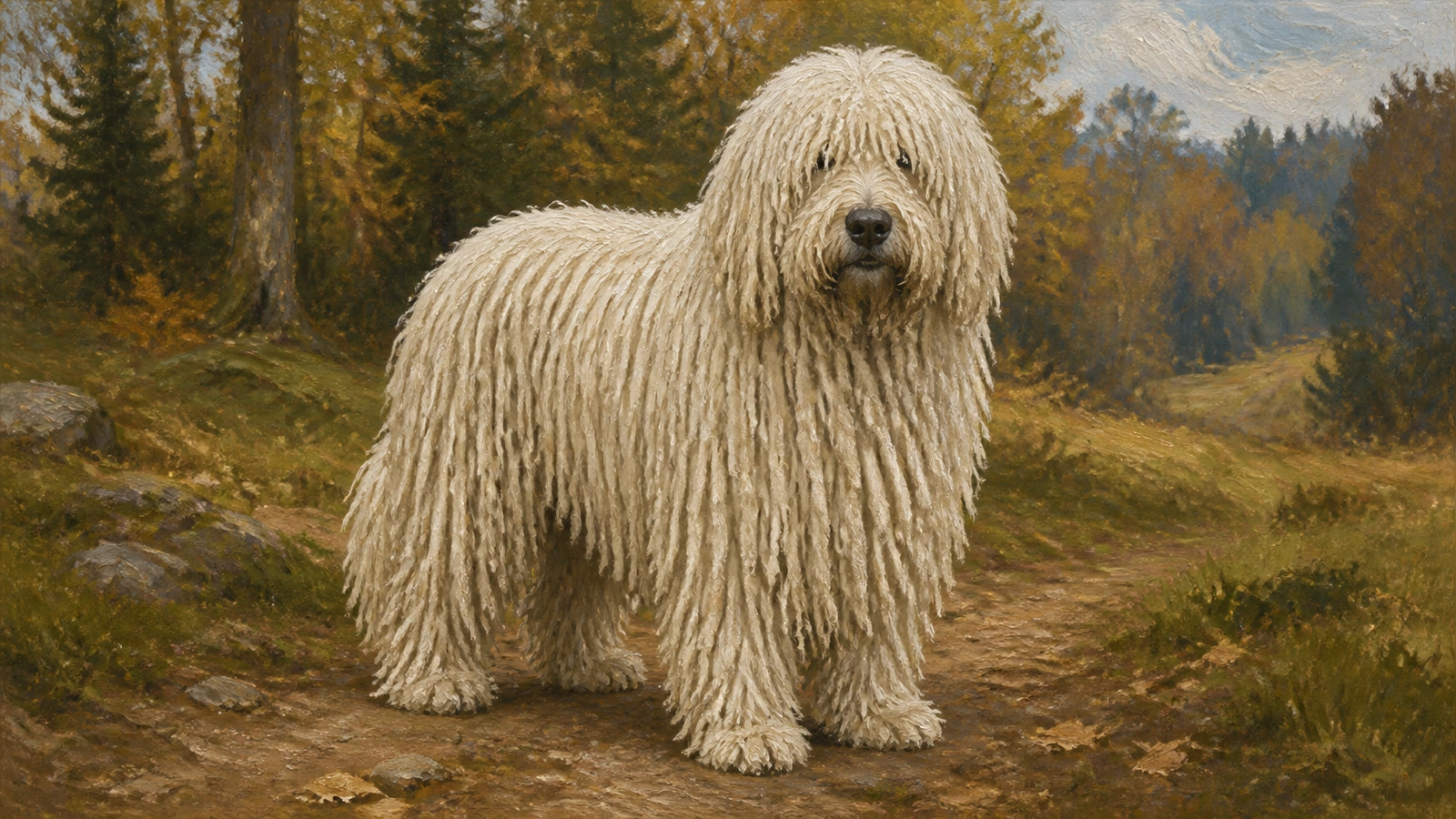
Komondor - MAIN HUB
BREED GROUP
Working Dogs
Country of origin
Hungary
BREED SIZE
Large
BREED HEIGHT
26 -
28 IN
66 -
71 cm
BREED WEIGHT
80 -
100 LB
36 -
45 KG
WHAT YOU NEED TO KNOW
american kennel club (AKC) recognition
Yes
Breed was recognized in 1937.

International Canine Federation (FCI) recognition
Yes
Breed was recognized in 1954.

WHAT DO OWNERS WANT TO KNOW?
Are Komondors good family dogs?
Excellent
9 out of 10
The Komondor is a deeply loyal breed that acts as a fearless protector of its family, including children and other pets. While they are calm indoors, their independent nature and protective instincts require experienced owners who can provide firm training and early socialization. They are best suited for families with a large, securely fenced yard rather than those living in apartments.
Are Komondors good with kids?
Excellent
9 out of 10
Komondors are generally gentle and deeply protective of children within their own family, often viewing them as part of the flock they must guard. While loyal and patient, their massive size and strength necessitate constant supervision around younger children to prevent accidental injuries. Early socialization is crucial, and owners should be cautious during playdates, as their strong guarding instinct may lead them to misinterpret roughhousing from visiting children as a threat.
Are Komondors good dogs for first time owners?
Not Recommended
1 out of 10
Komondors are not recommended for first-time owners due to their independent nature and powerful guarding instincts. They require a confident, experienced leader who can provide firm, consistent training and extensive early socialization. Additionally, the commitment to their specialized corded coat and large size can be overwhelming for those without prior dog ownership experience.
Are Komondors good apartment dogs?
Not Recommended
1 out of 10
Komondors are not suited for apartment living due to their large size, protective nature, and deep-rooted guarding instincts. They are independent livestock guardians that require significant space to roam and a large, securely fenced yard to patrol. In small, confined spaces without a job to do, they can become bored, territorial, and destructive.
Do Komondors need a yard?
Highly Recommended
2 out of 10
A large, securely fenced yard is highly recommended for a Komondor due to their large size and deep-rooted guarding instincts. As independent livestock guardians, they require significant space to roam and a secure area to patrol to fulfill their natural protective role. While they are calm indoors, access to an outdoor space is essential to prevent boredom and provide necessary physical activity.
Can Komondors be left at home alone?
Great
9 out of 10
Komondors are independent thinkers capable of working alone for hours, but they bond intensely with their families and can become bored or destructive if left without a job or companionship. While they are calm indoors and can manage moderate periods of solitude once mature, they thrive best when they are in close proximity to their "flock" and should not be relegated to life as an outdoor-only dog.
Do Komondors tolerate cats well?
Excellent
9 out of 10
They are primarily a one-family dog and may be suspicious of animals outside their 'pack'.
Are Komondors known to be aggressive?
Reactive
2 out of 10
Komondors are not naturally aggressive toward their families but possess powerful guarding instincts that make them fiercely protective. While they are calm and patient with those they trust, they are naturally wary, territorial, and reserved around strangers and other animals. Without early socialization and firm leadership, their independent nature can lead to aggression or snappy behavior when they perceive a threat to their territory or flock.
Do Komondors have a lot of energy?
Moderate
5 out of 10
Komondors have a moderate energy level, remaining relatively calm and quiet indoors while staying vigilant and active when outdoors or performing their guarding duties. They require daily physical activity, such as long walks or time to roam in a large, securely fenced yard, along with mental stimulation to prevent boredom. While not high-intensity athletes, they possess a strong, muscular frame built for endurance and require regular engagement to maintain their physical and mental well-being.
How much exercise do Komondors need?
~45 min a day
5 out of 10
Komondors require moderate daily exercise, typically between 45 and 60 minutes, which can be satisfied through one or two brisk walks. While they are relatively inactive indoors and calm by nature, they need consistent mental stimulation and outdoor activities like patrolling a fenced yard to prevent boredom and destructive behaviors. Incorporating training sessions or agility work can also help engage their intelligent, working minds while maintaining their physical health.



Do Komondors tolerate hot weather well?
Poor
3 out of 10
Komondors have a moderate tolerance for hot weather, as their unique corded coats act as natural insulation that can help regulate their body temperature. However, their massive size and heavy fur still put them at risk of overheating in extreme heat. Owners should provide ample shade, constant access to fresh water, and avoid strenuous exercise during the hottest parts of the day to keep them comfortable.
Are Komondors good with cold weather?
Poor
3 out of 10
Komondors have a moderate tolerance for hot weather, as their unique corded coats act as natural insulation that can help regulate their body temperature. However, their massive size and heavy fur still put them at risk of overheating in extreme heat. Owners should provide ample shade, constant access to fresh water, and avoid strenuous exercise during the hottest parts of the day to keep them comfortable.
Are Komondors sometimes banned from rentals?
Likely Banned
3 out of 10
Komondors are rarely subject to specific breed bans but often face restrictions due to their giant size, which frequently exceeds the 50-pound weight limit common in many rental agreements. Their protective nature and status as a livestock guardian breed may also lead to liability concerns for landlords, so owners should verify individual building policies and insurance requirements.
WHAT DO OWNERS WANT TO KNOW?