Standard Schnauzer Health and Costs
Breed Group
Companion Dogs
Country of Origin
Germany
Breed Size
Medium
AKC Recognition
Yes, recognized in 1904
FCI Recognition
Yes, recognized in 1955
Rarity
Common3 / 10
Purchase cost
Moderate to Expensive6 / 10
Life expectancy
Long Lifespan8 / 10
Health
Very healthy8 / 10
Health problem risk
Mild health concerns3 / 10
Maintenance cost
Moderate upkeep cost4 / 10
A Veterinarian's Guide
Standard Schnauzer Health Problems and Costs
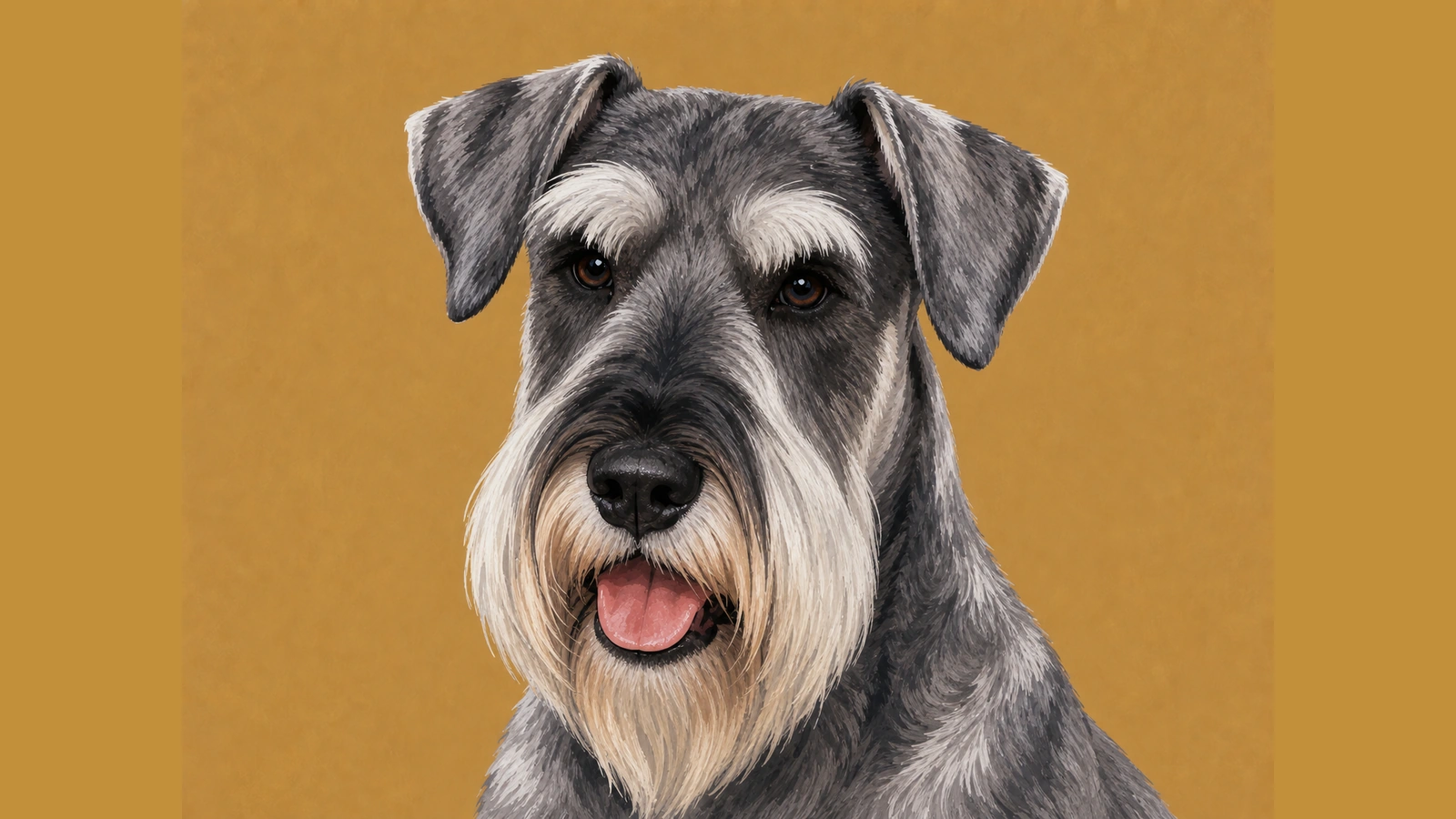
The Standard Schnauzer is a sturdy, spirited, medium-sized working dog, and it is generally robust. A handful of issues repeat in the breed, though: an inherited heart muscle disease, pancreatitis tied to food and weight, joint and eye problems, and bladder stones. Knowing them before you bring a puppy home, or while you already share your life with one, makes screening and vet visits much easier to plan.
In this guide
Why Does This Breed Need Heart Screening?
A Standard Schnauzer that suddenly seems weak, collapses, or breathes rapidly while resting needs immediate veterinary attention, because these can be signs of heart failure.
Dilated cardiomyopathy, or DCM, is a disease in which the heart muscle weakens and the chambers enlarge, so the heart pumps less efficiently. The name comes from the Greek kardia, "heart," and myos, "muscle," plus pathos, "disease." The Standard Schnauzer is among the breeds where the disease runs in families, and the breed club recommends a DNA test for it.
DCM often develops silently for months before a cough, tiring quickly, or a fainting spell brings a dog in. Listening to the heart at every wellness visit, and an ultrasound of the heart called an echocardiogram when a murmur or family history raises concern, can find it long before it becomes an emergency. A valve defect called pulmonic stenosis is also listed for the breed, which is another reason a veterinarian should listen to the heart on a regular basis.

Why Are Pancreatitis and Weight Such a Common Pair?
Pancreatitis, inflammation of the pancreas, the organ that makes digestive enzymes, is listed among this breed's possible problems. The word comes from the Greek pankreas, "all flesh," plus -itis, "inflammation." It is often set off by a fatty meal or table scraps and causes sudden vomiting, belly pain, and lethargy, ranging from mild to life-threatening. Our guide to the signs of pancreatitis in dogs covers the full picture, and excess body weight is widely considered a risk factor on top of the fat itself.
- 01
Repeated vomiting
Vomiting again and again, especially after fatty food.
- 02
Refusing food
A normally food-loving dog will not eat at all.
- 03
Belly pain
A hunched posture, restlessness, or crying when the belly is touched.
- 04
Lethargy
Unusual weakness or reluctance to move.
Strict portion control is a medical measure here, not just good manners. A measured, consistent, lower-fat diet works against pancreatitis and weight gain at the same time, and keeping fatty leftovers and treats out of the routine is worth more than almost any supplement.
What Hip and Eye Problems Should Owners Know About?
Hip dysplasia, an inherited malformation of the hip joint that leads to a loose joint, pain, and arthritis, occurs in the breed, which is why the breed club recommends a hip evaluation for breeding dogs. Keeping the dog lean protects the joints.
Cataracts, a clouding of the lens, and progressive retinal atrophy, or PRA, an inherited breakdown of the retina's light-sensing cells, both affect vision over time. The breed club recommends an eye exam by a veterinary ophthalmologist, which can catch changes before an owner notices anything. Most dogs adjust well to gradual vision loss in a familiar home.

What About Bladder Stones and Other Conditions?
Bladder stones are mineral deposits that form in the urinary bladder, and the breed is listed as prone to them. Straining to urinate, blood-tinged urine, or frequent small urinations are reasons to book a urine test promptly, since a stone can occasionally block the flow of urine, which is an emergency. The right diet depends on the stone's mineral makeup, so your veterinarian will want to analyze it before recommending one.
Breed guides also mention low thyroid hormone, an inherited clotting disorder called hemophilia A, and follicular dermatitis, an inflammation of the hair follicles. Hypothyroidism, or low thyroid hormone activity, tends to show up in middle age as weight gain and low energy, and daily medication manages it.
What Does Managing a Standard Schnauzer's Health Actually Cost?
| Condition or Need | Typical Cost Range | Notes |
|---|---|---|
| Annual wellness exam and vaccines | $200 to $350 | Heart check is part of the exam |
| Echocardiogram | $300 to $600 | If a murmur or family history calls for it |
| Pancreatitis treatment | $800 to $2,500 | Moderate case; severe cases cost more |
| Bladder stone removal or dissolution | $1,500 to $4,000 | Depends on surgery versus diet |
The pancreatitis and bladder stone ranges are wide because severity varies, from a few days of outpatient care to surgery and hospitalization. That variability is why some owners price pet insurance while a dog is still healthy.
Questions to Ask a Breeder Before Buying a Puppy
The AKC lists three tests that the breed club recommends: a hip evaluation, an ophthalmologist eye exam, and the Schnauzer DCM DNA test. Ask to see the results for both parents, and ask about heart disease, pancreatitis, and bladder stones in the puppy's close relatives and how long the adults in the line have lived.
Daily Life With a Standard Schnauzer
This is an energetic, intelligent, loyal dog that needs at least one or two long walks a day plus mental games, or it may dig, bark, and chew out of boredom. It can be stubborn and reserved with strangers, so it does best with a patient, consistent owner. Exercise also helps keep the weight where it should be.
The wiry coat sheds very little but needs regular grooming: combing about twice a week and a professional trim or hand-stripping a few times a year. The personality profile explains the spirited, protective side, and early, consistent training pays off with a bright but strong-minded dog.
Keeping Your Standard Schnauzer Healthy for the Long Run
Keep meals measured and low in fat, and keep table scraps out of the routine. Have the heart listened to at every wellness visit, schedule yearly eye exams, and brush the teeth daily. Report vomiting, straining to urinate, or any collapse promptly.
Final Thoughts From a Veterinarian
Standard Schnauzers usually live 13 to 16 years. Keep them lean, avoid fatty table scraps, have the heart checked yearly, and schedule eye exams. Report vomiting, collapse, or straining to urinate promptly. Your veterinarian can tailor the plan.
Health & Costs FAQ
How much do Standard Schnauzer cost?
Adoption costs typically range from $150-$400, while breeder costs range from $700-$2,500.
Purchase cost: 6 / 10
How long do Standard Schnauzer live?
Standard Schnauzers typically live 13 to 16 years. Keeping a lean weight, having the heart listened to at routine visits, and screening the eyes and hips help this sturdy breed stay active into its senior years.
Life expectancy: 8 / 10
Are Standard Schnauzer healthy dogs?
Standard Schnauzers are a sturdy, generally healthy breed, often living 13 to 16 years, but they are not problem-free. Owners should watch for dilated cardiomyopathy, hip dysplasia, cataracts and progressive retinal atrophy, pancreatitis, and bladder stones. Breed club screening of breeding dogs and a lean weight help keep risks down.
Health: 8 / 10
What health problems do Standard Schnauzer have?
Standard Schnauzers can develop dilated cardiomyopathy, a valve defect called pulmonic stenosis, hip dysplasia, cataracts and progressive retinal atrophy, pancreatitis, and bladder stones. Heart checks at routine visits, eye exams, and breed club screening of breeding dogs catch most issues early, and a lean, low-fat diet helps protect the pancreas.
Health problem risk: 3 / 10
Are Standard Schnauzer expensive to maintain?
Standard Schnauzers have moderate maintenance costs. The wiry double coat needs twice-weekly combing and a professional trim or hand-stripping every few months, and food and routine veterinary care add to the budget. Setting money aside for a heart work-up, pancreatitis, or bladder stones is wise, since those are the larger bills this breed can face.
Maintenance cost: 4 / 10
How much does it cost to own a Standard Schnauzer per month?
Monthly ownership costs are $110-$300.
Monthly ownership cost: 4 / 10
How much does pet insurance cost for a Standard Schnauzer?
Pet insurance premiums for a Standard Schnauzer generally range between $30 and $70 per month, depending on age and location. A policy is worth pricing while your dog is young and healthy, since pancreatitis, bladder stones, and heart disease can add up to thousands of dollars.
Pet insurance cost: 3 / 10
Will homeowners insurance cover a Standard Schnauzer?
Yes, most homeowners insurance policies cover Standard Schnauzers as they are generally not on restricted breed lists. However, coverage can vary by provider and location. It is essential to disclose your pet to your insurer to ensure you have adequate liability protection for any potential incidents.
Homeowners insurance difficulty: 9 / 10
Are Standard Schnauzer on insurance restricted breed lists?
No, Standard Schnauzers are not commonly found on insurance restricted-breed lists. They are generally viewed as a low-risk companion. Always disclose your pet to your insurance provider to ensure your policy includes full liability coverage.
Insurance restriction risk: 2 / 10
Can you get renters insurance with a Standard Schnauzer?
Yes, you can typically get renters insurance with a Standard Schnauzer, since the breed is rarely on restricted lists. Some insurers ask for details about the dog or set their own liability terms, so always disclose your dog to your provider and check your lease and landlord's pet rules.
Renters insurance difficulty: 8 / 10