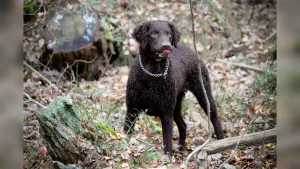
Wirehaired Vizsla Health and Costs
Breed Group
Sporting Dogs
Country of Origin
Hungary
Breed Size
Large
AKC Recognition
Yes, recognized in 2014
FCI Recognition
Yes, recognized in 2006
Rarity
Common3 / 10
Purchase cost
Moderate to Expensive6 / 10
Life expectancy
Moderate Lifespan6 / 10
Health
Generally healthy7 / 10
Health problem risk
Mild health concerns3 / 10
Maintenance cost
Moderate upkeep cost4 / 10
A Veterinarian's Guide
Wirehaired Vizsla Health Problems and Costs
The Wirehaired Vizsla is a tireless, wiry-coated Hungarian gundog that is generally healthy but carries a few inherited risks worth knowing about: hip and elbow dysplasia, a urinary condition called hyperuricosuria, a heart narrowing called subaortic stenosis, and several eye diseases. Knowing them before you bring a puppy home, or while you already share your life with one, makes screening and vet visits much easier to plan.
In this guide

What Joint Problems Affect This Breed?
Hip dysplasia, a poorly formed hip joint that can lead to pain and arthritis, and elbow dysplasia, its equivalent in the front legs, are both listed for the breed. The word comes from the Greek dys, "abnormal," and plasis, "formation." Signs include limping, reluctance to jump or climb stairs, and stiffness after rest. The breed club recommends a formal hip evaluation for breeding dogs, which catches affected dogs before they are bred.
Keeping a lean body weight is one of the most useful things an owner can do for these joints. Mild cases are often managed with weight control, physical therapy and medication, and severe cases may need surgery.

What Is Hyperuricosuria and Why Does It Matter?
A dog that strains repeatedly to urinate and passes little or no urine, especially a male, needs veterinary care the same day, because a stone may be blocking the urinary tract.
Hyperuricosuria, from the Greek hyper, "excessive," and ouron, "urine," means too much uric acid in the urine. In affected dogs this can lead to bladder or kidney stones. It is listed among the breed's inherited risks, and its management is mainly dietary: a low-purine food, which limits the building blocks the body turns into uric acid, along with plenty of water. The veterinary manual's section on urinary stones describes this diet-based approach in more detail.
Blood in the urine or frequent, small urinations are also reasons to book a visit rather than wait and see. Because the condition is inherited, it is fair to ask a breeder what screening they do for it.
Are Eye and Heart Conditions a Concern?
Progressive retinal atrophy, or PRA, an inherited breakdown of the retina's light-sensing cells, glaucoma, a painful rise in pressure inside the eye, and cataracts, a clouding of the lens, are all listed for the breed and tend to appear later in life. The breed club recommends an ophthalmologist evaluation for breeding dogs, and regular eye exams are sensible for pet dogs as they age. Redness, discharge or cloudiness in an eye deserves a prompt call to your veterinarian.

Subaortic stenosis, a narrowing just below the aortic valve that makes it harder for the heart to push blood out, is the heart condition associated with the breed. The name combines the Latin sub, "below," the Greek aorte, "great artery," and stenos, "narrow." Some dogs show no signs at all, while others become weak, breathe with difficulty or faint. A veterinarian can detect a heart murmur during a routine exam, and an ultrasound of the heart, called an echocardiogram, shows how significant the narrowing is.
- 01
Fainting or collapse
The dog suddenly goes limp or cannot stand.
- 02
Trouble breathing
Labored, rapid or noisy breathing at rest.
- 03
Red, cloudy or painful eye
Squinting, pawing at the eye, or sudden vision loss.
- 04
Blood in the urine
Pink, red or brown urine, especially with straining.
Does the Wirehaired Coat Need Special Care?
The dense, wiry coat needs only modest brushing, a few times a week and more often when the undercoat is shed, and baths only as lifestyle requires, since too many can strip the coat's natural oils. The grooming profile covers coat care in more detail. Ears matter more than coat for a dog that swims and works in cover, so clean them after time in water to help prevent ear infections.

How Much Exercise Does a Wirehaired Vizsla Actually Need?
This is a high-energy working breed that needs daily physical and mental activity, such as running, swimming, scent work and training games. Without enough, dogs can become destructive or restless. Steady, moderate activity throughout life also builds the muscle that supports the joints. Because of a strong prey drive, outdoor exercise is safest on a leash or in a securely fenced area.
What Does Managing a Wirehaired Vizsla's Health Actually Cost?
| Condition or Need | Typical Cost Range | Notes |
|---|---|---|
| Routine yearly care | $200 to $500 | Exams, vaccines, parasite prevention |
| Hip and elbow x-ray screening | $150 to $400 | Formal evaluation in young adulthood |
| Annual eye exam | $50 to $150 | More important past middle age |
| Heart ultrasound | $300 to $600 | If a murmur is found |
| Bladder stone surgery | $1,500 to $5,000 | If a stone causes a blockage |
Questions to Ask a Breeder Before Buying a Puppy
Ask for the parents' hip and eye results, since those are the breed club's recommended tests. Also ask whether the parents were checked for heart disease and hyperuricosuria, and whether any relatives have had urinary stones. Remember that the Wirehaired Vizsla is a separate breed from the smooth Vizsla, so ask for results specific to the Wirehaired lines.
Daily Life With a Wirehaired Vizsla
These are calm and gentle in the house when their needs are met, and affectionate, upbeat companions, as the personality profile explains. Plan for daily activity and attention, and for early, consistent training to channel that drive and build a reliable recall.

Keeping Your Wirehaired Vizsla Healthy for the Long Run
Schedule hip and eye checks, have your puppy's heart listened to at the first exam, keep your dog lean, and know the signs of a urinary blockage. Pet insurance is worth pricing while your dog is young and healthy.
Final Thoughts From a Veterinarian
Wirehaired Vizslas usually live 12 to 14 years and cost about $200 to $250 a month. Ask breeders about hip and eye screening, keep them lean and active, know the signs of urinary and heart trouble, and treat straining to urinate as urgent. Your veterinarian can tailor the plan.
Health & Costs FAQ
How much do Wirehaired Vizsla cost?
The cost of a Wirehaired Vizsla typically ranges from $1,000 to $3,000 when purchased from a reputable breeder. Adoption fees are more affordable, usually between $250 and $1,000. Owners should also budget approximately $500 to $1,000 for initial supplies and first-year veterinary care.
Purchase cost: 6 / 10
How long do Wirehaired Vizsla live?
Wirehaired Vizslas typically live 12 to 14 years. As a hardy, athletic sporting breed, they do best with regular exercise and a nutritious diet. Consistent veterinary check-ups and attention to hip, eye, heart, and urinary health help them live a full, healthy life.
Life expectancy: 6 / 10
Are Wirehaired Vizsla healthy dogs?
Wirehaired Vizslas are generally healthy and typically live 12 to 14 years, but they are not problem-free. Hip and elbow dysplasia, hyperuricosuria, subaortic stenosis, and eye diseases are listed for the breed. Hip and eye screening of breeding dogs, regular veterinary visits, and a lean, active lifestyle help catch trouble early.
Health: 7 / 10
What health problems do Wirehaired Vizsla have?
Wirehaired Vizslas can develop hip and elbow dysplasia, hyperuricosuria, which can lead to bladder or kidney stones, subaortic stenosis, a heart narrowing, and eye conditions such as progressive retinal atrophy, glaucoma, and cataracts. Ask breeders about hip and eye screening, and see your veterinarian promptly if your dog strains to urinate or an eye looks red or cloudy.
Health problem risk: 3 / 10
Are Wirehaired Vizsla expensive to maintain?
Wirehaired Vizslas have moderate upkeep costs. Grooming is modest, with brushing a few times a week and occasional baths. Costs come mainly from quality food to fuel a high energy level, routine veterinary care, and screening for hip and eye problems. Setting money aside for a possible urinary or heart problem is wise.
Maintenance cost: 4 / 10
How much does it cost to own a Wirehaired Vizsla per month?
Expect to spend between $200 and $250 per month to own a Wirehaired Vizsla. This budget covers high-quality food necessary for their athletic lifestyle, routine veterinary check-ups, and preventative medications. Factoring in grooming and pet insurance helps ensure your versatile hunting companion stays healthy and well-maintained throughout its life.
Monthly ownership cost: 5 / 10
How much does pet insurance cost for a Wirehaired Vizsla?
Pet insurance for a Wirehaired Vizsla typically costs between $45 and $70 per month. Because the breed carries inherited risks such as hip dysplasia, eye disease, and urinary stones, a policy is worth pricing while your dog is young and healthy. Premiums vary with age, location, and the plan's deductible and reimbursement levels.
Pet insurance cost: 4 / 10
Will homeowners insurance cover a Wirehaired Vizsla?
Yes, most homeowners insurance policies cover Wirehaired Vizslas, as they are not typically found on restricted-breed lists. Large dogs can sometimes affect premiums, but this breed is generally considered low-risk. Always disclose your dog to your provider to ensure full liability coverage remains active.
Homeowners insurance difficulty: 9 / 10
Are Wirehaired Vizsla on insurance restricted breed lists?
No, Wirehaired Vizslas are not typically found on insurance restricted-breed lists. Most providers view them as low-risk hunting companions rather than aggressive breeds. Still, always disclose your dog to your insurer to keep your liability coverage active and accurate.
Insurance restriction risk: 2 / 10
Can you get renters insurance with a Wirehaired Vizsla?
Yes, you can typically get renters insurance with a Wirehaired Vizsla, since the breed is not named on standard restricted-breed lists. Policies and pet-related terms still vary by insurer and state, so confirm coverage details with your provider and your landlord.
Renters insurance difficulty: 8 / 10