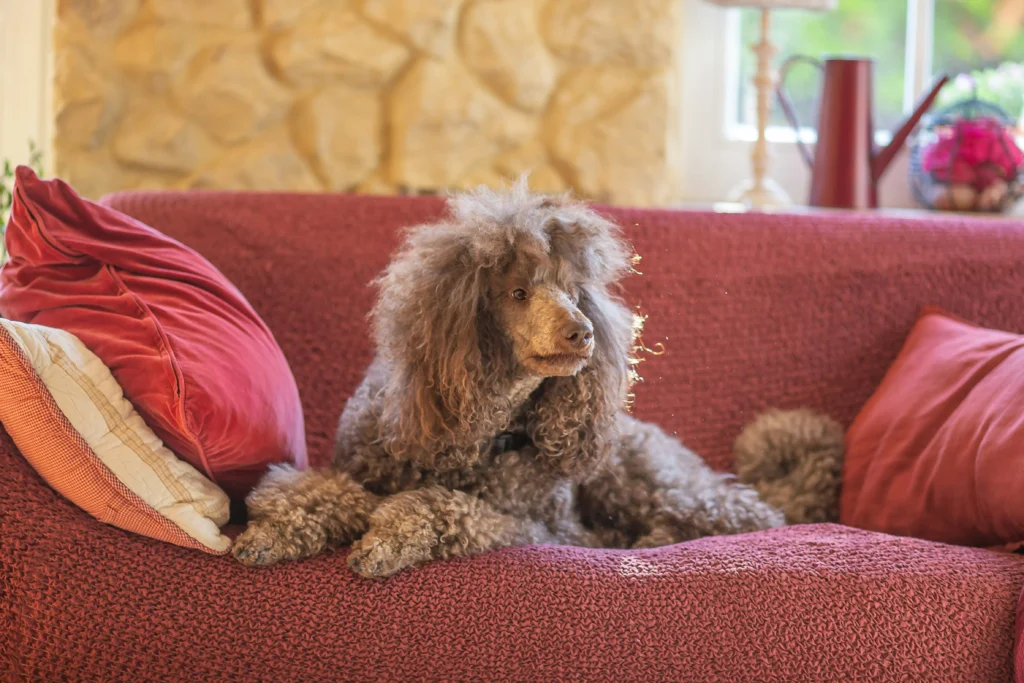
Poodle
Breed Group
Companion Dogs
Country of Origin
France
Breed Size
Medium
AKC Recognition
Yes, recognized in 1887
FCI Recognition
Yes, recognized in 1955
Family dog
Exceptional10 / 10
Good with kids
Excellent10 / 10
First-time owner
Exceptional10 / 10
Apartment dog
Exceptional9 / 10
Yard need
Not Required9 / 10
Can be left alone
Fair3 / 10
What Do Owners Want to Know?
Are Poodle good family dogs?
Poodles make exceptional family companions due to their deeply affectionate and patient nature. They are highly intelligent and versatile dogs that thrive on human interaction and being the center of attention within a devoted household. Additionally, their friendly temperament and alertness make them both loving partners and reliable watchdogs for families.
Family dog: 10 / 10
Are Poodle good with kids?
Poodles are generally excellent with children, known for their patient and playful temperaments. They are highly intelligent and form deep bonds with family members. While they adore people of all ages, interactions with younger children should be supervised to ensure gentle play and mutual respect.
Good with kids: 10 / 10
Are Poodle good for first-time owners?
Poodles are excellent for first-time owners due to their high intelligence and eagerness to please. They are among the easiest breeds to train, quickly mastering commands. While they require regular mental stimulation and professional grooming, their adaptable and friendly nature makes them rewarding companions for novices.
First-time owner: 10 / 10
Are Poodle good apartment dogs?
Poodles can adapt well to apartment living thanks to their high intelligence and moderate to high adaptability. While energetic, their exercise needs can be met through daily walks and mental stimulation. They are relatively quiet and clean, making them considerate neighbors in close urban quarters.
Apartment dog: 9 / 10
Do Poodle need a yard?
Poodles are highly adaptable and don't strictly require a yard, making them suitable for apartment living. However, they are athletic and thrive with a securely fenced space for off-leash play. If a yard isn't available, consistent daily walks and mental stimulation are essential to keep them happy.
Yard need: 9 / 10
Can Poodle be left alone?
Poodles can be left alone for moderate periods but are highly susceptible to separation anxiety due to their high intelligence and affectionate nature. They thrive on human companionship and may display destructive behaviors or excessive barking if isolated for too long without mental stimulation and social interaction.
Can be left alone: 3 / 10
Are Poodle good with cats?
Poodles are generally excellent companions for cats due to their high intelligence and gentle nature. They are highly trainable, allowing them to learn boundaries quickly. While early socialization is essential, their empathetic temperament and relatively low prey drive typically result in a harmonious relationship with feline household members.
Good with cats: 9 / 10
Are Poodle aggressive?
Poodles are not naturally aggressive and are renowned for their friendly, social nature. While highly intelligent and eager to please, they can become reactive if bored, stressed, or poorly socialized. Proper training and mental stimulation are essential to ensure these loyal companions remain well-behaved and gentle.
Aggression tendency: 10 / 10
Are Poodle high-energy dogs?
Poodles are highly energetic and athletic dogs that require regular physical and mental stimulation. Originally bred as water retrievers, they thrive on activities like swimming, fetch, and agility. Without adequate daily exercise and problem-solving challenges, their intelligence can lead to boredom and destructive household behaviors.
Energy level: 8 / 10
How much exercise does a Poodle need?
Standard Poodles require significant daily activity, typically needing 60 to 90 minutes of vigorous exercise. This should include brisk walks, swimming, or fetch to maintain their athletic build. As highly intelligent dogs, they also thrive on mental stimulation through agility training and interactive puzzles to prevent boredom.
Exercise need: 8 / 10
Can Poodle live in hot weather?
Poodles handle warm weather well but can overheat due to their dense, curly coats. Keeping their hair clipped short helps them stay cool. Always provide plenty of shade and fresh water during hot days, and limit strenuous activities to cooler mornings or evenings to ensure their safety.
Hot weather tolerance: 6 / 10
Can Poodle live in cold weather?
Poodles tolerate moderate cold well, especially with longer coats. However, their single layer of hair lacks an insulating undercoat, making them sensitive to freezing temperatures. It is best to use insulated jackets and booties during winter walks. Puppies and seniors require extra care to stay safe and warm.
Cold weather tolerance: 2 / 10
Are Poodle banned in apartments or rentals?
Standard Poodles are rarely restricted in apartments as they are not typically classified as aggressive. Their high intelligence and hypoallergenic coat make them desirable tenants. However, due to their larger size and high energy, they require consistent daily exercise to remain well-behaved in smaller living spaces.
Rental restriction risk: 10 / 10
Vet Insights
Standard Poodles are exceptionally intelligent and athletic, but they have specific health predispositions that owners must manage. As a veterinarian, I prioritize monitoring for gastric dilatation-volvulus (bloat), a life-threatening emergency common in deep-chested breeds. I also recommend regular screening for hip dysplasia, Addison’s disease, and sebaceous adenitis. Because their non-shedding curly coats grow continuously, professional grooming every six weeks is essential to prevent painful matting and skin infections. Additionally, proactive dental care and ear cleaning are vital to prevent chronic infections. Maintaining a lean weight will significantly reduce joint stress and improve longevity.