Vizsla Health and Costs
Breed Group
Sporting Dogs
Country of Origin
Hungary
Breed Size
Large
AKC Recognition
Yes, recognized in 1960
FCI Recognition
Yes, recognized in 1954
Rarity
Very Common2 / 10
Purchase cost
Moderate to Expensive6 / 10
Life expectancy
Moderate Lifespan5 / 10
Health
Fairly healthy6 / 10
Health problem risk
Average health burden5 / 10
Maintenance cost
Moderate upkeep cost4 / 10
A Veterinarian's Guide
Vizsla Health Problems and Costs
The Vizsla is an athletic, affectionate sporting dog, often called a Velcro dog for how closely it sticks to its owner. It is generally a sound breed, but a few conditions repeat: joint problems, epilepsy, bloat in its deep chest, and thyroid, eye, and skin disease. Knowing them before you bring a puppy home, or while you already share your life with one, makes screening and vet visits much easier to plan.
In this guide
Why Do Vizslas Need Hip Screening?
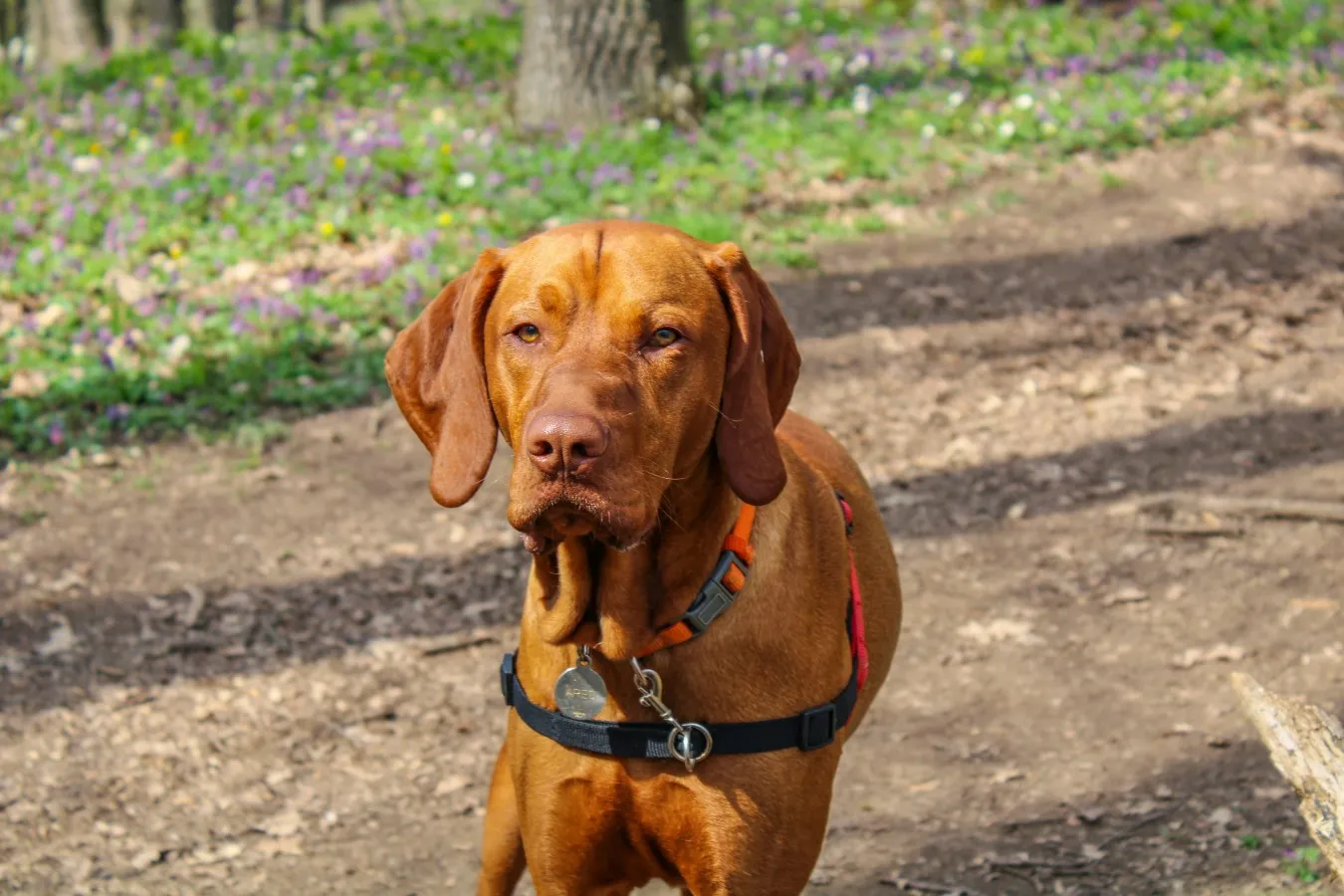
Hip dysplasia, an inherited malformation of the hip joint that leads to looseness, pain, and arthritis over time, is more common in larger dogs and occurs in the breed, though some sources describe it as uncommon in Vizslas. Because an active young dog can hide discomfort, the breed club's recommended hip evaluation of breeding dogs matters more than waiting for limping. Keeping a Vizsla lean throughout life reduces stress on the joints.
What Is Epilepsy in Vizslas?
A first seizure, or any seizure that lasts more than a few minutes, needs emergency veterinary evaluation right away.
Epilepsy is a brain disorder that causes recurring seizures, and it is listed among the breed's major health risks. In idiopathic epilepsy, the term means no outside cause is found, and many dogs need daily anti-seizure medication and regular monitoring once diagnosed. The word comes from the Greek epilambanein, "to seize." Note when each seizure happens and how long it lasts, and film it if you can do so safely, because that helps your veterinarian.
Bloat Is an Emergency in Deep-Chested Dogs
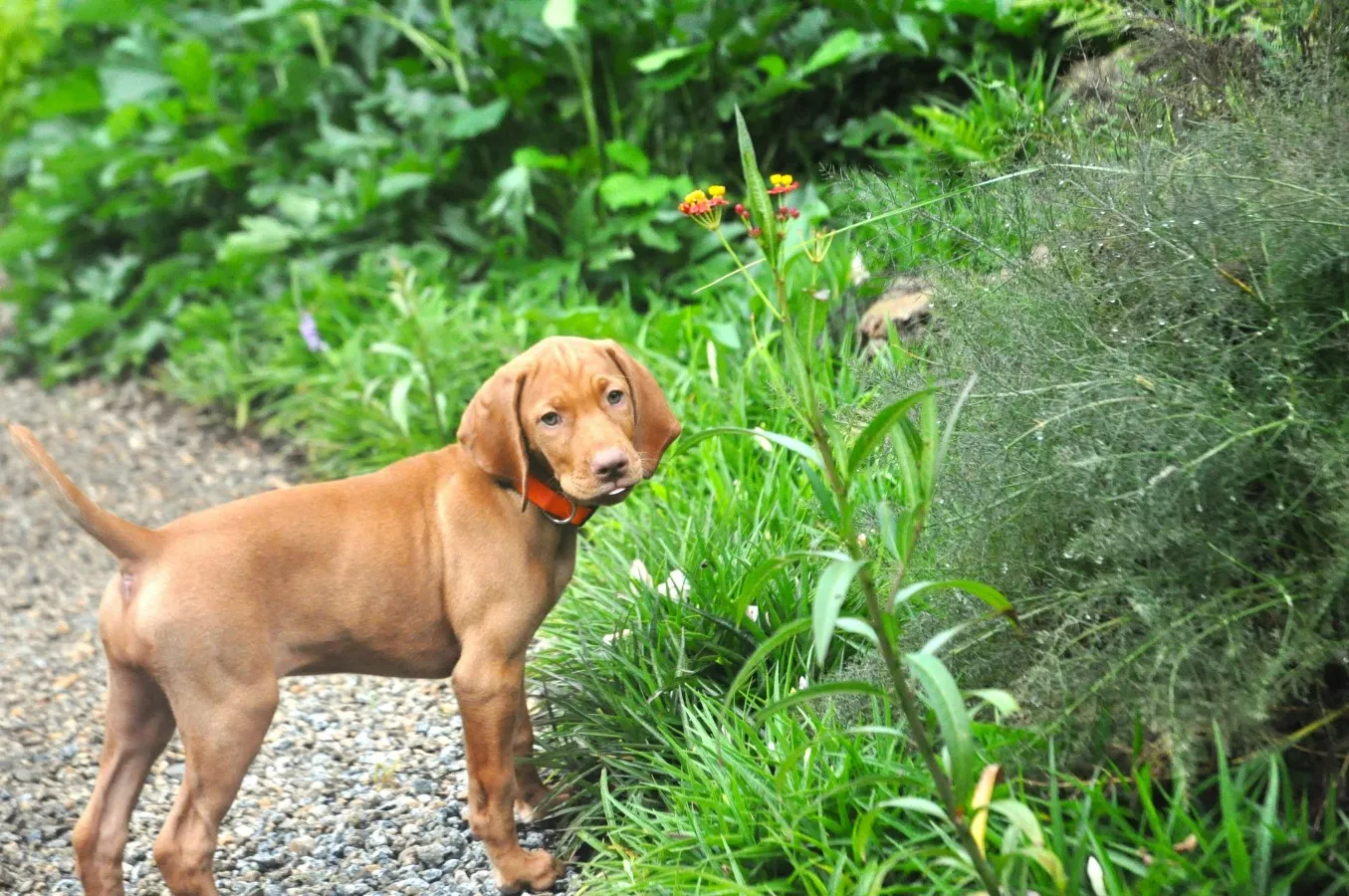
Bloat, medically gastric dilatation-volvulus, happens when the stomach fills with gas and twists on itself, cutting off its own blood supply. The Vizsla's deep chest raises the risk, there is no home treatment, and surgery is the only way to correct a twisted stomach. Dogs who reach surgery quickly generally do better, so learn these warning signs before you need them.
- 01
Swollen belly
The abdomen looks tight, rounded, or distended.
- 02
Unproductive retching
Straining to vomit with little or nothing coming up.
- 03
Restlessness and drooling
Pacing, drooling, or being unable to settle.
- 04
Sudden collapse
The dog becomes weak or collapses.
A slow-feeder bowl and avoiding exercise right before and after meals both help, though no precaution removes the risk. Some owners choose a preventive gastropexy. The word comes from the Greek gaster, "stomach," and pexis, "fixing in place." The surgery tacks the stomach to the abdominal wall, often at the same time as a spay or neuter, and it stops the twisting, which is the dangerous part.
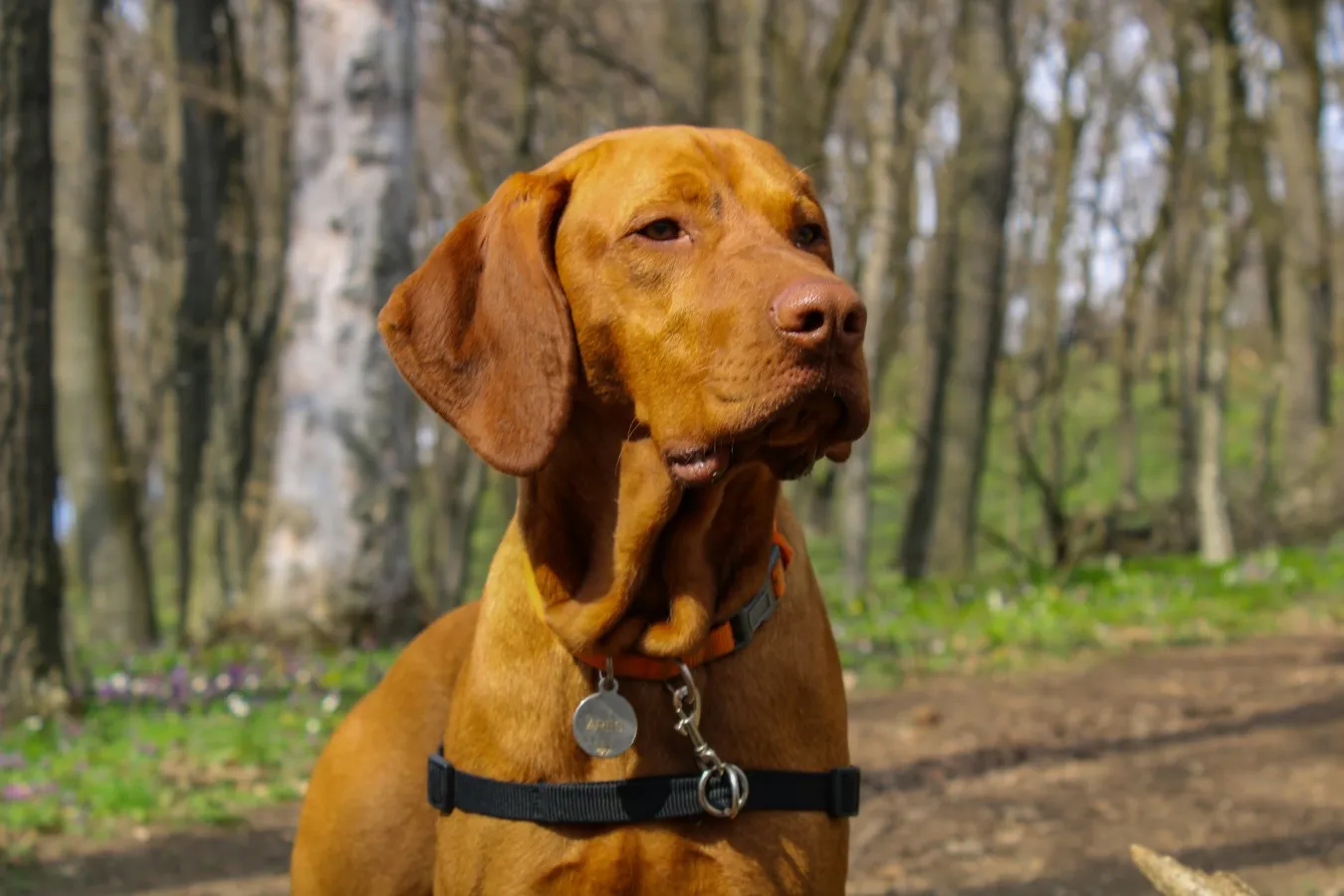
What About the Thyroid and the Eyes?
Hypothyroidism, or low thyroid hormone activity, slows the metabolism, with weight gain, low energy, and coat changes as typical signs. A blood test confirms it, and a daily tablet manages it for life. Read more about low thyroid in dogs. Progressive retinal atrophy, or PRA, is an inherited breakdown of the retina's light-sensing cells that causes gradual vision loss. Retina comes from the Latin rete, "net." Thyroid and eye evaluations are both on the breed club's recommended list for breeding dogs.
What Skin Problems and Lumps Should Owners Know About?
Sebaceous adenitis, an inflammation that damages the skin's oil glands, is listed among the breed's inherited conditions, and skin and food allergies are also possible. Dry or flaky skin, hair loss, or a dull coat are reasons to book a visit, and the breed is also prone to ear infections, so routine ear checks help. Cancers such as lymphoma, hemangiosarcoma, and mast cell tumors are reported too, so have any new or changing lump examined rather than watched.
What Does Managing a Vizsla's Health Actually Cost?
| Condition or Need | Typical Cost Range | Notes |
|---|---|---|
| Routine wellness care | $200 to $400 a year | Exam, vaccines, preventives |
| Hip, thyroid, and skin care | Several hundred dollars a year | Varies with severity |
| Emergency bloat surgery | $3,000 to $7,000 | Life-threatening, surgical |
Questions to Ask a Breeder Before Buying a Puppy
Ask for hip, eye, and thyroid results for both parents, since the breed club's recommended list covers a hip evaluation, an ophthalmologist evaluation, and a thyroid evaluation. Also ask whether epilepsy or skin disease has appeared in the lines, and what the breeder does about bloat awareness for puppy buyers.
Daily Life With a Vizsla
This is an energetic hunting breed, so plan on at least an hour of exercise a day plus real mental work. The short coat needs only weekly brushing and the occasional bath, as the grooming guide explains. Vizslas stay very close to their people, as the personality profile shows, and boredom or loneliness can lead to chewing, so early crate and alone-time training from puppyhood pays off.
Keeping Your Vizsla Healthy for the Long Run
Keep your dog lean, schedule hip, eye, and thyroid checks as your veterinarian advises, feed smaller meals, and learn the warning signs of bloat and seizures before you ever need them. Pet insurance is worth pricing while your dog is young and healthy, because premiums rise as the dog ages and conditions such as epilepsy appear.
Final Thoughts From a Veterinarian
Vizslas usually live about 10 to 14 years. Screen hips, eyes and thyroid, feed smaller meals and avoid exercise around them, and treat a seizure or swollen belly as an emergency. Budget roughly $200 to $600 a month. Your veterinarian can tailor the plan.
Health & Costs FAQ
How much do Vizsla cost?
Purchasing a Vizsla from a reputable breeder typically costs between $1,000 and $3,000, though some lineages reach $3,800. Prospective owners should also budget $500 to $1,000 for initial supplies, vaccinations, and neutering. While adoption is more affordable, the first year generally requires an investment of $2,800 to $5,500.
Purchase cost: 6 / 10
How long do Vizsla live?
Vizslas typically live about 10 to 14 years, and one UK study reported an average of around 13.5 years. A lean weight, daily exercise, dental care, and routine veterinary checkups help them stay active into their senior years.
Life expectancy: 5 / 10
Are Vizsla healthy dogs?
Vizslas are generally healthy, athletic dogs that typically live 10 to 14 years, but they are prone to some inherited conditions, including epilepsy, thyroid disease, progressive retinal atrophy, and sebaceous adenitis. Their deep chest also raises bloat risk. Hip screening, a lean weight, and regular veterinary checkups help manage these concerns.
Health: 6 / 10
What health problems do Vizsla have?
Vizslas can develop epilepsy, hypothyroidism, progressive retinal atrophy, sebaceous adenitis, allergies, and hip dysplasia, and their deep chest raises bloat risk. Cancers such as lymphoma are also reported. Screening breeding dogs and buying from reputable breeders helps with early detection and management.
Health problem risk: 5 / 10
Are Vizsla expensive to maintain?
Vizslas have moderate upkeep costs. The short coat needs little professional grooming, but their high activity level calls for quality nutrition, and owners often budget for training and enrichment. Setting money aside for screening and for possible emergencies such as bloat is wise.
Maintenance cost: 4 / 10
How much does it cost to own a Vizsla per month?
Expect to spend roughly $200 to $600 a month to own a Vizsla. Most of that goes toward high-quality food for an active dog, routine veterinary care, and preventives, and costs vary by location and by how much training and boarding you use.
Monthly ownership cost: 7 / 10
How much does pet insurance cost for a Vizsla?
Pet insurance for a Vizsla typically costs about $20 to $80 per month, though premiums can rise as the dog ages or if conditions such as epilepsy develop. Pricing a policy while your dog is young and healthy is wise.
Pet insurance cost: 3 / 10
Will homeowners insurance cover a Vizsla?
Yes, most homeowners insurance policies will cover a Vizsla. They are typically known for their friendly, athletic nature and are rarely found on restricted breed lists. However, since policies vary by provider, you should always confirm liability coverage with your insurance agent to ensure protection.
Homeowners insurance difficulty: 9 / 10
Are Vizsla on insurance restricted breed lists?
No, Vizslas are not typically found on insurance restricted-breed lists. These lists generally target breeds perceived as high-risk or aggressive. As a friendly and athletic breed, Vizslas are usually viewed as standard dogs, though you should always confirm specific details with your provider.
Insurance restriction risk: 2 / 10
Can you get renters insurance with a Vizsla?
Yes, you can typically get renters insurance with a Vizsla. They are generally not on restricted breed lists. Most policies include liability coverage for your pet, protecting you from costs related to injuries or property damage caused by your dog. Always confirm specific coverage details with your provider.
Renters insurance difficulty: 8 / 10