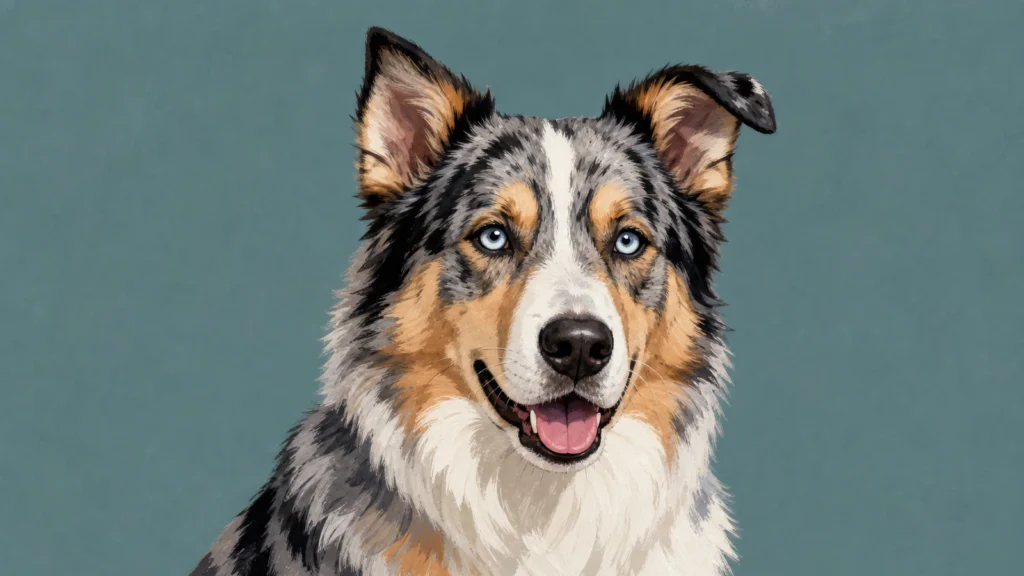
Aussie Husky
Breed Group
Hybrid Dogs
Country of Origin
United States
Breed Size
Medium
AKC Recognition
No
FCI Recognition
Yes, recognized in 1954
Family dog
Above Average6 / 10
Good with kids
Average6 / 10
First-time owner
Not Recommended1 / 10
Apartment dog
Not Recommended3 / 10
Yard need
Highly Recommended2 / 10
Can be left alone
Fair3 / 10
What Do Owners Want to Know?
Are Aussie Husky good family dogs?
The Aussie Husky is a loyal and affectionate family pet that thrives in active households. However, due to their high energy levels and need for significant daily exercise and mental stimulation, they are best suited for experienced owners who can prevent destructive behaviors.
Family dog: 6 / 10
Are Aussie Husky good with kids?
Aussie Huskies are generally gentle and playful with children, making them great companions for active families. Due to their high energy and exuberant nature, they are best suited for households with older children who can match their activity levels. Supervision is recommended around toddlers to prevent accidental knocks, and early socialization is essential to manage their herding instincts and ensure they remain well-behaved playmates.
Good with kids: 6 / 10
Are Aussie Husky good for first-time owners?
Aussie Huskies are generally not recommended for first-time owners. They combine the Australian Shepherd's intensity with the Husky's independent streak, demanding experienced handling, consistent positive-reinforcement training, and a serious daily commitment to exercise and mental stimulation to prevent destructive behavior.
First-time owner: 1 / 10
Are Aussie Husky good apartment dogs?
Aussie Huskies are generally not recommended for apartment living due to their high energy levels and intense daily exercise requirements. While they can adapt to smaller spaces with extremely active owners, their tendency for vocalization and potential for destructive behavior when bored makes them better suited for larger homes with access to a fenced yard.
Apartment dog: 3 / 10
Do Aussie Husky need a yard?
A yard is highly recommended for an Aussie Husky to accommodate their high energy levels and need for vigorous activity. While they can adapt to apartment living if their significant physical and mental exercise requirements are met through several hours of daily engagement, a secure outdoor space provides a safe environment for them to run, play, and satisfy their natural instincts.
Yard need: 2 / 10
Can Aussie Husky be left alone?
Aussie Huskies are highly social and active dogs that thrive on human companionship and can struggle when left alone. Without sufficient exercise and mental stimulation before departure, they may develop separation anxiety leading to destructive behaviors like howling, chewing, or digging. While they can manage moderate periods of solitude if properly trained and tired out, they are best suited for households where someone is frequently present to engage their energetic and intelligent nature.
Can be left alone: 3 / 10
Are Aussie Husky good with cats?
Aussie Huskies generally coexist well with cats, particularly when socialized from a young age. While their lineage involves a high prey drive and herding instincts that may lead to chasing, their affectionate nature allows them to form harmonious bonds with indoor companions through patient training and supervised introductions.
Good with cats: 8 / 10
Are Aussie Husky aggressive?
Aussie Huskies are not inherently aggressive but are naturally alert and protective of their families. While they are loyal and affectionate with their owners, they may be reserved or watchful around strangers. Consistent early socialization and positive reinforcement training are essential to manage their protective instincts and ensure they remain well-behaved and confident in various social settings.
Aggression tendency: 3 / 10
Are Aussie Husky high-energy dogs?
Aussie Huskies are exceptionally high-energy dogs that require significant daily exercise and mental stimulation to thrive. Combining the athletic herding drive of the Australian Shepherd with the legendary endurance of the Siberian Husky, they need 1-2 hours of vigorous activity, such as hiking or running, to prevent boredom and destructive behaviors. They are best suited for active owners who can provide a structured job or consistent physical outlets to satisfy their adventurous spirit.
Energy level: 10 / 10
How much exercise does a Aussie Husky need?
Aussie Huskies are high-energy dogs that require at least 1 to 2 hours of daily exercise to stay healthy and prevent destructive behavior. As a cross between two active working breeds, they thrive on vigorous activities like running, hiking, and long walks. Incorporating mental stimulation through training and puzzle toys is also essential to satisfy their intelligent and spirited nature.
Exercise need: 8 / 10
Can Aussie Husky live in hot weather?
Aussie Huskies are highly sensitive to heat due to their thick double coats, making them prone to overheating and heatstroke. Owners must provide constant access to shade and fresh water, and utilize air conditioning during hot days. Strenuous exercise should be strictly limited to the early morning or late evening hours to ensure their safety and comfort.
Hot weather tolerance: 1 / 10
Can Aussie Husky live in cold weather?
Aussie Huskies are exceptionally well-suited for cold weather due to their thick, water-resistant double coats inherited from both the Australian Shepherd and Siberian Husky. Their dense undercoat provides excellent insulation, while the outer guard hairs repel moisture and snow. While they can comfortably handle freezing temperatures and enjoy playing in the snow, owners should monitor for signs of discomfort in extreme sub-zero conditions and ensure they have a warm, dry place to retreat.
Cold weather tolerance: 10 / 10
Are Aussie Husky banned in apartments or rentals?
Aussie Huskies are often subject to apartment breed bans due to their Siberian Husky heritage, as Huskies are frequently included on insurance-related restricted breed lists. Their large size, high energy levels, and vocal nature can also lead to restrictions or noise complaints in multifamily housing. Prospective owners should verify specific landlord policies and insurance requirements, as these athletic hybrids are generally better suited for active homes with fenced outdoor spaces.
Rental restriction risk: 1 / 10
Vet Insights
Aussie Huskies are energetic and generally healthy hybrids, but they are predisposed to several hereditary conditions from their parent breeds. As a veterinarian, I prioritize screening for hip and elbow dysplasia, as well as various eye disorders including progressive retinal atrophy (PRA), cataracts, and Collie Eye Anomaly (CEA). Due to their high activity levels, they are also at increased risk for cranial cruciate ligament (CCL) injuries and exercise-induced overheating. Owners should monitor for signs of epilepsy and autoimmune disorders, which can occur in both lineage lines. Maintaining a lean body weight through a high-quality diet is essential to minimize joint stress and prevent obesity-related complications like diabetes or pancreatitis. Regular dental care and ear cleanings are also vital to prevent chronic infections in this active, double-coated breed.