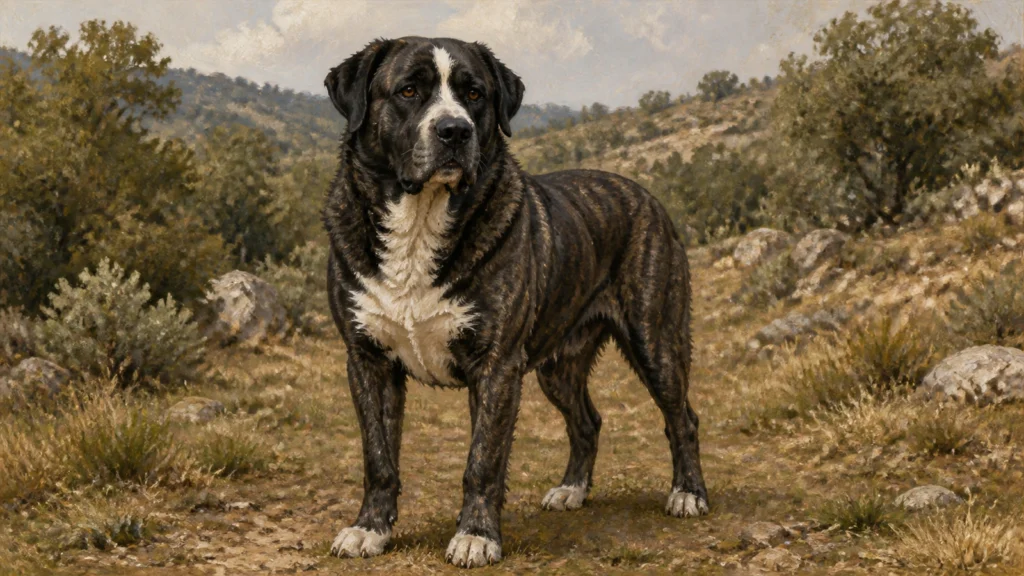
Rafeiro do Alentejo Training Profile
Breed Group
Working Dogs
Country of Origin
Portugal
Breed Size
Giant
AKC Recognition
No
FCI Recognition
Yes, recognized in 1954
Mental stimulation needs
High Needs8 / 10
Trainability
8 / 10
Picky eater
Good Eater7 / 10
Easy to train
Quick Learner8 / 10
Training stubbornness
Cooperative8 / 10
Puppy training
Good8 / 10
Training FAQ
Are Rafeiro do Alentejo easy to train?
Rafeiro do Alentejos are intelligent and capable of learning complex tasks, but their independent nature and stubborn streak require a patient, experienced owner. They respond best to early socialization and consistent, motivational training methods rather than harsh reprimands. While they are cooperative with a firm leader, their historical role as autonomous guardians means they often prefer to think for themselves, making persistence and clear boundaries essential for success.
Easy to train: 8 / 10
Are Rafeiro do Alentejo stubborn to train?
Rafeiro do Alentejos are famously stubborn and independent, often preferring their own agenda over commands. Originally bred as autonomous guardians, they require an experienced, firm leader. Success depends on extreme patience, consistent positive reinforcement, and starting training early to manage their willful and territorial nature effectively.
Training stubbornness: 8 / 10
How do you train a Rafeiro do Alentejo puppy?
Train your Rafeiro do Alentejo puppy using positive reinforcement and early socialization to manage their independent and territorial nature. Establish yourself as a firm, consistent leader while using treats and praise to motivate them. Avoid harsh methods, as they are sensitive to reprimands despite their large size. Because they can be stubborn, start training early and maintain a patient, predictable routine to ensure they grow into well-adjusted companions.
Puppy training: 8 / 10
How difficult is potty training in Rafeiro do Alentejo?
Rafeiro do Alentejos are famously stubborn and independent, often preferring their own agenda over commands. Originally bred as autonomous guardians, they require an experienced, firm leader. Success depends on extreme patience, consistent positive reinforcement, and starting training early to manage their willful and territorial nature effectively.
Potty training difficulty: 8 / 10
How many walks does a Rafeiro do Alentejo need?
Rafeiro do Alentejos require moderate exercise, typically needing at least 60 minutes of daily activity such as a long walk or a jog. While they are generally calm indoors, a consistent routine involving outdoor exercise and space to roam in a securely fenced area is essential to maintain their health and prevent obesity.
Walking need: 6 / 10
What is the best daily routine for a Rafeiro do Alentejo?
A Rafeiro do Alentejo's daily routine should focus on their role as a calm yet vigilant guardian. Provide moderate daily exercise through long, steady walks or time in a securely fenced yard where they can patrol their territory. Feed adults twice daily with high-quality food to prevent bloat, a common concern for large breeds. Essential care includes weekly brushing of their thick coat and early morning training sessions using positive reinforcement to manage their independent nature. Since they are prone to joint issues, ensure they have a comfortable, supportive bed and avoid overexertion during the hottest parts of the day.
Routine need: 5 / 10
Vet Insights
Rafeiro do Alentejos are independent, powerful guardians requiring firm leadership and early socialization. While intelligent, their stubborn nature necessitates patient, positive reinforcement. They require moderate daily exercise, typically sixty minutes of walking or patrolling a fenced yard. Care emphasizes weekly brushing, heat management, and monitoring for bloat or joint issues to maintain their health as vigilant companions.