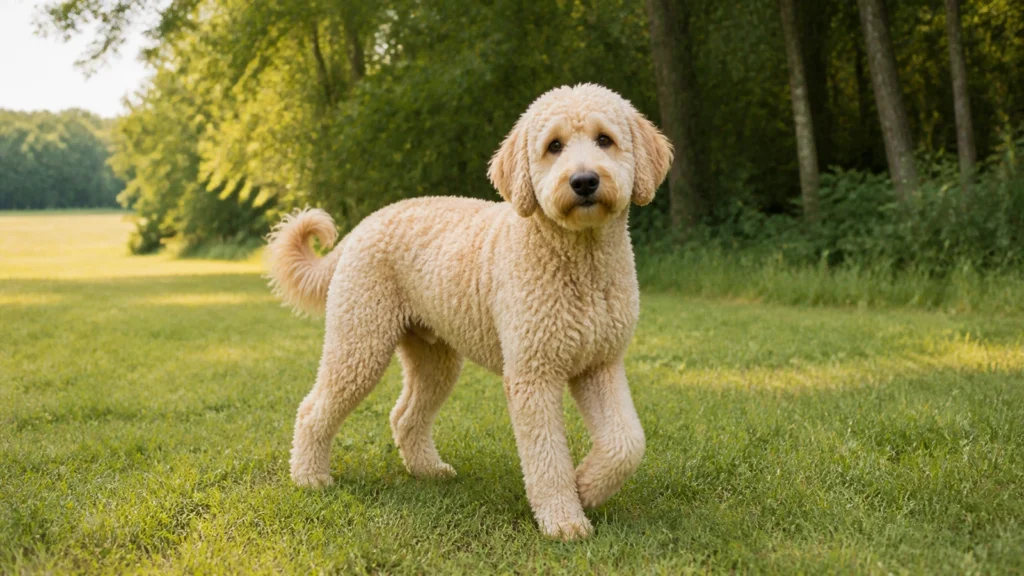
Sheepadoodle Training Profile
Breed Group
Hybrid Dogs
Country of Origin
United States
Breed Size
Large
AKC Recognition
No
FCI Recognition
No
Mental stimulation needs
High Needs8 / 10
Trainability
9 / 10
Picky eater
Average6 / 10
Easy to train
Quick Learner8 / 10
Training stubbornness
Very Cooperative9 / 10
Puppy training
Very Good9 / 10
Training FAQ
Are Sheepadoodle easy to train?
Train Sheepadoodle puppies using positive reinforcement and consistency, as they are intelligent and eager to please. Focus on early socialization to manage their herding instincts and potential aloofness. Incorporate mental stimulation through puzzle toys and short, engaging training sessions to keep this energetic breed focused and well-mannered.
Easy to train: 8 / 10
Are Sheepadoodle stubborn to train?
Sheepadoodles are highly intelligent and generally cooperative, but they are known to have a notable stubborn streak inherited from both the Old English Sheepdog and Poodle. This independent nature can lead to testing boundaries, especially during their adolescent "rebel" phase. To succeed, owners must maintain consistent, firm leadership and use high-value rewards to keep them engaged and prevent them from deciding a task isn't worth their effort.
Training stubbornness: 9 / 10
How do you train a Sheepadoodle puppy?
Train Sheepadoodle puppies using positive reinforcement and consistency, as they are intelligent and eager to please. Focus on early socialization to manage their herding instincts and potential aloofness. Incorporate mental stimulation through puzzle toys and short, engaging training sessions to keep this energetic breed focused and well-mannered.
Puppy training: 9 / 10
How difficult is potty training in Sheepadoodle?
Train Sheepadoodle puppies using positive reinforcement and consistency, as they are intelligent and eager to please. Focus on early socialization to manage their herding instincts and potential aloofness. Incorporate mental stimulation through puzzle toys and short, engaging training sessions to keep this energetic breed focused and well-mannered.
Potty training difficulty: 8 / 10
How many walks does a Sheepadoodle need?
Sheepadoodles require significant physical activity, typically needing two moderate walks or jogs daily totaling 60 to 90 minutes. Beyond walks, they thrive on play sessions like fetch, hiking, or swimming to burn off their high energy and satisfy their athletic nature. Consistent exercise is essential to prevent restlessness and boredom-driven behaviors like barking or chewing.
Walking need: 1 / 10
What is the best daily routine for a Sheepadoodle?
A Sheepadoodle's daily routine should focus on balancing their high energy with consistent mental engagement. Provide 60 to 90 minutes of daily activity, ideally split into two brisk walks or jogs supplemented by play sessions like fetch, swimming, or hiking. Feed adult Sheepadoodles twice daily and puppies three to four times to prevent overeating and maintain a healthy weight. Essential daily care includes brushing three to four times a week to prevent matting, along with short, engaging training sessions using positive reinforcement to manage their herding instincts and keep their sharp minds occupied.
Routine need: 5 / 10
Vet Insights
Sheepadoodles are highly intelligent and cooperative companions, making them exceptionally easy to train. They thrive on positive reinforcement but require consistent leadership to manage an occasional stubborn streak and herding instincts. This active breed needs 60 to 90 minutes of daily exercise and regular mental stimulation. Their care routine includes frequent brushing and structured socialization.