Bloodhound Health and Costs
Breed Group
Hound Dogs
Country of Origin
Belgium
Breed Size
Large
AKC Recognition
Yes, recognized in 1885
FCI Recognition
Yes, recognized in 1960
Rarity
Average2 / 10
Purchase cost
Affordable to Moderate4 / 10
Life expectancy
Moderate Lifespan5 / 10
Health
Moderate health concerns4 / 10
Health problem risk
High health burden7 / 10
Maintenance cost
Moderate upkeep cost4 / 10
A Veterinarian's Guide
Bloodhound Health Problems and Costs
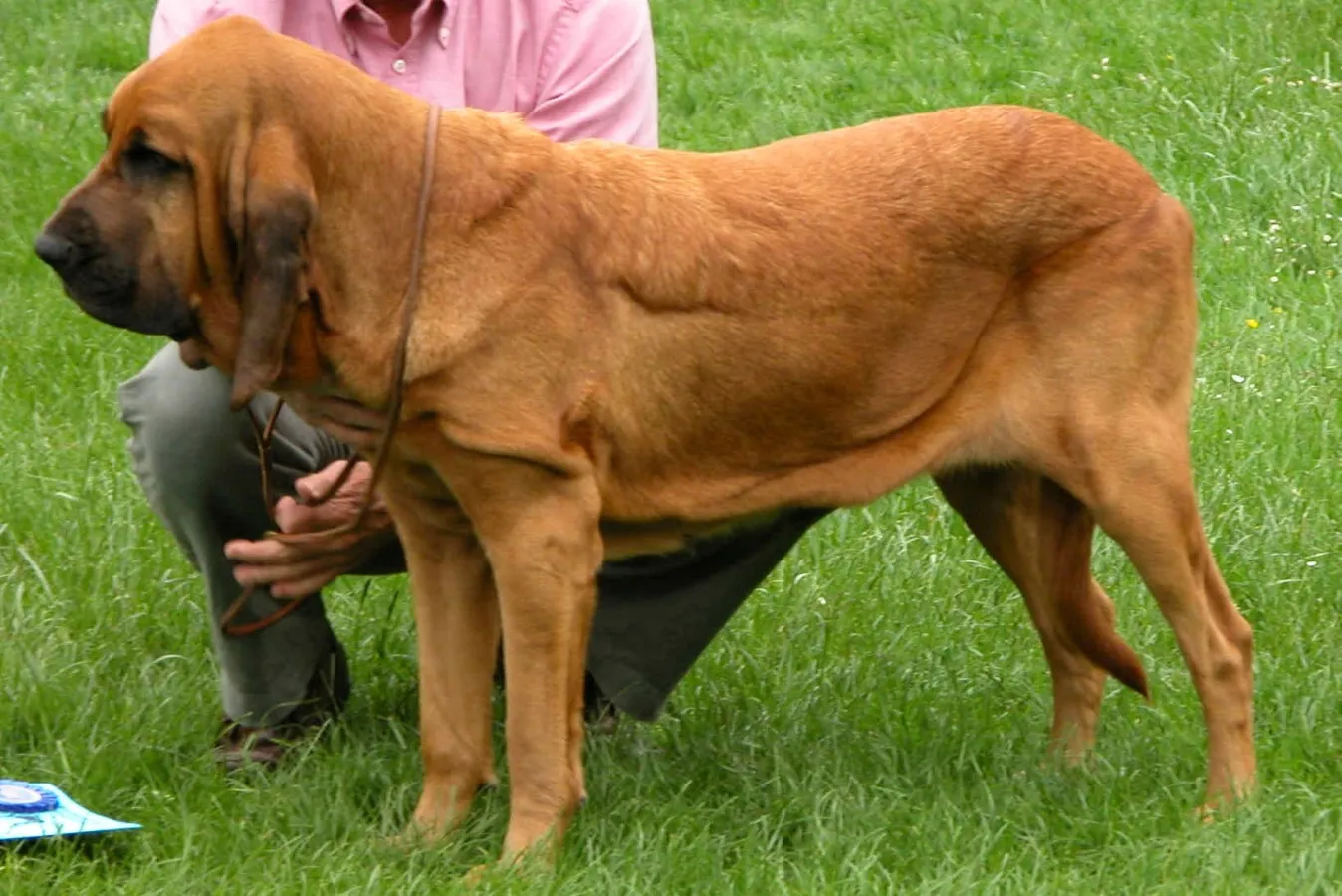
The Bloodhound is a large, gentle scent hound with loose skin, long ears and a deep chest. Most of the breed's health picture follows from that build: a stomach that can twist, skin folds that trap moisture, ears that hold in debris, and drooping eyelids. Knowing these patterns early makes daily care and vet visits much easier to plan.
In this guide
Why Is Bloat Such a Serious Risk for Bloodhounds?
Bloat can be fatal within hours. A dog with a swollen belly, unproductive retching and restlessness needs an emergency veterinarian right away, never a night of watching at home.
Gastric dilatation-volvulus, usually called bloat, is a condition in which the stomach fills with gas and can then twist. The word volvulus comes from the Latin volvere, "to twist." The American Kennel Club describes bloat as a medical and surgical emergency that most often affects deep-chested dogs, and a twisted stomach can send a dog into shock within an hour or two.
- 01
Swollen belly
The abdomen looks enlarged or feels tight.
- 02
Retching with nothing coming up
Repeated attempts to vomit that produce little or nothing.
- 03
Drooling and restlessness
Pacing, excess drool, or being unable to settle.
- 04
Pain or whining
Your dog cries out or flinches when the belly is touched.
Many veterinarians discuss a preventive gastropexy for deep-chested breeds. In this procedure the stomach is tacked to the body wall so it cannot twist, and it is often planned alongside a spay or neuter. Raising it at the first puppy visit gives you time to decide calmly rather than in a crisis.
Why Do Bloodhounds Get Skin Fold Infections?
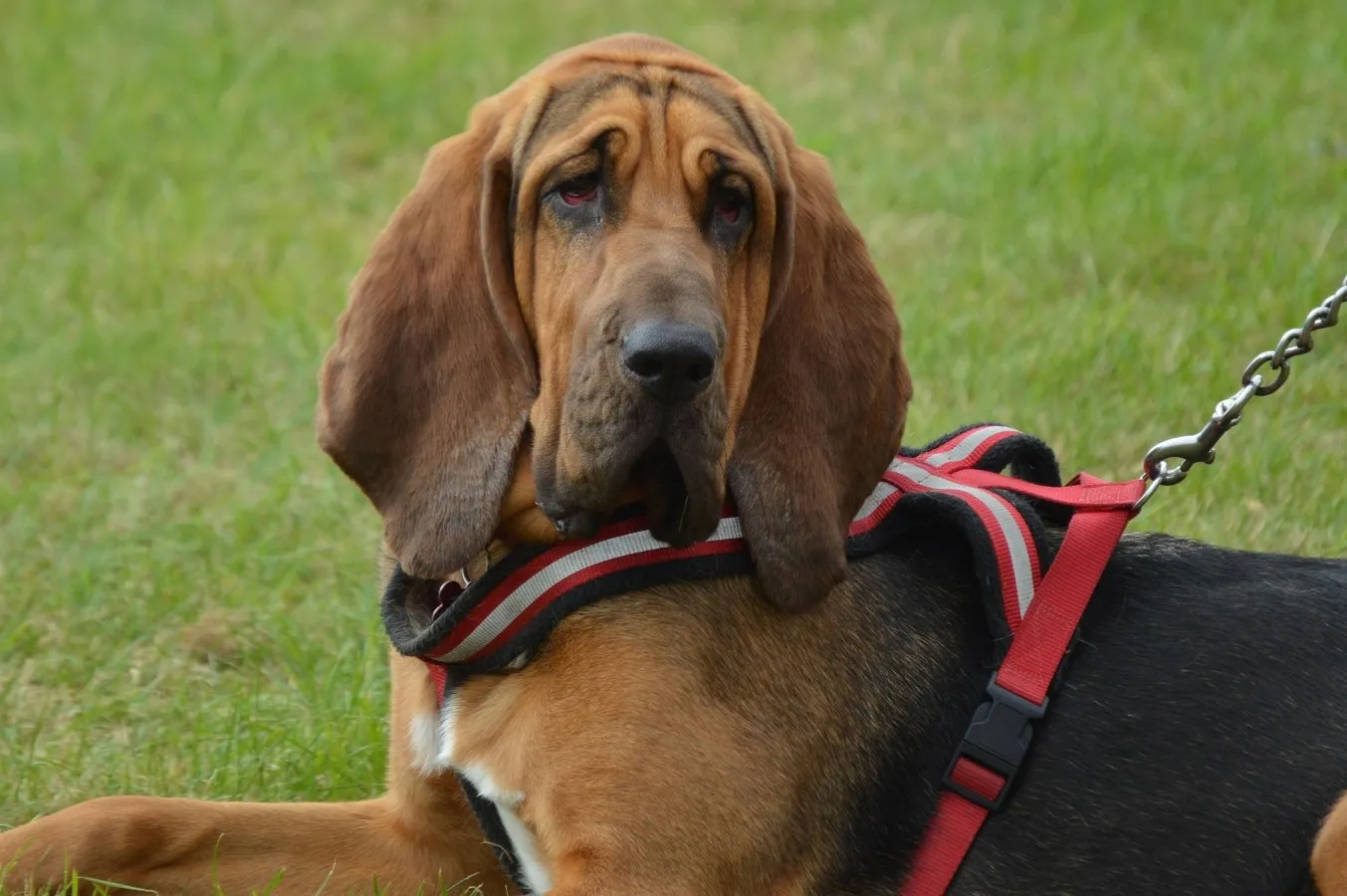
The deep folds on the face and neck trap moisture, drool and skin oils, which makes a warm, damp place where bacteria and yeast can overgrow. The medical term is skin fold dermatitis, from the Greek derma, "skin," and -itis, "inflammation." Typical signs are odor, redness, and a moist or crusty discharge between the folds.
Gently wiping the folds with a cleanser your veterinarian recommends, then drying them thoroughly, is the usual routine. How often depends on your dog and the season, so ask your veterinarian what schedule suits yours. Persistent redness or a strong smell is a reason to book a visit rather than keep wiping.
What Should Owners Know About Bloodhound Eyes and Ears?
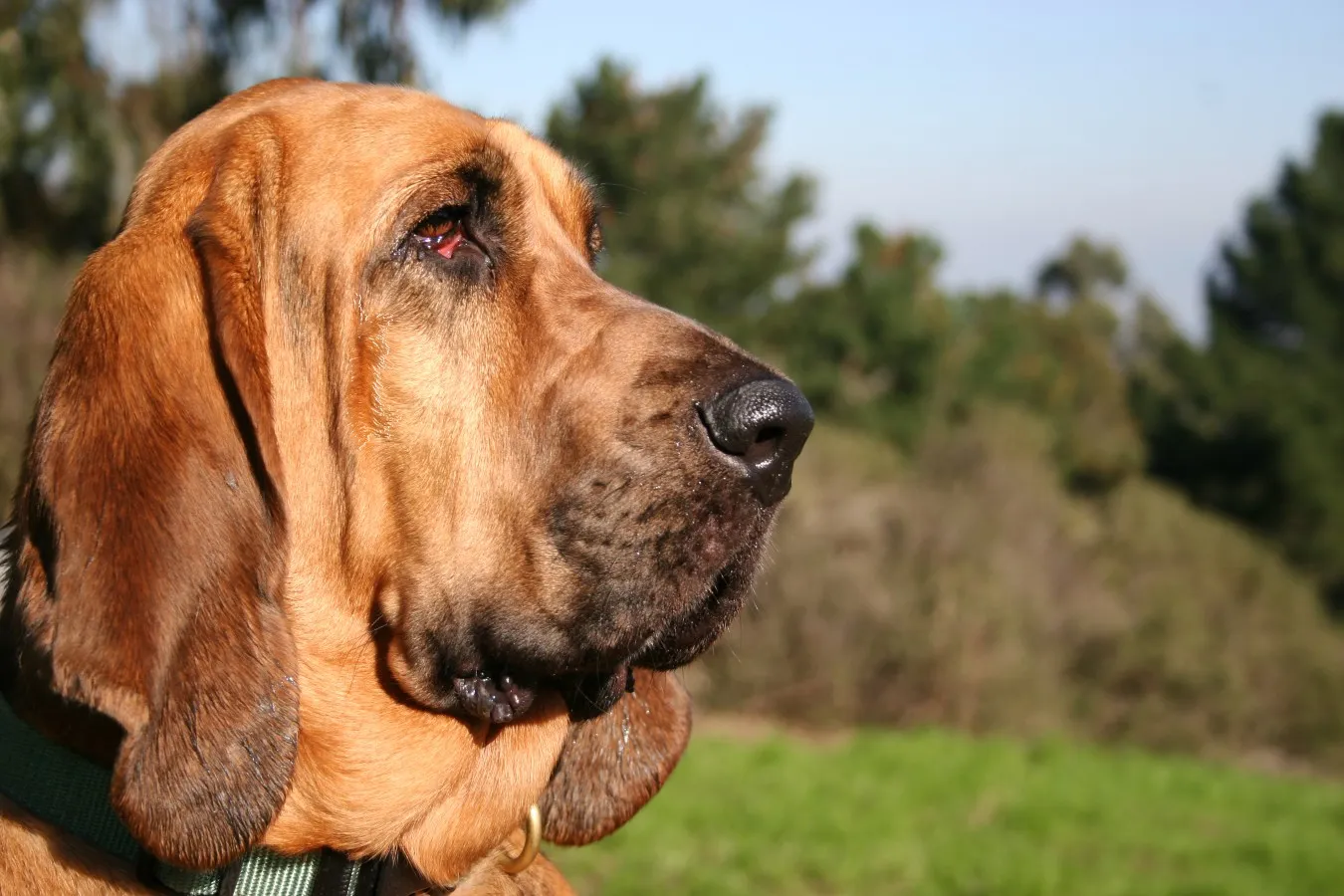
Loose eyelids are part of the Bloodhound look, but they can cause trouble. Ectropion, from the Greek ek-, "out," and trepein, "to turn," is a lower eyelid that sags outward. Entropion is the opposite, an eyelid that rolls inward so the lashes and hair rub the surface of the eye. VCA Animal Hospitals lists the Bloodhound among the breeds with entropion, which is described as hereditary, and notes that squinting, holding the eye shut and heavy tearing are common signs. Mild eyelid sag is often just monitored, while entropion that irritates the cornea usually needs surgery.
The long, heavy ears are the other weak point. Drooping ears limit airflow into the ear canal, and VCA notes that dogs with drooping ears are more prone to ear infections. Head shaking, scratching, redness, a bad odor and discharge are the signs to watch for. Checking the ears weekly and drying them after baths or swims helps you catch trouble early, and a veterinarian should diagnose the cause before any drops are used.
Are Bloodhounds Prone to Joint Problems?
Hip and elbow dysplasia means the joint did not form or fit together properly, which can lead to early arthritis. Large breeds such as the Bloodhound can be affected. Signs include stiffness after rest, reluctance to jump, and a bunny-hopping gait. Screening x-rays from about age two show how the joints look before limping becomes obvious. Keeping your dog lean and avoiding hard, repetitive jumping while the bones are still growing both reduce long-term wear.
What Do Bloodhound Health Costs Look Like?
| Condition or Need | Typical Cost Range | Notes |
|---|---|---|
| Routine care for a healthy adult | $80 to $150/month | Large-breed food, fold cleanser, regular vet visits |
| Routine care with pet insurance | $130 to $220/month | Premiums vary by age and location |
| Emergency bloat surgery | $3,000 to $7,500 | Higher with complications or after-hours fees |
Figures vary by region and clinic, so ask your veterinarian for an estimate. Because bloat surgery is the largest bill most Bloodhound owners could face, pet insurance or a dedicated emergency fund is worth setting up while your dog is young and healthy.
Questions to Ask a Breeder Before Buying a Puppy
The AKC publishes health testing requirements for the hound group, and a good breeder can tell you which screenings the breed club recommends. Ask to see current results for both parents, including hip and elbow evaluations. Ask whether any relatives have had bloat, and whether the lines have had eyelid or chronic ear and skin problems. A breeder who answers openly is usually well informed about the breed.
Daily Life With a Bloodhound
Bloodhounds are scent-driven and independent, so short, rewarding sessions work better than long drills, and the training guide covers how to keep a nose-led dog engaged. The short coat is simple, but the folds and ears set the routine, and the grooming guide walks through it. The personality profile explains the gentle, easygoing side that makes the breed such a loyal companion. Feeding smaller meals and avoiding hard exercise right after eating are common-sense habits for a deep-chested dog, so ask your veterinarian what they advise.
Keeping Your Bloodhound Healthy for the Long Run
Know the bloat signs, clean and dry the folds and ears on a regular schedule, and keep your dog lean. Plan hip and elbow screening around age two, and report squinting, tearing or ear discomfort early. Bloodhounds typically live 10 to 12 years, so steady routines pay off for many years.
Final Thoughts From a Veterinarian
Bloodhounds usually live 10 to 12 years and do best when owners learn the bloat warning signs, keep folds and ears clean, and plan for emergencies early. Most problems are manageable when caught promptly. Your veterinarian can tailor screening and prevention to your dog.
Health & Costs FAQ
How much do Bloodhound cost?
A Bloodhound puppy typically costs between $600 and $1,200 from a reputable breeder, though champion bloodlines can reach $2,500. Adoption is a more affordable option, ranging from $50 to $300. Prospective owners should budget an additional $200 to $500 for initial supplies and essential veterinary care.
Purchase cost: 4 / 10
How long do Bloodhound live?
Bloodhounds typically live 10 to 12 years. Routine veterinary checkups, a lean body weight, regular fold and ear care, and knowing the signs of bloat all support a long, comfortable life.
Life expectancy: 5 / 10
Are Bloodhound healthy dogs?
Bloodhounds have moderate health concerns tied to their build. The main risks are bloat, which is an emergency, skin fold dermatitis, ear infections, eyelid problems such as entropion, and hip and elbow dysplasia. Routine care and early screening keep most of these manageable.
Health: 4 / 10
What health problems do Bloodhound have?
Bloodhounds are prone to bloat because of their deep chest, along with skin fold dermatitis, ear infections, eyelid problems such as ectropion and entropion, and hip and elbow dysplasia. Regular cleaning of the skin folds and ears, plus a plan for bloat, helps catch problems early.
Health problem risk: 7 / 10
Are Bloodhound expensive to maintain?
Bloodhounds have moderate maintenance costs. Their large size means a bigger food budget, and the skin folds and long ears need regular cleaning to prevent infections. The largest expense to plan for is emergency bloat surgery.
Maintenance cost: 4 / 10
How much does it cost to own a Bloodhound per month?
Routine care for a healthy adult typically runs $80 to $150 a month, or about $130 to $220 a month with pet insurance included.
Monthly ownership cost: 4 / 10
How much does pet insurance cost for a Bloodhound?
Pet insurance for a Bloodhound typically costs between $50 and $90 per month. Because bloat surgery is a major expense, insurance is worth considering while your dog is young. Costs vary with your dog's age, location, and the coverage limits you select.
Pet insurance cost: 5 / 10
Will homeowners insurance cover a Bloodhound?
Yes, most homeowners insurance policies will cover a Bloodhound. They are generally not included on restricted breed lists. However, since they are large dogs, it is important to notify your provider and ensure your liability limits are sufficient to cover potential accidents or injuries.
Homeowners insurance difficulty: 9 / 10
Are Bloodhound on insurance restricted breed lists?
No, Bloodhounds are not typically found on insurance restricted-breed lists. Unlike breeds perceived as higher liability risks, Bloodhounds are generally viewed as gentle, docile companions. However, you should always disclose your pet to your insurance provider to ensure your liability coverage remains valid for your large dog.
Insurance restriction risk: 2 / 10
Can you get renters insurance with a Bloodhound?
Yes, you can typically get renters insurance with a Bloodhound. They are rarely included on restricted breed lists as they are not classified as aggressive. However, always disclose your pet to your insurer to ensure your liability coverage remains valid and covers potential incidents.
Renters insurance difficulty: 8 / 10