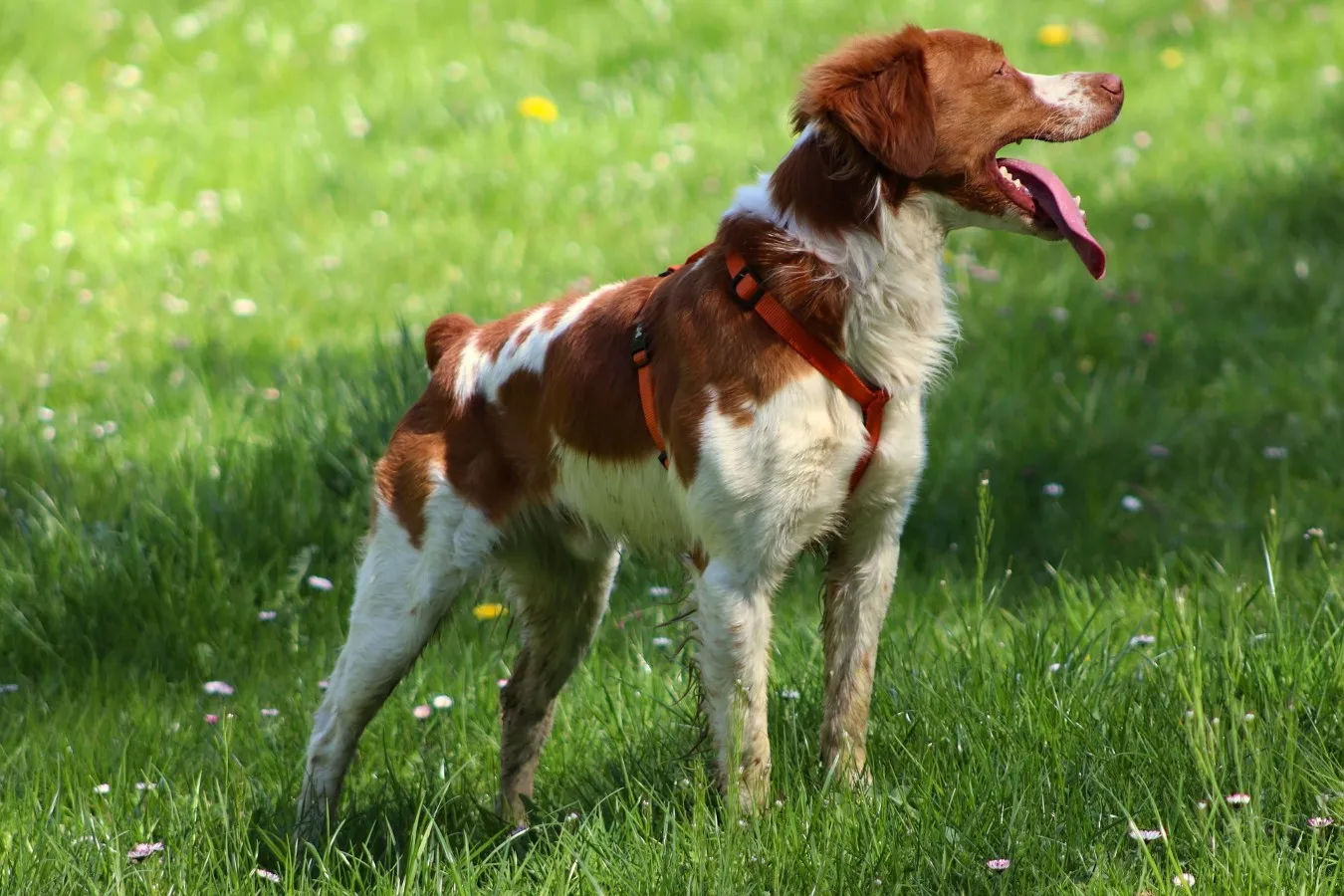
Brittany - MAIN HUB
BREED GROUP
Sporting Dogs
Country of origin
France
BREED SIZE
Medium
BREED HEIGHT
18 -
21 IN
46 -
53 cm
BREED WEIGHT
30 -
40 LB
14 -
18 KG
WHAT YOU NEED TO KNOW
american kennel club (AKC) recognition
Yes
Breed was recognized in 1934.

International Canine Federation (FCI) recognition
Yes
Breed was recognized in 1954.

WHAT DO OWNERS WANT TO KNOW?
Are Brittanys good family dogs?
Excellent
10 out of 10
Brittanys are excellent companions for active families because of their bright, fun-loving, and sensitive temperament. They are generally good with children and form strong bonds, though they require significant daily exercise and mental stimulation to stay happy and well-behaved.
Are Brittanys good with kids?
Excellent
10 out of 10
Brittanys are excellent companions for children due to their bright, fun-loving, and sensitive nature. Their playful energy makes them wonderful playmates for active kids, although supervision is recommended around younger children to manage their high stamina and prevent accidental knocks during enthusiastic play.
Are Brittanys good dogs for first time owners?
Recommended
10 out of 10
Brittanys are recommended for active first-time owners because they are highly intelligent and eager to please, making them relatively easy to train. However, novices must be prepared for their intense energy levels and the significant commitment required for daily exercise and mental stimulation. Their sensitive nature also means they thrive best with owners who use gentle, positive reinforcement training methods.
Are Brittanys good apartment dogs?
Not Recommended
1 out of 10
Brittanys are not recommended for apartment living due to their extremely high energy levels and significant exercise requirements. While they are medium-sized and can physically fit in smaller spaces, they possess immense stamina and a strong prey drive that typically requires 1.5 to 2 hours of daily vigorous activity. Without access to a yard or frequent outdoor excursions, they are prone to destructive boredom and separation anxiety, making them better suited for active homes with ample outdoor space.
Do Brittanys need a yard?
Strictly Required
10 out of 10
A fenced yard is essential for a Brittany to accommodate their extremely high energy levels and need for nearly two hours of vigorous daily exercise. A secure outdoor space provides these athletic dogs with a safe area to run and play, helping to prevent the restlessness and destructive behaviors that often occur when their physical and mental stimulation needs are not met.
Can Brittanys be left at home alone?
Not Recommended
1 out of 10
Brittanys are highly social dogs that crave constant companionship and are particularly prone to separation anxiety. While they can tolerate short periods of solitude with training, leaving them alone for extended hours often leads to destructive behaviors or excessive barking. They thrive best in active households where they can remain close to their families and receive regular interaction.
Do Brittanys tolerate cats well?
Good
6 out of 10
Brittanys generally coexist well with cats, especially when raised together from a young age or introduced as puppies. While their strong hunting instincts and high prey drive can lead to chasing behavior, they are not naturally aggressive and can be trained to respect feline housemates. Successful integration requires patient socialization, obedience training for commands like "leave it," and providing cats with safe, high retreats to ensure a harmonious multi-pet household.
Are Brittanys known to be aggressive?
Very Gentle
10 out of 10
Brittanys are not naturally aggressive; they are typically friendly, upbeat, and sensitive companions. While they may bark to alert owners of strangers, they are often submissive rather than protective and generally coexist well with other dogs and people. Early socialization and positive reinforcement training are essential to prevent potential timidity and ensure they remain confident, well-behaved family members.
Do Brittanys have a lot of energy?
Hyperactive
10 out of 10
Brittanys are exceptionally high-energy dogs that require significant daily exercise and mental stimulation to thrive. Originally bred as tireless hunting partners, they possess immense stamina and need 1.5 to 2 hours of vigorous activity, such as running, hiking, or dog sports, to prevent destructive boredom and restlessness.
How much exercise do Brittanys need?
90–120 min a day
9 out of 10
Brittanys are high-energy athletes that require extensive daily activity, typically needing 1.5 to 2 hours of exercise to remain healthy and content. This should include a variety of vigorous activities such as brisk walks, hiking, running, or dog sports like agility and field trials. Providing both physical outlets and mental stimulation through scent games and training is essential to prevent destructive behavior caused by boredom.
Do Brittanys tolerate hot weather well?
Fair
4 out of 10
Brittanys can tolerate warm weather but are susceptible to overheating due to their high energy levels and dense coats. Owners should limit vigorous activity to the cooler early morning or evening hours and ensure constant access to shade and fresh water. It is important to watch for signs of heatstroke and protect their paws from hot pavement.
Are Brittanys good with cold weather?
Fair
4 out of 10
Brittanys can tolerate warm weather but are susceptible to overheating due to their high energy levels and dense coats. Owners should limit vigorous activity to the cooler early morning or evening hours and ensure constant access to shade and fresh water. It is important to watch for signs of heatstroke and protect their paws from hot pavement.
Are Brittanys sometimes banned from rentals?
Rarely Banned
8 out of 10
Brittanys are generally not subject to apartment breed bans because they are not typically classified as aggressive. However, their high energy levels and significant exercise requirements can be a challenge for apartment living, often leading landlords to prefer smaller or lower-energy breeds. Their size may also exceed some complexes' specific weight limits. Always verify individual landlord policies and weight restrictions before applying.



WHAT DO OWNERS WANT TO KNOW?