Pekingese Health and Costs
Breed Group
Toy Dogs
Country of Origin
China
Breed Size
Toy
AKC Recognition
Yes, recognized in 1906
FCI Recognition
Yes, recognized in 1966
Rarity
Common3 / 10
Purchase cost
Moderate to Expensive6 / 10
Life expectancy
Long Lifespan8 / 10
Health
Notable health concerns3 / 10
Health problem risk
High health risk7 / 10
Maintenance cost
Moderate upkeep cost4 / 10
A Veterinarian's Guide
Pekingese Health Problems and Costs
The Pekingese is a compact toy companion of regal bearing, created for the ruling classes of ancient China, and it is famously loyal. Its flat face and prominent eyes come with real medical tradeoffs, though. Most of the breed's health concerns trace back to that anatomy: breathing, heat, the eyes, the skin folds, and crowded teeth. Knowing them before you bring a puppy home, or while you already share your life with one, makes the daily care and the vet visits much easier to plan.
In this guide

Why Is Noisy Breathing Not Just a Quirk in This Breed?
Brachycephalic airway syndrome sits at the center of most of the breed's problems. Brachycephalic comes from the Greek brachys, "short," and kephale, "head," describing the shortened skull. The American College of Veterinary Surgeons describes brachycephalic syndrome as a combination of an elongated soft palate (the tissue at the back of the roof of the mouth, which is too long and pokes into the airway), narrowed nostrils, and tissue near the voice box that is drawn into the airway. Together they make every breath more effortful.
Snoring, snorting, and noisy breathing are so common in Pekingese that many owners assume it is just how the breed sounds. Loud breathing, retching or gagging, tiring quickly, and bluish gums are signs of restricted airflow rather than harmless quirks. Mildly affected dogs may be managed with reduced exercise and heat avoidance, while surgery to widen the nostrils and shorten the soft palate is suggested for dogs with more severe breathing difficulty.
How Do Heat and Exercise Affect a Pekingese?
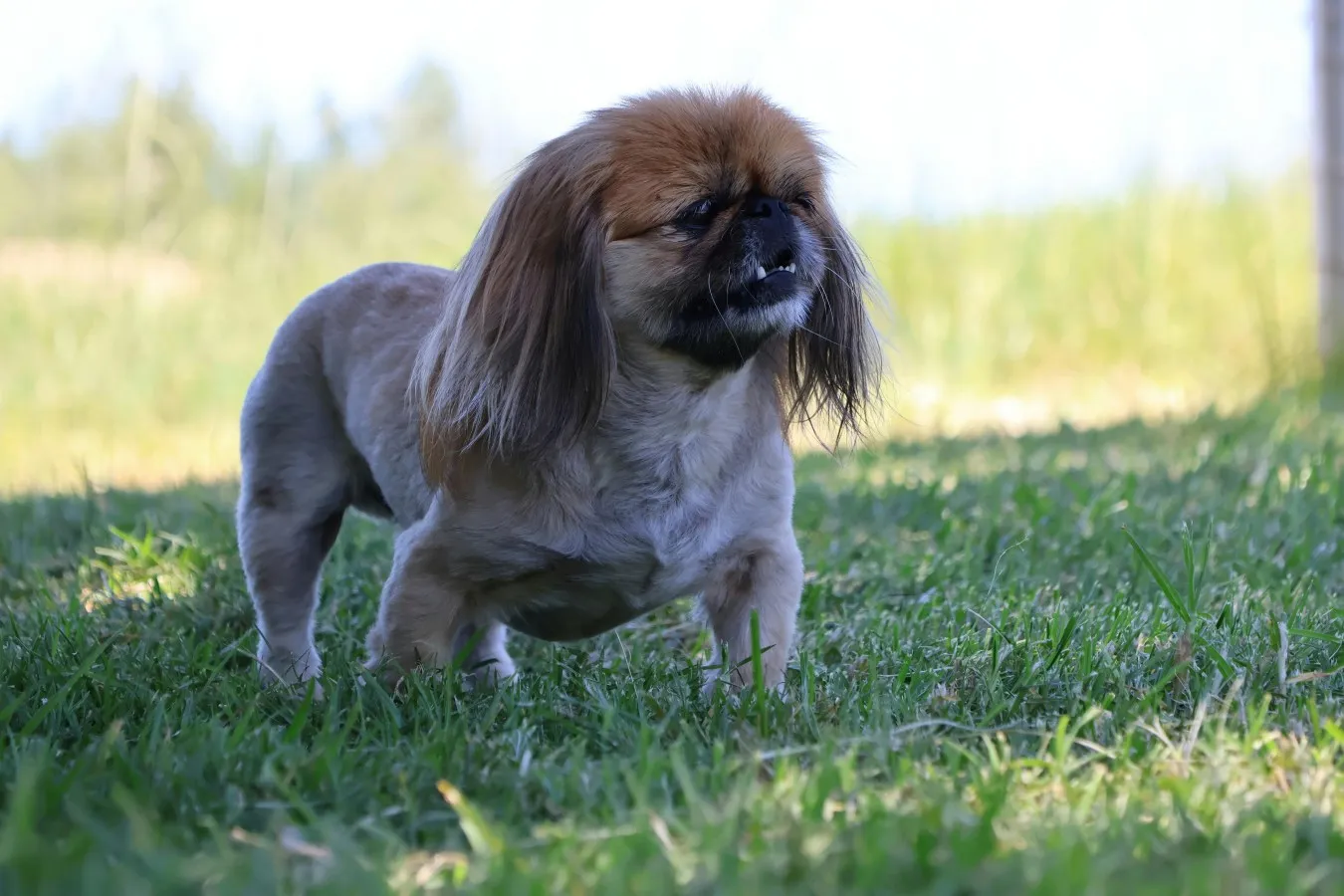
Panting is a dog's main way to cool down, and it works less well through a narrowed airway, so short-faced dogs overheat more easily. Short, gentle walks in the cooler parts of the day suit the breed far better than long runs. A harness rather than a neck collar also avoids pressure on an already compromised airway, and a lean body weight matters because extra weight makes breathing harder. Indoor play is a good substitute on hot or humid days, and a Pekingese should never be left in a parked car.
- 01
Blue or purple gums
Gums or tongue that look bluish or purple.
- 02
Struggling to breathe
Extreme distress, heavy gagging, or gasping at rest.
- 03
Cannot cool down
Heavy panting that does not settle after heat exposure.
- 04
Collapse
The dog becomes weak or collapses.
Why Are Pekingese Prone to Eye Problems?
A squinting, red, watery, or cloudy eye in a Pekingese should be examined promptly, ideally the same day, rather than watched for improvement.
Flat-faced dogs have prominent, shallow eye sockets that leave little protection against bumps, dust, and debris, so they face a higher risk of corneal ulcers, which are scratches or erosions on the surface of the eye, and abrasions. Dry eye, medically keratoconjunctivitis sicca, is also described in the breed and usually leaves the eyes painful and red. Progressive retinal atrophy, an inherited breakdown of the retina's light-sensing cells, is described as well. Retina comes from the Latin rete, "net." Wiping the eyes daily and keeping facial folds clean helps, since trapped moisture and debris irritate the area.

How Should Skin Folds and Teeth Be Cared For?
Skin fold dermatitis means yeast and bacterial infection in the facial folds, which stay warm and moist. Regular cleaning with a veterinarian-approved cleanser is the best prevention, and keeping fur around the eyes and folds trimmed helps you spot early redness. Redness, odor, or discharge deserves a vet visit.
Dental disease is one of the most common conditions in small breeds such as the Pekingese. A shortened jaw leaves little room for teeth, and crowding can make plaque harder to control. Daily tooth brushing and routine professional cleanings are recommended, and your veterinarian can tell you how often your dog needs them.
What Does Managing a Pekingese's Health Actually Cost?
| Condition or Need | Typical Cost Range | Notes |
|---|---|---|
| Routine annual wellness exam | $150 to $300 | Eye checks may be needed more often |
| Corneal ulcer treatment | $200 to $800 | Higher if surgery is needed |
| Airway surgery (nostrils and soft palate) | $2,000 to $5,000 | For dogs with more severe breathing difficulty |
| Dental cleaning under anesthesia | $400 to $900 | May be needed regularly because of crowding |
| Skin fold dermatitis care | $100 to $400/year | Cleansers and occasional vet visits |
Questions to Ask a Breeder Before Buying a Puppy
The AKC's toy group health testing page lists no recommended health tests for the Pekingese, so the conversation matters even more. Ask how the parents breathe at rest and after exercise, whether either has needed airway or eye surgery, and whether any have had corneal ulcers or dry eye. Ask to see the puppies' parents, and look for open nostrils and a muzzle long enough to breathe through comfortably. A breeder who answers openly is usually well informed about the breed's other needs too.
Daily Life With a Pekingese
Pekingese are known for undying loyalty and a dignified, sometimes independent attitude, which the personality profile explains. They need only moderate exercise, and calm, patient training with a harness suits them better than long sessions in the heat.
The long double coat needs real upkeep: PetMD suggests brushing at least an hour a week and professional grooming every six to eight weeks, plus daily eye wiping and fold cleaning. A short summer trim can make heat easier to manage.

Keeping Your Pekingese Healthy for the Long Run
Pekingese typically live 12 to 14 years. Keep your dog lean, avoid heat, and do not dismiss noisy breathing or a red eye as normal. Airway function can become more limiting as a dog ages, so senior Pekingese often need even more caution around heat and exertion. Pet insurance is worth pricing while your dog is young and healthy.
Final Thoughts From a Veterinarian
Pekingese are loyal companions that usually live 12 to 14 years, but their flat face needs ongoing care. Treat noisy breathing as a sign to ask about, protect them from heat, and have red or squinting eyes seen promptly. Your veterinarian can tailor a plan.
Health & Costs FAQ
How much do Pekingese cost?
Pekingese puppies typically cost between $700 and $3,000 from reputable breeders, though show-quality or rare lineages can exceed $5,000. Adoption fees range from $200 to $400. Owners should also budget $150 to $400 for initial supplies, plus ongoing costs for grooming and breed-specific veterinary care.
Purchase cost: 6 / 10
How long do Pekingese live?
Pekingese typically live 12 to 14 years, a good lifespan for a flat-faced breed. A lean weight, heat avoidance, daily eye and skin fold care, dental care, and routine veterinary checkups help them stay comfortable into their senior years.
Life expectancy: 8 / 10
Are Pekingese healthy dogs?
Pekingese face notable health challenges because of their flat faces. This brachycephalic structure can cause breathing difficulty and heat sensitivity, and the breed is also prone to eye problems, skin fold infections, and dental disease. Many live 12 to 14 years with attentive care, including a lean weight and regular veterinary checkups.
Health: 3 / 10
What health problems do Pekingese have?
Pekingese are prone to brachycephalic airway syndrome (BOAS), which causes breathing difficulty and heat sensitivity. They also face eye conditions such as corneal ulcers and dry eye, skin fold dermatitis, and dental disease from crowded teeth. Regular veterinary monitoring of breathing, eyes, skin folds, and teeth is essential.
Health problem risk: 7 / 10
Are Pekingese expensive to maintain?
Pekingese have moderate upkeep costs. The long double coat needs brushing at least an hour a week and professional grooming about every six to eight weeks, and the eyes and facial folds need daily cleaning. Owners should also set aside money for breed-related veterinary care such as eye and dental treatment.
Maintenance cost: 4 / 10
How much does it cost to own a Pekingese per month?
Expect to spend about $100 to $200 per month to own a Pekingese. This typically covers small-breed food, professional grooming every six to eight weeks, and routine veterinary care. Pet insurance and breed-related care such as eye, dental, or airway treatment can raise the total.
Monthly ownership cost: 4 / 10
How much does pet insurance cost for a Pekingese?
Pet insurance for a Pekingese commonly costs about $64 to $110 per month, and premiums can rise as the dog ages. Because airway, eye, and dental conditions can be costly, it is worth pricing a policy while your dog is young and healthy.
Pet insurance cost: 6 / 10
Will homeowners insurance cover a Pekingese?
Yes, most homeowners insurance policies cover Pekingese, since they are small toy dogs not typically found on restricted breed lists. Always disclose your dog to your insurer to ensure proper liability coverage.
Homeowners insurance difficulty: 9 / 10
Are Pekingese on insurance restricted breed lists?
Pekingese are generally not included on standard insurance restricted-breed lists. As small toy dogs they are not usually viewed as high-liability breeds, but it is always wise to disclose your dog and confirm the policy with your provider.
Insurance restriction risk: 2 / 10
Can you get renters insurance with a Pekingese?
Yes, you can typically get renters insurance with a Pekingese. As a small toy breed, they are rarely included on restricted lists. Their compact size suits apartments, but always disclose your dog to your insurer and review your lease for pet requirements.
Renters insurance difficulty: 8 / 10