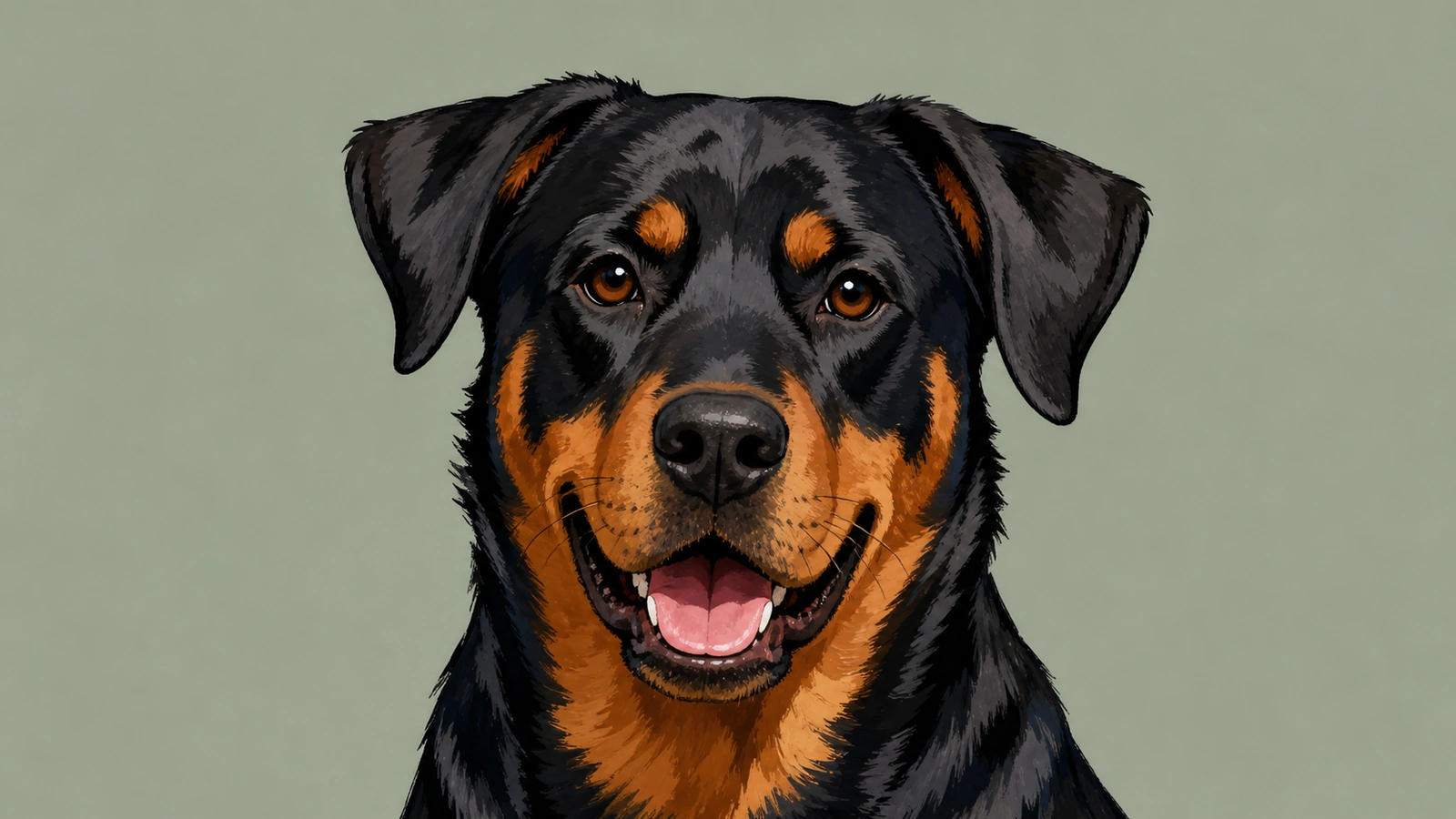
Rotterman - MAIN HUB
BREED GROUP
Hybrid Dogs
Country of origin
United States
BREED SIZE
Large
BREED HEIGHT
22 -
26 IN
56 -
66 cm
BREED WEIGHT
65 -
72 LB
29 -
33 KG
WHAT YOU NEED TO KNOW
american kennel club (AKC) recognition
No
Breed was recognized in 0.

International Canine Federation (FCI) recognition
No
Breed was recognized in 0.

WHAT DO OWNERS WANT TO KNOW?
Are Rottermans good family dogs?
Excellent
3 out of 10
The Rotterman is an excellent family dog for active, experienced households, as they are affectionate shadows that bond deeply and provide unwavering devotion. While they are calm and gentle indoors, they require significant daily exercise and consistent leadership to manage their high energy and protective instincts effectively.

Are Rottermans good with kids?
Fair
3 out of 10
Rottermans are loyal and affectionate with their families, but their large size and high energy can be overwhelming for smaller children. While they can coexist peacefully with kids, their significant strength and protective nature require consistent supervision and early socialization. This powerful hybrid is generally better suited for active families with older children who can respect the dog's boundaries.
Are Rottermans good dogs for first time owners?
Fair
3 out of 10
Rottermans are generally not recommended for first-time owners due to their powerful size, dominant nature, and high energy requirements. They thrive with experienced handlers who can provide the firm, consistent leadership and early socialization necessary to manage their strong protective instincts. While deeply loyal, their need for significant daily exercise and mental stimulation can be overwhelming for those new to dog ownership.
Are Rottermans good apartment dogs?
Fair
3 out of 10
Rottermans are generally not recommended for apartment living due to their large size and high energy requirements. While they are calm and gentle indoors, they thrive best in homes with more space and a securely fenced yard to accommodate their need for vigorous daily exercise and mental stimulation. Owners in smaller living spaces must be exceptionally dedicated to providing multiple long walks and intense play sessions to prevent boredom and destructive behaviors.
Do Rottermans need a yard?
High
3 out of 10
A securely fenced yard is highly recommended for a Rotterman due to their large size, high energy levels, and need for vigorous daily activity. While they can adapt to various living situations, having a safe outdoor space for training, agility, and play is ideal for managing their physical and mental stimulation needs.
Can Rottermans be left at home alone?
Good
7 out of 10
Rottermans are highly social "Velcro dogs" that form deep bonds with their owners and may develop separation anxiety if left alone for extended periods. While they can typically tolerate being alone for 4 to 6 hours with proper exercise and mental stimulation, they thrive in households where they can remain close to their families and avoid the frustration or destructive behaviors often caused by prolonged isolation.
Do Rottermans tolerate cats well?
Good
6 out of 10
Rottermans can coexist peacefully with cats, especially when raised together from a young age and properly socialized. However, due to the potential prey drive and protective instincts inherited from their parent breeds, the Rottweiler and Doberman Pinscher, introductions should be slow and supervised. Consistent training helps ensure they maintain a respectful and harmonious relationship with feline housemates.
Are Rottermans known to be aggressive?
Easygoing
7 out of 10
Rottermans are not naturally aggressive but possess strong protective instincts inherited from their Rottweiler and Doberman Pinscher parents. While they are typically calm, affectionate, and gentle with their families, they are naturally wary of strangers and will act decisively if they perceive a threat. Proper socialization and consistent, firm training from a young age are essential to ensure their protective nature is manageable and that they remain well-behaved companions.
Do Rottermans have a lot of energy?
Active
6 out of 10
Rottermans are high-energy, athletic dogs that require significant daily physical and mental stimulation to thrive. They typically need about 90 minutes of vigorous exercise, such as agility training or long runs, to prevent boredom and destructive behaviors. This powerful hybrid is best suited for active owners who can provide a structured outlet for their considerable stamina and intelligence.
How much exercise do Rottermans need?
~90 min a day
6 out of 10
Rottermans are high-energy, athletic hybrids that require approximately 90 minutes of vigorous daily exercise to maintain their physical and mental well-being. This should include a combination of long walks, runs, and intensive activities like agility training or scent work to satisfy their stamina and intelligence. Consistent physical outlets are essential to prevent boredom and destructive behaviors in this powerful, working-oriented breed.
Do Rottermans tolerate hot weather well?
Average
5 out of 10
Rottermans can tolerate warm weather but are prone to overheating due to their large size and dark coats, which absorb heat quickly. Owners should provide constant access to shade and fresh water, avoiding strenuous exercise during peak sun hours. Because this hybrid can inherit heart conditions from its parent breeds, extra caution is necessary during high temperatures to prevent heatstroke and respiratory distress.
Are Rottermans good with cold weather?
Average
5 out of 10
Rottermans can tolerate warm weather but are prone to overheating due to their large size and dark coats, which absorb heat quickly. Owners should provide constant access to shade and fresh water, avoiding strenuous exercise during peak sun hours. Because this hybrid can inherit heart conditions from its parent breeds, extra caution is necessary during high temperatures to prevent heatstroke and respiratory distress.
Are Rottermans sometimes banned from rentals?
Often Restricted
4 out of 10
Rottermans are frequently subject to apartment breed bans due to their lineage from Rottweilers and Doberman Pinschers, both of which are commonly found on restricted breed lists. Their large size and reputation as protective guardians often lead insurance companies to label them as high-risk liabilities. Prospective owners should carefully review individual lease agreements and landlord policies, as these restrictions are common despite the breed's intelligence and loyalty.
WHAT DO OWNERS WANT TO KNOW?