Smooth Fox Terrier Health and Costs
Breed Group
Terrier Dogs
Country of Origin
United Kingdom
Breed Size
Small
AKC Recognition
Yes, recognized in 1885
FCI Recognition
Yes, recognized in 1954
Rarity
Fairly Common4 / 10
Purchase cost
Moderate5 / 10
Life expectancy
Moderate Lifespan6 / 10
Health
Generally healthy7 / 10
Health problem risk
Moderate health concerns4 / 10
Maintenance cost
Low maintenance cost2 / 10
A Veterinarian's Guide
Smooth Fox Terrier Health Problems and Costs
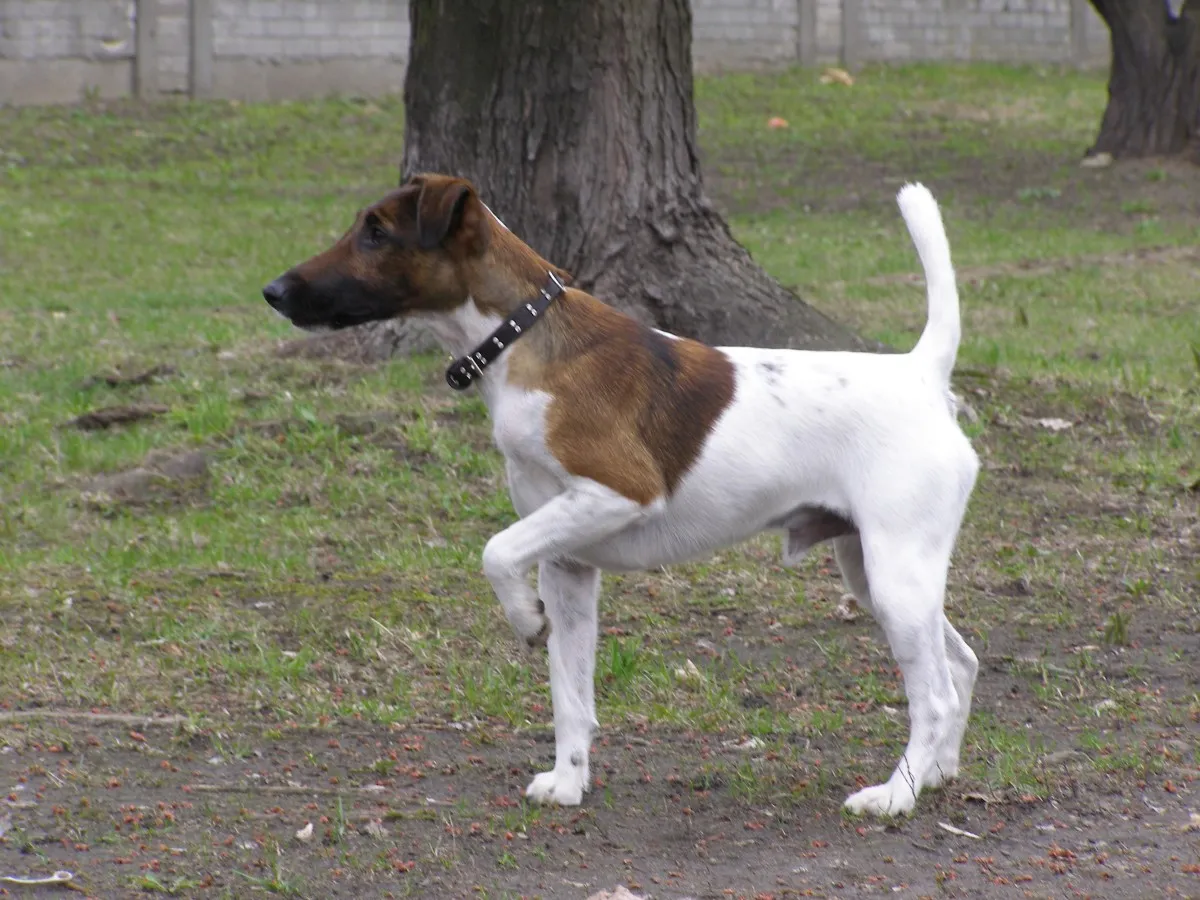
The Smooth Fox Terrier is a lively, gregarious terrier bred for the traditional English fox hunt, with a short white coat marked in tan or black. It is a spirited, devoted companion, and a few health issues repeat in the breed: eyes, kneecaps and hips, the heart, and the teeth. Knowing them before you bring a puppy home, or while you already share your life with one, makes the screening and the vet visits much easier to plan.
In this guide
Why Is Lens Luxation Such an Urgent Eye Problem?
Do not wait to see whether a sore eye settles on its own, because in terriers a displaced lens can raise the pressure inside the eye and cause painful glaucoma, and the longer the lens stays out of place, the lower the chance of saving vision.
Primary lens luxation is an inherited weakness of the fibers that hold the lens in place, so the lens slips out of position. It is well known in terrier breeds and is considered a medical emergency. When the lens moves forward it blocks fluid drainage and is extremely painful, and treatment is usually surgery by a veterinary ophthalmologist, a specialist in animal eyes. A lens that falls backward may cause little discomfort, which is why any change in the eye deserves a call to your veterinarian.
- 01
Red, painful eye
Squinting, pawing at the eye, or flinching when it is touched.
- 02
Cloudy or bluish eye
A sudden milky or bluish change in the surface of the eye.
- 03
Eye looks different
One eye looks larger, or the pupil or lens looks out of position.
- 04
Sudden vision change
Bumping into things or hesitating in familiar rooms.
Ask your veterinarian or an ophthalmologist whether genetic testing for lens luxation is available, since a breeder can use it to avoid passing the weakness on.

Are Kneecap and Hip Problems Common in This Breed?
Patellar luxation means the kneecap slips out of its groove. The word patella is Latin for "small dish," and luxare means "to dislocate." A dog may skip a step or briefly hold a back leg up, then carry on. Many cases are managed medically, and severe cases are corrected with surgery. The breed club recommends a patella evaluation for breeding dogs.
Legg-Calve-Perthes disease is a hip problem in young, growing dogs, usually under a year old, in which the blood supply to the top of the thigh bone is disrupted and the bone breaks down. It causes a hind-leg limp, and the Merck Veterinary Manual recommends surgery to remove the damaged bone, with an excellent outlook afterward. A young dog that skips, hops or favors a back leg is worth an exam rather than a wait-and-see approach.
Why Do the Heart and Hearing Matter in This Breed?
The breed club recommends a cardiac exam for breeding dogs. Valve disease, in which the valve between the heart's left chambers gradually degenerates and begins to leak, is common in small dogs generally and often shows up first as a soft murmur your veterinarian hears with a stethoscope, long before any coughing or tiring. Listening to the heart at every annual exam is the simplest way to catch it early, and a murmur can then be tracked with chest x-rays or a heart ultrasound.
Puppies can also be born deaf, usually from inner-ear defects. A hearing test, called a BAER test, measures the brain's electrical response to sound and identifies affected puppies well before an owner could tell.

Why Is Dental Disease So Common in Small Breeds?
Small dogs often have teeth crowded into a proportionally small jaw, which makes tartar build up fast and leads to periodontal disease, an infection of the gums and bone around the teeth. The word comes from the Greek peri-, "around," and odous, "tooth." Brushing daily or almost daily, started as early as a puppy will tolerate it, slows this down. Bad breath, visible tartar or pawing at the mouth are worth mentioning at a checkup, and retained baby teeth that crowd the adult ones are best caught at puppy visits.
What Does Managing a Smooth Fox Terrier's Health Actually Cost?
| Condition or Need | Typical Cost Range | Notes |
|---|---|---|
| Annual eye exam | $75 to $200 | Screening for lens problems |
| Legg-Calve-Perthes surgery | $1,500 to $3,000 | If diagnosed, generally an excellent outcome |
| Patellar luxation surgery | $1,500 to $3,500 | Only for moderate to severe grades |
| Heart ultrasound | $300 to $600 | If a murmur is detected |
| Professional dental cleaning | $300 to $700 | Recurring, timed by your veterinarian |
An emergency eye surgery or an orthopedic operation can arrive without warning, so it is worth pricing pet insurance while your dog is young and healthy.
Questions to Ask a Breeder Before Buying a Puppy
Ask for the parents' kneecap and heart results. The breed club recommends a patella evaluation and a cardiac exam for breeding dogs, so ask to see the paperwork rather than relying on a verbal promise.
The club does not list eye or hearing tests for the breed, so ask separately whether the parents have had eye exams or lens luxation testing, whether puppies are hearing tested, and whether any relatives lost an eye or had deafness.

Daily Life With a Smooth Fox Terrier
This is a devoted, intelligent and independent terrier with high energy, so plan on daily exercise such as brisk walks and play. Expect a strong prey drive: Smooth Fox Terriers may see other animals as something to chase, and they are known to dig their way out, so a secure yard and early training matter. Patience and consistency work better than force, as the training page explains.
The short coat is low-maintenance, with weekly brushing enough for a moderate shedder, as the grooming page covers. Smooth Fox Terriers love to please and are affectionate with their people, as the personality profile describes, and they make good family pets when children are taught how to treat a dog.

Keeping Your Smooth Fox Terrier Healthy for the Long Run
Have the eyes, kneecaps and heart checked at annual exams, and brush the teeth daily. Know the eye emergency signs before you need them, and keep puppies and young dogs from hard jumping until your veterinarian has checked their hips and knees.
Final Thoughts From a Veterinarian
Smooth Fox Terriers typically live 10 to 13 years and cost about $100 to $150 a month. Treat any sudden eye change as an emergency, schedule kneecap and heart checks, brush those teeth daily, and keep the yard escape-proof. Your veterinarian can tailor the plan.
Health & Costs FAQ
How much do Smooth Fox Terrier cost?
The cost of a Smooth Fox Terrier typically ranges from $1,000 to $2,000 when purchased from a reputable breeder. Adoption fees are more affordable, usually between $50 and $500. Owners should also budget for initial supplies and annual veterinary expenses to maintain this energetic and hardy breed.
Purchase cost: 5 / 10
How long do Smooth Fox Terrier live?
Smooth Fox Terriers typically live 10 to 13 years. Regular veterinary checkups, daily dental care, a lean weight and prompt attention to eye changes help these energetic companions stay spirited and active into their senior years.
Life expectancy: 6 / 10
Are Smooth Fox Terrier healthy dogs?
Smooth Fox Terriers are generally healthy and athletic dogs that typically live 10 to 13 years, but they are not problem-free. Primary lens luxation, patellar luxation, Legg-Calve-Perthes disease, heart disease and congenital deafness are the main concerns. Regular veterinary checkups help catch them early.
Health: 7 / 10
What health problems do Smooth Fox Terrier have?
Smooth Fox Terriers can develop primary lens luxation, an eye emergency, along with patellar luxation and Legg-Calve-Perthes disease. Heart disease and congenital deafness in puppies are also seen. Kneecap and heart screening, regular eye checks and daily dental care help catch problems early.
Health problem risk: 4 / 10
Are Smooth Fox Terrier expensive to maintain?
Smooth Fox Terriers are relatively affordable to maintain. The short coat needs only weekly brushing, though regular dental care is essential. Owners should budget for quality food and routine veterinary checkups, including eye, kneecap and heart monitoring.
Maintenance cost: 2 / 10
How much does it cost to own a Smooth Fox Terrier per month?
Expect to spend about $100 to $150 per month to own a Smooth Fox Terrier. This budget covers quality food, routine veterinary checkups and preventative medications. Minimal grooming needs help keep monthly costs low.
Monthly ownership cost: 9 / 10
How much does pet insurance cost for a Smooth Fox Terrier?
Pet insurance for a Smooth Fox Terrier generally costs about $30 to $55 per month. A policy is worth pricing while your dog is young and healthy, since an emergency eye surgery or an orthopedic operation can be costly.
Pet insurance cost: 3 / 10
Will homeowners insurance cover a Smooth Fox Terrier?
Yes, most homeowners insurance policies cover Smooth Fox Terriers, as they are not typically on restricted breed lists. However, always disclose your pet to your provider to ensure full liability coverage is active. Since individual bite history can affect premiums, consistent training and socialization are highly recommended.
Homeowners insurance difficulty: 9 / 10
Are Smooth Fox Terrier on insurance restricted breed lists?
No, Smooth Fox Terriers are not typically found on insurance restricted-breed lists. These lists generally focus on larger breeds perceived as higher liability risks. As a small, energetic companion, the Smooth Fox Terrier is usually covered under standard homeowners or renters insurance policies without breed-specific exclusions.
Insurance restriction risk: 2 / 10
Can you get renters insurance with a Smooth Fox Terrier?
Yes, you can typically get renters insurance with a Smooth Fox Terrier. They are rarely on restricted breed lists due to their small size and non-aggressive nature. Most policies provide liability coverage, but always disclose your pet to your insurer to ensure your protection remains active.
Renters insurance difficulty: 8 / 10