Greyhound Grooming Profile
COAT TYPE
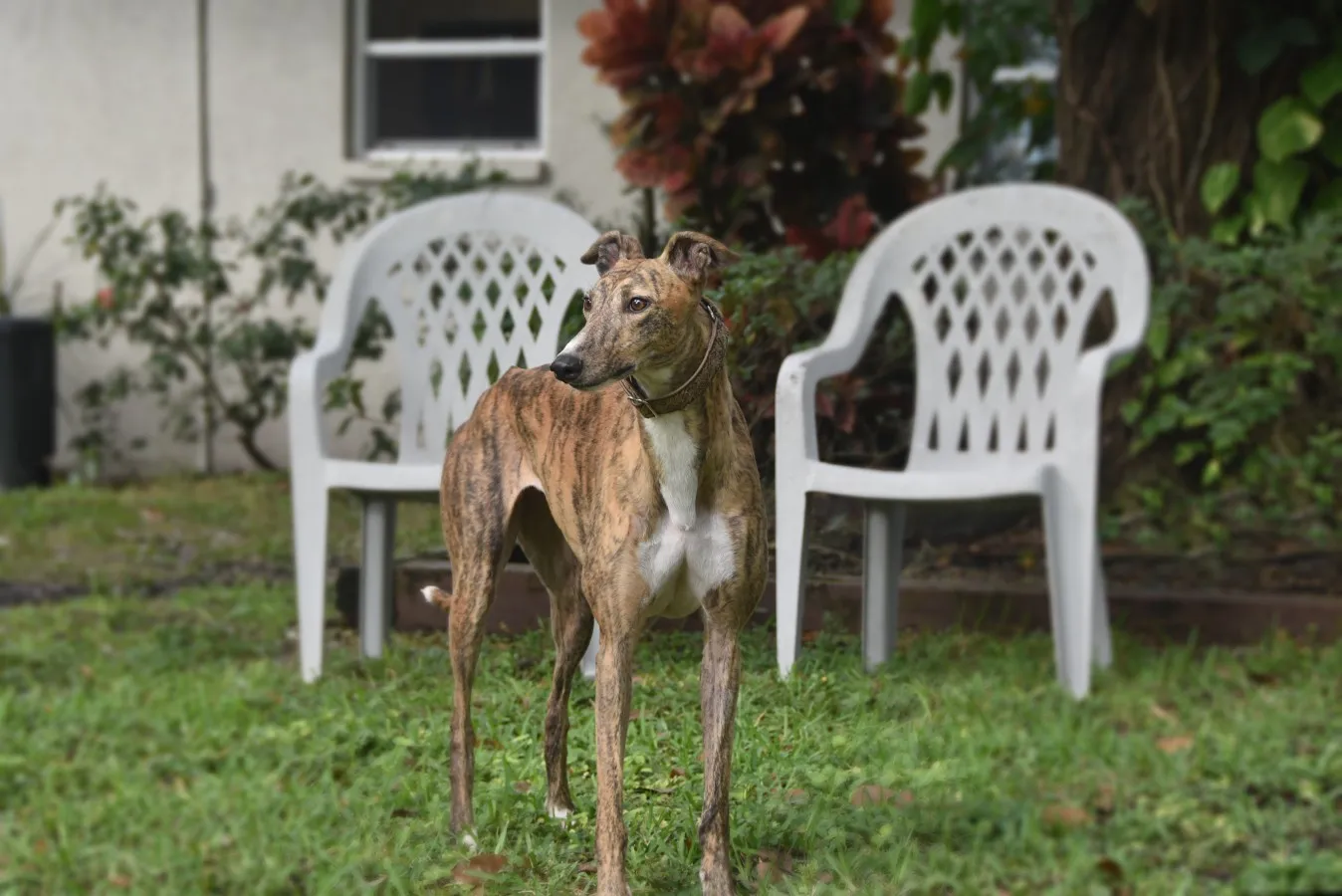
Smooth/Short
SHEDDING
High
GROOMING SKILL
Easy
TRAINING FAQ
Are Greyhounds hypoallergenic?
Worst Choice
Greyhounds are not hypoallergenic. They produce dander and saliva that can trigger allergies, though their short coats are easier to manage than heavy shedders.
Do Greyhounds shed a lot?
Moderate; Greyhounds are known to shed year-round, which contradicts the current Minimal rating
Greyhounds are high shedders. Their short, smooth coat loses hair year-round, requiring regular brushing to keep shedding under control.
How often should you groom your Greyhound?
5 mins/week
Greyhounds need minimal grooming. A weekly brushing with a rubber mitt and occasional baths are enough to keep their short coat healthy and clean.
Are Greyhounds low maintenance dogs?
Easy
Greyhounds are highly low-maintenance dogs, famously known as 45-mph couch potatoes. Their short, smooth coats require only weekly brushing and minimal bathing. While they need daily walks and protection from cold weather, their calm, quiet indoor nature makes them exceptionally easy companions for most households.
How big do Greyhounds get?
Large
Greyhounds are large, slender dogs. Males stand 28-30 inches and weigh 65-85 pounds, while females stand 27-28 inches and weigh 60-65 pounds.
When do Greyhounds usually stop growing?
13-18 months
Greyhounds reach full size by 14-18 months, but they are not considered socially or mentally mature until age 3. While they reach full size by 14-18 months, they are not considered socially or mentally mature until age 3.
How much should a Greyhound eat?
4-5 cups to match standard feeding recommendations
The average Greyhound requires 4 to 5 cups of high-quality dry food daily.
How often should a Greyhound eat?
3-4 meals/day
Greyhound puppies require frequent, small meals to support their high metabolism and rapid growth. It is generally recommended to feed them three to four times daily until they reach six months of age. After six months, transition to two meals per day as their growth rate begins to slow.