Brussels Griffon Health and Costs
Breed Group
Toy Dogs
Country of Origin
Belgium
Breed Size
Toy
AKC Recognition
Yes, recognized in 1910
FCI Recognition
Yes, recognized in 1954
Rarity
Rare2 / 10
Purchase cost
Expensive7 / 10
Life expectancy
Long Lifespan8 / 10
Health
Moderate health concerns4 / 10
Health problem risk
High health burden7 / 10
Maintenance cost
Moderate upkeep cost4 / 10
A Veterinarian's Guide
Brussels Griffon Health Problems and Costs
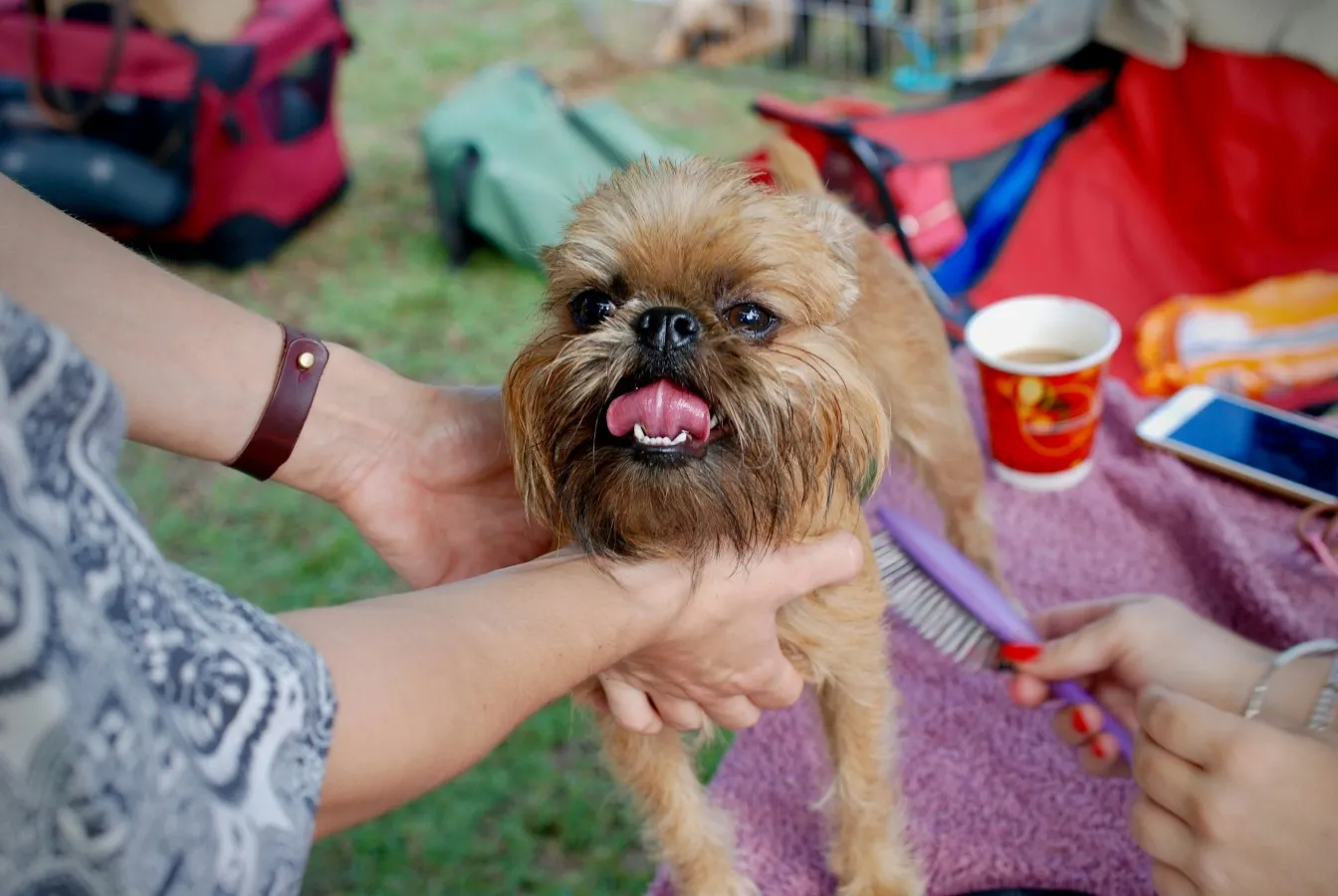
The Brussels Griffon is a small, flat-faced toy dog with big eyes and an almost human expression. The same short face that gives it so much character explains most of its health needs: breathing that tires in the heat, eyes that are easy to injure, small jaws with crowded teeth, and knees that can slip. Knowing these before you bring a puppy home, or while you already share your life with one, makes screening and vet visits much easier to plan.
In this guide
Why Does a Flat Face Make Breathing and Heat Harder?
Brachycephalic airway syndrome describes a set of airway changes in short-nosed dogs, such as narrow nostrils and an overly long soft palate, that make breathing harder work than it should be. Brachycephalic comes from the Greek brachys, "short," and kephale, "head." Noisy breathing, snorting, and snoring are the usual signs, and they are often worse in hot or humid weather because panting cools these dogs less effectively. The VCA article does not name the Brussels Griffon among its typical breeds, so ask your veterinarian how much your own dog's face shape affects its airway.
Extra weight makes breathing signs worse, so keeping a Griffon lean helps its airway as well as its joints. Surgery can correct airway anatomy in dogs that struggle, and earlier correction tends to give better results.
- 01
Struggling to breathe
Very noisy, labored breathing that does not ease with rest.
- 02
Panting that will not settle
Heavy panting after heat or exertion that continues despite cooling down.
- 03
Collapse or fainting
Weakness or collapse after exercise or time in warm weather.
- 04
Retching with weakness
Repeated retching or vomiting along with labored breathing.

Why Are This Breed's Eyes So Easy to Injure?
Squinting, a tightly closed eye, rubbing the face on the carpet, discharge, or a cloudy surface needs a veterinary visit the same day. A scratched cornea can deepen quickly and threaten the eye.
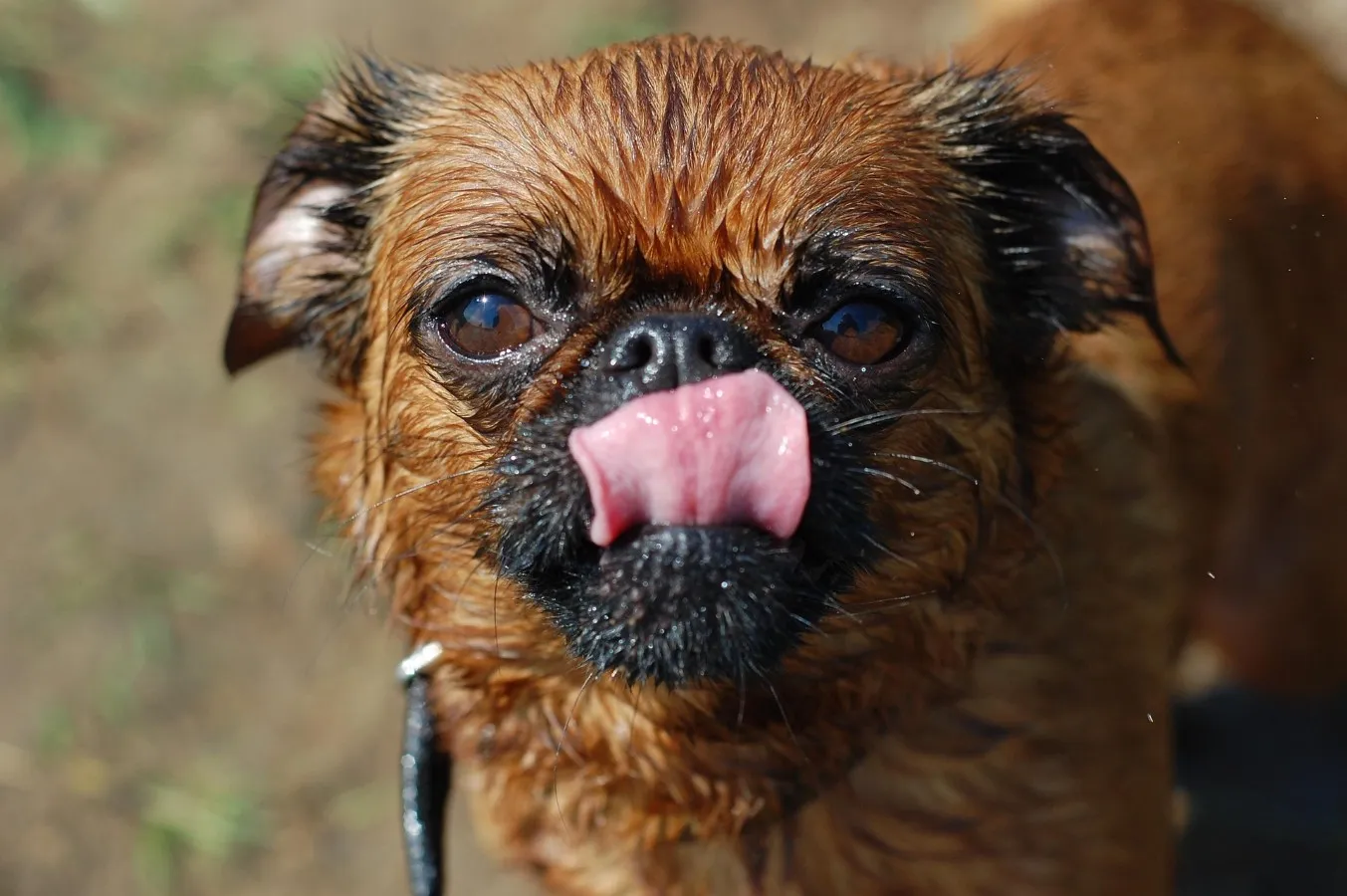
The large, forward-set eyes and short muzzle leave little protection, so scratches to the cornea, the clear front surface of the eye, are a real risk in this breed. Cornea comes from the Latin corneus, "horny." Trauma is the most common cause of corneal ulcers, and flat-faced breeds are more prone to them. Superficial ulcers often heal in a few days with drops and a protective cone, but deeper ones can need intensive treatment or surgery, and a recheck after two to three days is important.
Griffons are also described as prone to cataracts, a clouding of the lens, along with lens luxation and glaucoma. The breed club recommends an ophthalmologist evaluation for breeding dogs, and regular eye checks are sensible for pets too.
What Joint Problems Affect Brussels Griffons?
Patellar luxation, where the kneecap slips out of its groove at the end of the thighbone, is listed among the breed's concerns. Patella is Latin for "small dish." Signs range from an occasional skip in the stride to running on three legs for a few steps before returning to normal. Mild cases may not need surgery, while surgery is recommended for most dogs, and results are excellent when it is done before arthritis develops.
Hip dysplasia, an inherited looseness of the hip joint, is also listed. A certified patella and hip evaluation of breeding dogs tells you more than waiting for a limp, and a lean body weight protects both joints.
Why Is Dental Care So Important for Small Jaws?
Small and short-nosed dogs are more prone to dental disease because their small jaws leave teeth crowded. Daily brushing with dog toothpaste is the best plaque control, but once tartar has formed, a professional cleaning under general anesthesia is the only way to remove it. A veterinarian can also tell you whether any baby teeth have been retained and should come out.
What Should Owners Know About Syringomyelia?
Syringomyelia is a condition in which fluid-filled cavities form in the spinal cord, usually linked to a mismatch between skull and brain size. Syrinx is Greek for "pipe," and myelos means "marrow" or spinal cord. It causes pain and is described as rare, and a related skull malformation called Chiari-like malformation may predispose a dog to it. Management usually centers on pain medication and lifestyle changes, and surgery has a low success rate.
Signs of unexplained pain, especially around the head and neck, deserve a veterinary visit, and your veterinarian can advise whether a specialist evaluation makes sense for your dog.

What Does Managing a Brussels Griffon's Health Actually Cost?
| Condition or Need | Typical Cost Range | Notes |
|---|---|---|
| Routine annual care | $500 to $900 | Exam, vaccines, and preventives |
| Annual eye exam | $75 to $200 | Starting in early adulthood |
| Dental cleaning under anesthesia | $300 to $700 | Higher if extractions are needed |
| Corneal injury surgical repair | $800 to $2,000 | Depends on severity |
| Kneecap surgery | $1,500 to $3,000 per knee | For higher grades of luxation |
Questions to Ask a Breeder Before Buying a Puppy
The breed club recommends patella, hip, and ophthalmologist evaluations for breeding dogs, so ask to see the results for both parents. It is also reasonable to ask whether the parents have been screened for syringomyelia and Chiari-like malformation, and whether any close relatives have had eye injuries, cataracts, or breathing trouble.
None of this guarantees a puppy will avoid every issue in this guide, but a breeder who tracks these details across their lines is giving you real information.
Daily Life With a Brussels Griffon
This is an indoor companion that likes to stay close to its person, as the personality profile explains. Griffons can be shy with new people at first and sensitive around rough small children, so gentle, consistent training and early social experiences suit them well. Moderate energy means roughly 30 minutes of walks or play a day, kept easy in warm weather with shade and water always available.
Coat care depends on the type. Smooth coats shed seasonally and need weekly brushing in spring and fall, while wiry coats shed very little, as the grooming guide covers. Either type benefits from daily tooth brushing and regular nail trims.
Keeping Your Brussels Griffon Healthy for the Long Run
Keep your Griffon cool and lean, protect its eyes from rough play and branches, and brush its teeth every day. Ask your veterinarian to check the kneecaps and listen to the heart at routine visits. Pet insurance is worth pricing while your dog is young and healthy.
Final Thoughts From a Veterinarian
Brussels Griffons often live 12 to 15 years. Keep them cool and lean, protect their eyes, brush their teeth daily, and have knees and heart checked at routine visits. Ask breeders about screening. Your veterinarian can tailor a plan to your dog.
Health & Costs FAQ
How much do Brussels Griffon cost?
The average purchase price is $2,500 - $4,500.
Purchase cost: 7 / 10
How long do Brussels Griffon live?
Brussels Griffons typically have a lifespan of 12 to 15 years. Providing a high-quality diet, regular exercise, and routine veterinary care will help ensure your Griff lives a full, healthy, and happy life. Their longevity makes them a wonderful, long-term companion for dedicated pet owners.
Life expectancy: 8 / 10
Are Brussels Griffon healthy dogs?
Brussels Griffons often live 12 to 15 years, but they are not problem-free. Their flat face brings airway and eye concerns, and patellar luxation, dental crowding, and cataracts are listed for the breed. Syringomyelia is described as rare. Regular checkups, a lean weight, and daily tooth brushing help catch and limit these problems.
Health: 4 / 10
What health problems do Brussels Griffon have?
Brussels Griffons can have brachycephalic airway problems that make breathing harder in heat, easily injured eyes, cataracts, patellar luxation, hip dysplasia, and dental crowding. Heart problems are also listed. Syringomyelia, a spinal cord condition linked to skull and brain size, is rare but can cause pain. Screening and regular veterinary monitoring help.
Health problem risk: 7 / 10
Are Brussels Griffon expensive to maintain?
Brussels Griffons have moderate upkeep costs. Smooth coats need weekly brushing in the shedding seasons and wiry coats shed very little, while both types need daily dental care. Larger bills are more likely to come from dental cleanings, eye problems, or knee surgery, so setting money aside for them is wise.
Maintenance cost: 4 / 10
How much does it cost to own a Brussels Griffon per month?
Monthly ownership costs are $150 - $300.
Monthly ownership cost: 5 / 10
How much does pet insurance cost for a Brussels Griffon?
Starting premiums may be $38 - $47, they can increase significantly (up to $80 - $100+) as the dog ages.
Pet insurance cost: 3 / 10
Will homeowners insurance cover a Brussels Griffon?
Yes, most homeowners insurance policies will cover a Brussels Griffon. As a small toy breed, they are not typically found on restricted or aggressive breed lists. However, always check with your specific provider to confirm liability coverage and ensure your pet is properly disclosed.
Homeowners insurance difficulty: 9 / 10
Are Brussels Griffon on insurance restricted breed lists?
No, Brussels Griffons are not typically included on insurance restricted-breed lists. These lists generally focus on larger breeds perceived to have higher liability risks or aggressive tendencies. As a small toy breed, they are usually viewed as low-risk pets by most homeowners and renters insurance providers.
Insurance restriction risk: 2 / 10
Can you get renters insurance with a Brussels Griffon?
Yes, you can typically obtain renters insurance with a Brussels Griffon. As a small toy breed, they are rarely included on restricted breed lists. Their compact size makes them ideal for apartment living, but always disclose your pet to your insurer and landlord to ensure proper liability coverage.
Renters insurance difficulty: 8 / 10