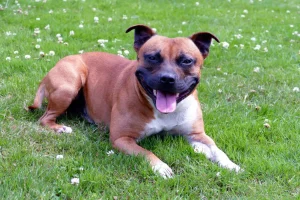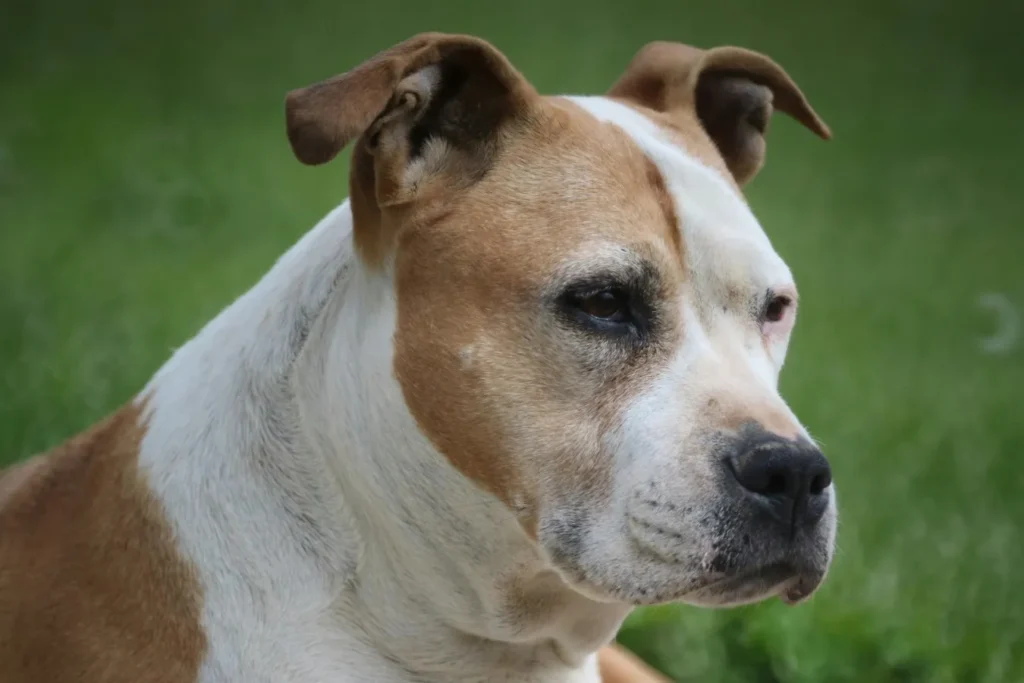
American Staffordshire Terrier Training Profile
Breed Group
Terrier Dogs
Country of Origin
United States
Breed Size
Medium
AKC Recognition
Yes, recognized in 1936
FCI Recognition
Yes, recognized in 1954
Mental stimulation needs
High Needs8 / 10
Trainability
3 / 10
Picky eater
Eats Everything10 / 10
Easy to train
Independent4 / 10
Training stubbornness
Very Stubborn2 / 10
Puppy training
Average6 / 10
Training FAQ
Are American Staffordshire Terrier easy to train?
American Staffordshire Terriers are intelligent and eager to please, but their independent nature and physical strength can lead to stubbornness. They require firm, consistent leadership and respond best to positive reinforcement. Early socialization and engaging, reward-based training sessions are essential to manage their powerful personalities and ensure success.
Easy to train: 4 / 10
Are American Staffordshire Terrier stubborn to train?
American Staffordshire Terriers are intelligent but famously bull-headed and independent. They often test boundaries, requiring firm, consistent leadership and patient owners. To succeed, utilize positive, creative reinforcement and high-value rewards. Short, engaging sessions help manage their impulsive nature and ensure they remain focused on your commands.
Training stubbornness: 2 / 10
How do you train a American Staffordshire Terrier puppy?
American Staffordshire Terriers are high-energy athletes requiring at least 60 minutes of daily vigorous activity. Owners should provide two brisk walks supplemented with interactive play like fetch or tug-of-war. Consistent exercise and mental stimulation are essential to prevent boredom and maintain the health of this powerful breed.
Puppy training: 6 / 10
How difficult is potty training in American Staffordshire Terrier?
Potty training an American Staffordshire Terrier typically takes 4 to 6 months. While intelligent and agreeable, they can be headstrong, requiring firm, consistent leadership. Success relies on a strict routine, crate training, and positive reinforcement with high-value treats to motivate this powerful and loyal breed.
Potty training difficulty: 2 / 10
How many walks does a American Staffordshire Terrier need?
American Staffordshire Terriers are high-energy athletes requiring at least 60 minutes of daily vigorous activity. Owners should provide two brisk walks supplemented with interactive play like fetch or tug-of-war. Consistent exercise and mental stimulation are essential to prevent boredom and maintain the health of this powerful breed.
Walking need: 8 / 10
What is the best daily routine for a American Staffordshire Terrier?
An American Staffordshire Terrier's daily routine should prioritize vigorous physical activity and structured mental engagement. Provide at least 60 to 90 minutes of high-energy exercise daily, including brisk walks and interactive play like fetch, tug-of-war, or agility training. Feed adult AmStaffs twice daily and puppies three to four times, using slow feeders to minimize the risk of bloat. Incorporate short training sessions or puzzle toys to satisfy their intelligent minds and prevent boredom-driven behaviors. Regular socialization and weekly brushing of their short coat are also essential to maintain their health and ensure they remain well-adjusted family companions.
Routine need: 8 / 10
Vet Insights
American Staffordshire Terriers are intelligent but bull-headed athletes requiring firm, consistent leadership. They need at least 60 to 90 minutes of vigorous daily exercise and mental stimulation to prevent boredom. Training benefits from positive reinforcement, though housebreaking can be challenging. Their routine emphasizes structured play, slow feeding to prevent bloat, and early socialization to ensure a well-adjusted, loyal companion.