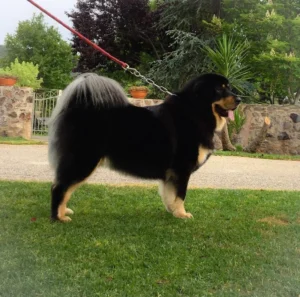
Transmontano Mastiff Training Profile
Breed Group
Working Dogs
Country of Origin
Portugal
Breed Size
Giant
AKC Recognition
No
FCI Recognition
Yes, recognized in 2020
Mental stimulation needs
Mild Needs3 / 10
Trainability
9 / 10
Picky eater
Average6 / 10
Easy to train
Eager9 / 10
Training stubbornness
Very Cooperative9 / 10
Puppy training
Very Good9 / 10
Training FAQ
Are Transmontano Mastiff easy to train?
Transmontano Mastiffs are exceptionally eager and cooperative, making them remarkably easy to train for a livestock guardian breed. They thrive on positive reinforcement and clear leadership. Their high intelligence and need for mental engagement ensure they remain focused and responsive, provided training sessions are consistent and structured.
Easy to train: 9 / 10
Are Transmontano Mastiff stubborn to train?
Transmontano Mastiffs are generally not stubborn; instead, they are exceptionally cooperative and eager for a livestock guardian breed. While they maintain the independent spirit typical of working dogs, their high intelligence and desire for engagement make them highly responsive to clear leadership. They thrive on positive reinforcement and remain focused during training when provided with a consistent and structured routine.
Training stubbornness: 9 / 10
How do you train a Transmontano Mastiff puppy?
The ideal routine for a Transmontano Mastiff centers on providing ample space for roaming and consistent mental engagement. Plan for long daily walks or hikes totaling at least 60-90 minutes. Incorporate structured obedience training and socialization to manage their independent nature, ensuring they have a secure, large property to patrol.
Puppy training: 9 / 10
How difficult is potty training in Transmontano Mastiff?
Potty training a Transmontano Mastiff typically takes up to 6 months to perfect. These massive dogs are eager to please and highly intelligent, making them receptive to consistent routines. Success relies on patience, positive reinforcement, and crate training to manage their large size and prevent indoor accidents.
Potty training difficulty: 9 / 10
How many walks does a Transmontano Mastiff need?
The ideal routine for a Transmontano Mastiff centers on providing ample space for roaming and consistent mental engagement. Plan for long daily walks or hikes totaling at least 60-90 minutes. Incorporate structured obedience training and socialization to manage their independent nature, ensuring they have a secure, large property to patrol.
Walking need: 8 / 10
What is the best daily routine for a Transmontano Mastiff?
A Transmontano Mastiff's daily routine should focus on providing ample space for roaming and consistent mental engagement to satisfy their livestock guardian instincts. Plan for 60 to 90 minutes of daily activity, ideally through long walks or hikes on a secure, large property where they can patrol. Feed adults twice daily and puppies three to four times to support their massive frame and steady growth. Essential daily care includes structured obedience training and early socialization to manage their independent nature, ensuring they remain cooperative and well-adjusted family companions.
Routine need: 2 / 10
Vet Insights
Transmontano Mastiffs are exceptionally cooperative and eager livestock guardians, making them remarkably easy to train with positive reinforcement. These intelligent, independent dogs require 60-90 minutes of daily exercise and ample space to roam. Potty training typically takes six months. Their routine focuses on consistent mental engagement, early socialization, and structured leadership to manage their massive frame and guarding instincts.