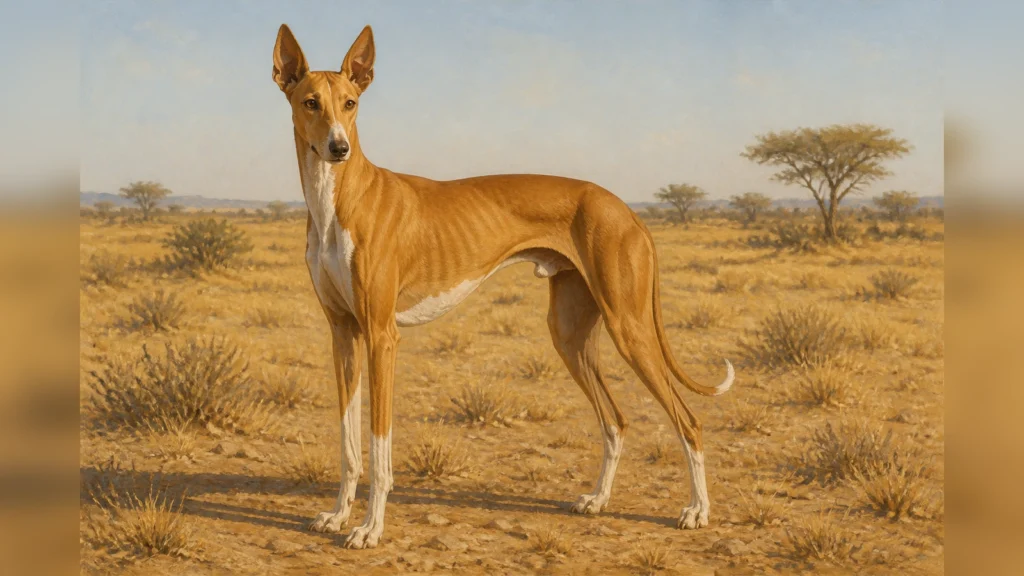
Azawakh Personality Profile
Breed Group
Hound Dogs
Country of Origin
Mali
Breed Size
Large
AKC Recognition
Yes, recognized in 2019
FCI Recognition
Yes, recognized in 1954
Friendliness
Aloof3 / 10
Attachment
Independent2 / 10
Playfulness
Average5 / 10
Smart
Highly Intelligent9 / 10
Cuddle
Not Cuddly2 / 10
Separation anxiety
Highly Anxious9 / 10
Personality FAQ
Are Azawakh smart?
Azawakhs are highly intelligent and independent thinkers. Bred as hunters and guardians in the Sahara, they are observant and learn quickly. However, their strong-willed nature means training requires patience, positive reinforcement, and mutual respect rather than harsh commands.
Smart: 9 / 10
Do Azawakh like to cuddle?
Azawakhs form incredibly deep bonds with their families but are not typically clingy lap dogs. They show affection on their own terms, often preferring to rest near you rather than engaging in constant physical cuddling or demanding attention.
Cuddle: 2 / 10
Do Azawakh get separation anxiety?
Because they bond so intensely with their human pack, Azawakhs can be highly prone to separation anxiety. They do not tolerate being left alone for long periods and can become stressed or destructive if isolated without proper companionship.
Separation anxiety: 9 / 10
Do Azawakh bark a lot?
Azawakhs are highly alert and make excellent watchdogs. They will readily use their voice to alert you of strangers or unusual activity around the home. Early training is important to ensure their protective barking does not become excessive.
Barking: 3 / 10
Are Azawakh protective or territorial?
Bred to guard nomadic camps, Azawakhs are fiercely protective and naturally territorial. They are deeply loyal to their family but highly suspicious of strangers. Extensive, early socialization is absolutely critical to manage their strong guarding instincts and prevent overreaction.
Protective tendency: 9 / 10
Vet Insights
Azawakhs are highly intelligent, independent sighthounds that form intense bonds with their families. While aloof with strangers and not typically cuddly, they are fiercely protective guardians. Despite their independence, they are prone to separation anxiety and thrive on constant companionship. These alert watchdogs remain generally quiet unless announcing a perceived threat to their home or loved ones.