Chinese Shar-Pei Grooming Profile
Breed Group
Companion Dogs
Country of Origin
China
Breed Size
Medium
AKC Recognition
Yes, recognized in 1992
FCI Recognition
Yes, recognized in 1981
Allergy-friendly
Fair5 / 10
Shedding
Moderate5 / 10
Grooming need
Minimal7 / 10
Low-maintenance
Hard2 / 10
Size
Medium6 / 10
Growth timeline
12-18 months5 / 10
Grooming FAQ
Are Chinese Shar-Pei hypoallergenic or allergy-friendly?
Chinese Shar-Peis are not hypoallergenic. They shed moderately year-round and produce dander that triggers allergies. Their unique skin folds can trap additional allergens like dust and saliva, and the breed’s coarse, bristle-like coat can cause skin irritation or rashes in sensitive owners upon direct contact.
Allergy-friendly: 5 / 10
Do Chinese Shar-Pei shed?
Chinese Shar-Peis are moderate shedders with a unique, sandpaper-like coat. While they don't require excessive brushing, they typically experience heavier "blowouts" during spring and fall. Weekly grooming sessions are sufficient to manage loose hair, but owners must ensure their skin folds remain clean and dry to prevent infections.
Shedding: 5 / 10
How often should you groom a Chinese Shar-Pei?
To maintain a healthy Chinese Shar-Pei, brush their short, bristly coat weekly and bathe them only a few times a year to preserve natural oils. Critically, their skin folds require daily cleaning and thorough drying to prevent infections. Regularly check their small ears and trim fast-growing nails.
Grooming need: 7 / 10
Are Chinese Shar-Pei low-maintenance dogs?
Chinese Shar-Peis are high-maintenance dogs despite their short coats. Their unique wrinkles require daily cleaning and drying to prevent infections. Additionally, their stubborn, independent nature and protective instincts demand early, consistent training and socialization, making them a significant commitment for experienced owners rather than novice pet parents.
Low-maintenance: 2 / 10
How big do Chinese Shar-Pei get?
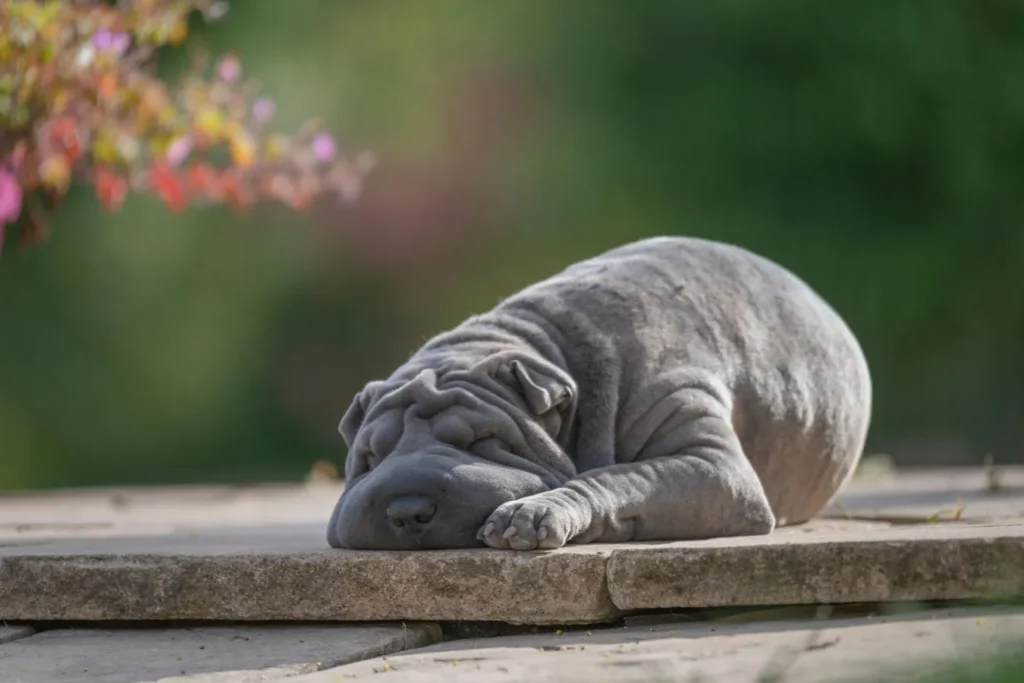
Chinese Shar-Peis are medium-sized dogs that typically stand 18-20 inches at the shoulder. Adult weights can be as low as 35-44 pounds according to some breed standards, though 45-60 pounds is also common. Their compact, sturdy build is defined by their unique wrinkles and hippopotamus-like muzzle.
Size: 6 / 10
When do Chinese Shar-Pei stop growing?
Chinese Shar-Peis typically reach their full adult height between 12 and 18 months of age. While their vertical growth stabilizes during this period, they typically don't reach full physical maturity until around age 2.
Growth timeline: 5 / 10
How much should a Chinese Shar-Pei eat?
Adult Chinese Shar-Peis typically require 1.5 to 2.5 cups of high-quality dry food daily, divided into two meals. This breed is prone to obesity and bloat, so precise portion control is essential. Choose allergen-friendly proteins and monitor their weight closely to maintain optimal health. They should be fed two meals daily to help prevent bloat.
Feeding amount: 5 / 10
How often should a Chinese Shar-Pei puppy eat?
Chinese Shar-Pei puppies require frequent, small meals to support their unique growth and development. Feed them 3 to 4 small meals daily until six months of age, then establish a consistent twice-daily schedule as they mature.
Puppy feeding frequency: 5 / 10
Vet Insights
Chinese Shar-Peis are medium-sized dogs reaching full maturity by age two. They are moderate shedders with unique skin folds requiring daily cleaning to prevent infections. Though relatively low-energy, they are high-maintenance due to their stubborn nature and specific health needs. Owners should provide 1.5-2.5 cups of food daily and prioritize early socialization and firm training.