Norwegian Elkhound Health and Costs
Breed Group
Spitz Dogs
Country of Origin
Norway
Breed Size
Medium
AKC Recognition
Yes, recognized in 1913
FCI Recognition
Yes, recognized in 1963
Rarity
Common3 / 10
Purchase cost
Moderate to Expensive6 / 10
Life expectancy
Long Lifespan8 / 10
Health
Generally healthy7 / 10
Health problem risk
Mild health concerns3 / 10
Maintenance cost
Moderate upkeep cost4 / 10
A Veterinarian's Guide
Norwegian Elkhound Health Problems and Costs
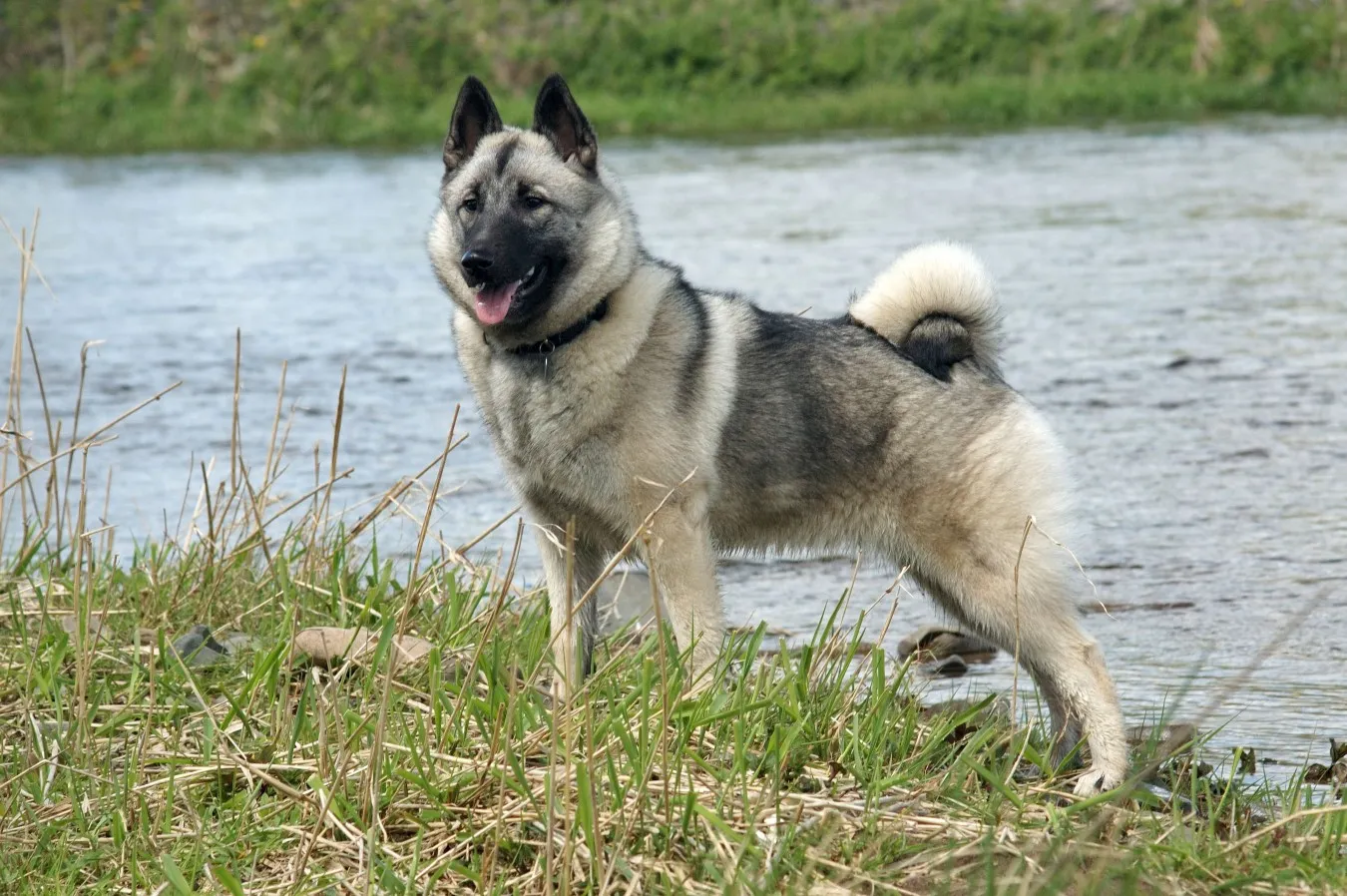
The Norwegian Elkhound is a sturdy, silver-gray Nordic hunting dog, and it has a reputation for being healthy. A few conditions still repeat in the breed: hips, eyes, a rare inherited kidney disorder, kneecaps, skin cysts, and an easy tendency to gain weight. Knowing them before you bring a puppy home, or while you already share your life with one, makes the screening and the vet visits much easier to plan.
In this guide
Why Do Hips and Kneecaps Need Attention in This Breed?
Hip dysplasia is an inherited malformation in which the thigh bone does not fit snugly into the hip socket, leading to a loose joint, pain, and arthritis over time. It is among the best known concerns in the breed. Early signs are easy to mistake for ordinary aging: stiffness after rest, reluctance to jump into the car, or a subtle change in gait. A certified hip evaluation gives an objective answer long before visible signs, which is why the breed club recommends it for breeding dogs.
Patellar luxation, a kneecap that slips out of its groove, is also listed for the breed. A dog that skips a step or briefly holds a back leg up while running deserves an exam. Mild cases are often managed with weight control and monitoring, and more severe ones may need surgery. A lean body is the single most helpful thing you can do for both joints.
Why Do Eyes Need Yearly Checks?
Progressive retinal atrophy, or PRA, is an inherited breakdown of the light-sensing cells at the back of the eye. Atrophy comes from the Greek for "without nourishment," a wasting away. The first sign is usually trouble seeing at dusk and dawn, such as hesitating on stairs or bumping into furniture in dim light, and vision then fades gradually. There is no cure, so an annual exam by a veterinary ophthalmologist, which the breed club also recommends, finds it earlier than an owner would notice at home. Most dogs adapt well to gradual vision loss in a familiar home.
What Is Fanconi Syndrome, and Why Is It Worth Knowing About?
Increased thirst and urination, weight loss despite a normal appetite, or unusual tiredness in a Norwegian Elkhound deserves a prompt veterinary visit, and collapse, repeated vomiting, or refusing food and water needs urgent care.
Fanconi syndrome is a hereditary kidney disorder in which the kidney's filtering tubes fail to take back nutrients such as glucose, a sugar, and amino acids, so they spill into the urine instead. It is described as a historic concern in the breed that can still affect individual dogs, and it is treatable with supplements and monitoring when it is caught early. Left unrecognized, it can become serious.
Because the early signs are subtle, it is reasonable to ask your veterinarian whether baseline bloodwork and a urine test make sense for your dog, particularly if a close relative was ever affected. Keeping the dog hydrated and watching drinking habits at home is a simple way to notice a change early.
Why Do Elkhounds Gain Weight So Easily?
Norwegian Elkhounds are food-motivated and gain weight easily, and the dense coat can hide extra pounds until a hands-on check reveals them. Measuring meals instead of free-feeding, and feeling for the ribs at every visit, protects the joints and the heart alike.
An unexplained weight gain with a dull coat and low energy can also point toward an underactive thyroid, called hypothyroidism, which a blood test can check and daily medication usually manages. Our guide to low thyroid in dogs explains the signs. Small sebaceous cysts, which are oil-gland lumps under the skin, also occur. They are usually harmless but can become infected, so have any new lump looked at.
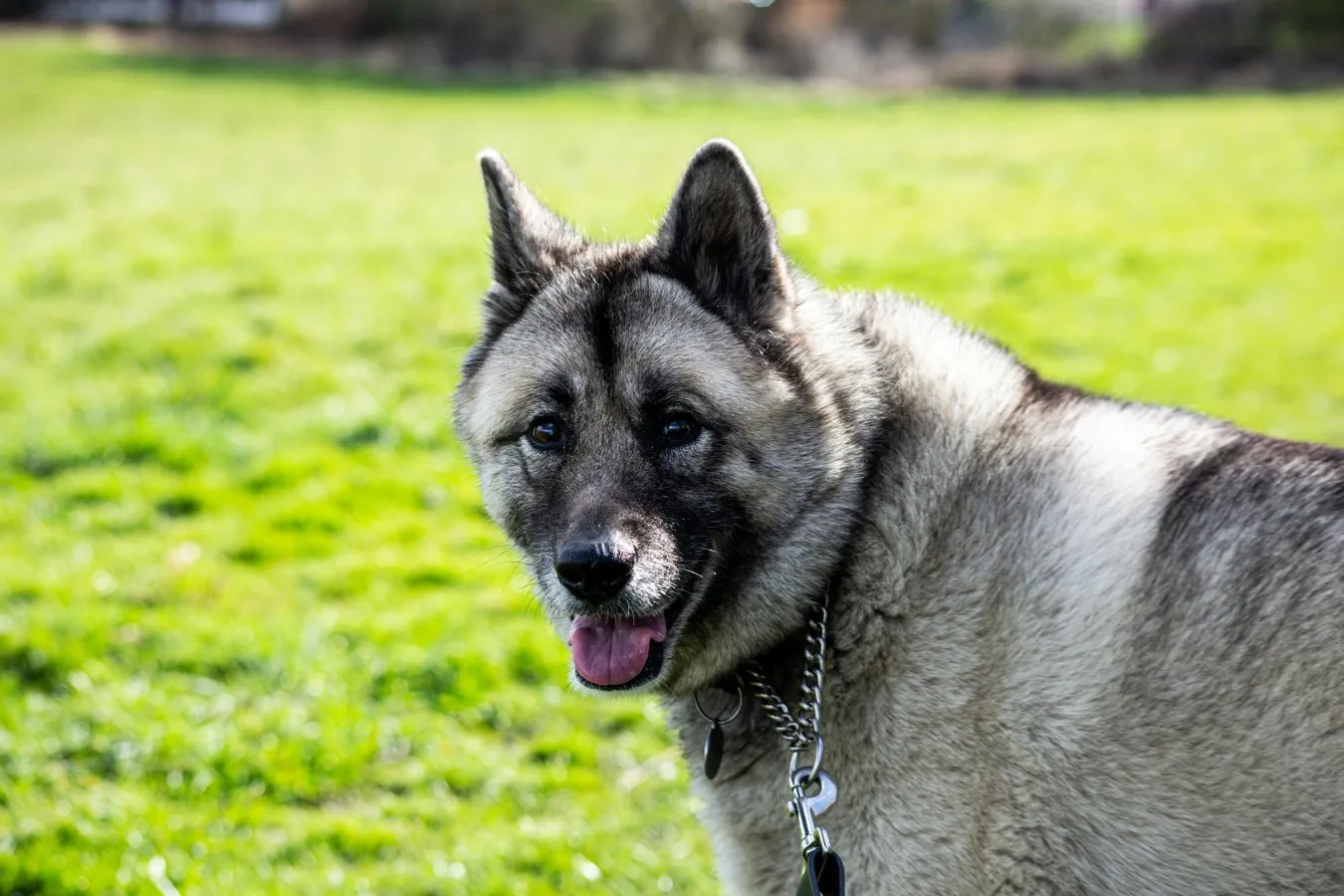
Why Can a Norwegian Elkhound Struggle in Warm Weather?
This is a dog built for Scandinavian winters, and the thick double coat that protects it in the cold can make heat harder to tolerate. Exercise in the cool morning or evening, and always provide shade and fresh water. Excess weight makes heat problems worse, so weight control and heat care go together.
- 01
Heavy panting that will not settle
Panting continues even after rest in the shade.
- 02
Glazed eyes or wobbling
The dog looks dazed or cannot walk steadily.
- 03
Vomiting
Repeated vomiting after heat exposure.
- 04
Collapse
The dog becomes weak or collapses.
Heatstroke can become life-threatening within hours, so start cooling on the way to the clinic and let the veterinary team take over.
What Does Managing a Norwegian Elkhound's Health Actually Cost?
| Condition or Need | Typical Cost Range | Notes |
|---|---|---|
| Hip radiographs (certified) | $200 to $450 | X-rays plus consult, ideally before breeding |
| Kidney bloodwork and urinalysis | $150 to $350 | Discuss a baseline with your veterinarian |
| Thyroid panel | $80 to $200 | If weight gain or low energy appears |
| Annual eye exam | $150 to $300 | By a veterinary ophthalmologist |
| Heatstroke emergency treatment | $800 to $3,000 or more | Varies widely by severity |
Ongoing kidney care is the cost owners are least prepared for, because it often means monitoring rather than a single procedure. Pet insurance is worth pricing while your dog is young and healthy.
Questions to Ask a Breeder Before Buying a Puppy
Ask for the parents' hip and eye examination results. The breed club recommends hip and ophthalmologist evaluations for breeding dogs, so ask to see the paperwork. It is also fair to ask whether kidney disease has ever appeared in the line, and how the breeder keeps puppies lean.
Daily Life With a Norwegian Elkhound
Elkhounds were bred to track game over rough ground, so expect an active, independent dog that needs a daily hour or more of real exercise. They like to explore and may wander off, so a secure fence and a leash in open areas matter. The personality profile explains the loyal, vocal side of the breed, and early, consistent training helps with barking and recall.
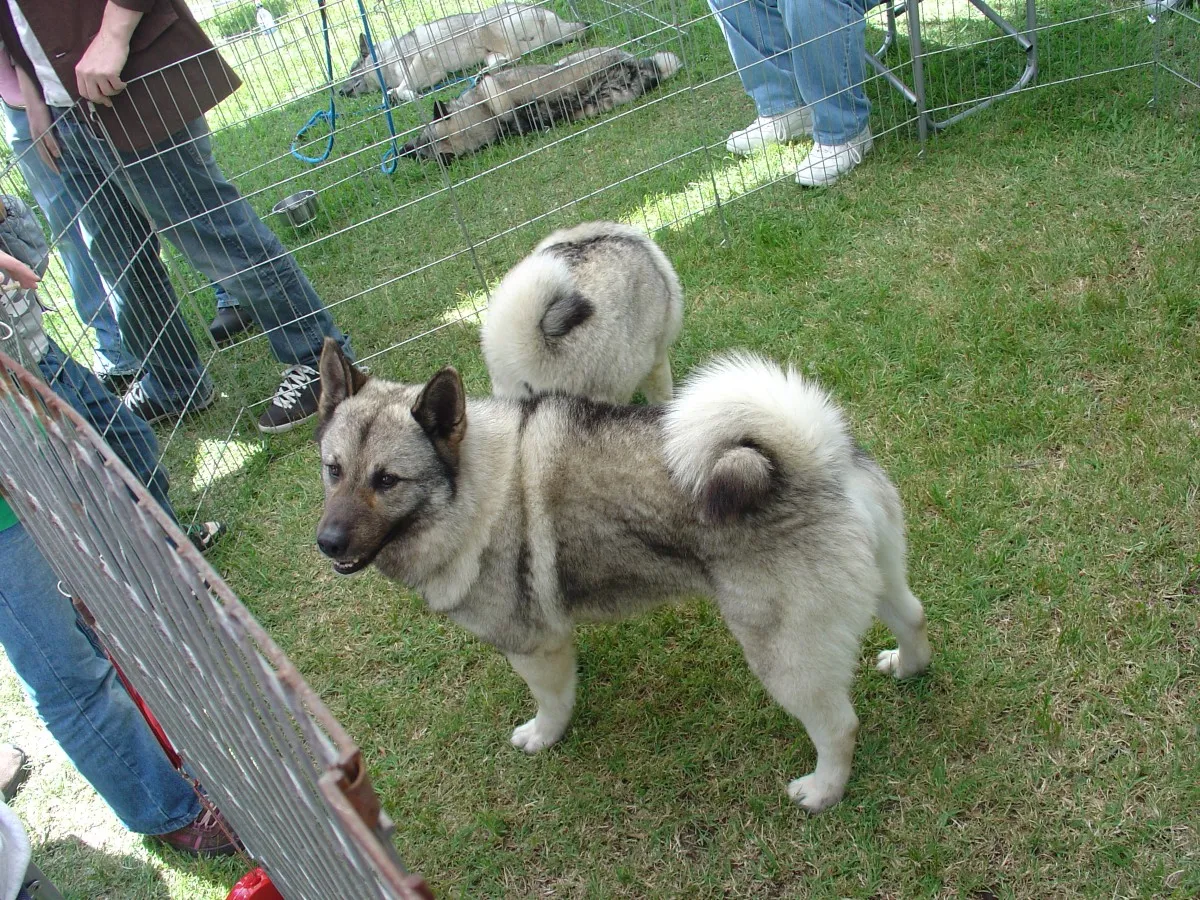
The coat sheds a little all year and heavily about twice a year. Regular brushing is the main grooming task, and brushing from back to front pulls out loose undercoat. The breed rarely needs more than a couple of baths a year.
Keeping Your Norwegian Elkhound Healthy for the Long Run
Schedule hip and eye screening, ask your veterinarian about kidney testing, keep your dog lean, and take warm weather seriously. Track thirst, weight, and energy, since a stoic dog may not show discomfort until a problem is well along.
Final Thoughts From a Veterinarian
Norwegian Elkhounds are hardy and often live 12 to 15 years. Plan for hip and eye screening, ask about kidney testing, keep them lean, and take heat seriously. Your veterinarian can tailor the plan.
Health & Costs FAQ
How much do Norwegian Elkhound cost?
Norwegian Elkhounds typically cost $1,000 to $2,000 from a reputable breeder in the US, with prices reflecting lineage and health testing. Adoption through breed-specific rescues is less common given the breed's modest popularity, but usually runs $150 to $400 when a dog becomes available.
Purchase cost: 6 / 10
How long do Norwegian Elkhound live?
Norwegian Elkhounds typically live 12 to 15 years. Their hardy build supports a long life, though hip dysplasia, eye disease, kidney disease, and weight gain are worth planning for. A lean weight, hip and eye screening, regular exercise, and routine veterinary checkups help them stay active into their senior years.
Life expectancy: 8 / 10
Are Norwegian Elkhound healthy dogs?
Norwegian Elkhounds are generally healthy and often live 12 to 15 years, but they are not problem-free. Hip dysplasia, progressive retinal atrophy, and a hereditary kidney condition called Fanconi syndrome are the main inherited concerns, and the breed gains weight easily. Hip and eye screening and routine checkups help catch trouble early.
Health: 7 / 10
What health problems do Norwegian Elkhound have?
Norwegian Elkhounds can develop hip dysplasia, progressive retinal atrophy, Fanconi syndrome (a kidney disorder), kneecap problems, sebaceous cysts, and thyroid disease. They also gain weight easily and can struggle in warm weather because of the thick double coat. Hip and eye screening, a lean body weight, and routine veterinary visits catch most issues early.
Health problem risk: 3 / 10
Are Norwegian Elkhound expensive to maintain?
Norwegian Elkhounds have moderate upkeep costs. The thick double coat sheds a little all year and heavily about twice a year, so brushing tools and occasional professional deshedding add a modest ongoing cost. Quality food, routine veterinary care, and hip and eye screening make up most of the rest.
Maintenance cost: 4 / 10
How much does it cost to own a Norwegian Elkhound per month?
Owning a Norwegian Elkhound typically costs about $150 to $200 a month for food, routine veterinary care, grooming supplies, and preventive medication. Seasonal shedding adds a modest cost for brushing tools or occasional professional grooming.
Monthly ownership cost: 4 / 10
How much does pet insurance cost for a Norwegian Elkhound?
Pet insurance for a Norwegian Elkhound typically costs about $30 to $50 a month for a standard accident-and-illness plan, depending on provider and coverage level. Pricing a policy while your dog is young is wise, since hip, eye, or kidney problems can add up to thousands of dollars.
Pet insurance cost: 3 / 10
Will homeowners insurance cover a Norwegian Elkhound?
Most homeowners insurance policies cover Norwegian Elkhound owners without issue, since this sturdy Nordic hunting breed isn't on typical restricted or dangerous breed lists. Coverage details still vary by insurer and state, so confirming directly with your provider before signing a policy is always worthwhile.
Homeowners insurance difficulty: 9 / 10
Are Norwegian Elkhound on insurance restricted breed lists?
Norwegian Elkhounds are not commonly found on insurance restricted breed lists, which usually target breeds like Pit Bulls, Rottweilers, and certain mastiff types. This loyal Nordic hunting breed generally poses no special underwriting concerns for home or renters insurance policies in most regions.
Insurance restriction risk: 2 / 10
Can you get renters insurance with a Norwegian Elkhound?
Yes, you can typically get renters insurance with a Norwegian Elkhound, since the breed is rarely on restricted lists. Some insurers ask about the dog or set their own liability terms, and landlords may have their own pet rules, so always disclose your dog to your provider and confirm the policy details.
Renters insurance difficulty: 8 / 10