Pug Health and Costs
Breed Group
Companion Dogs
Country of Origin
China
Breed Size
Small
AKC Recognition
Yes, recognized in 1885
FCI Recognition
Yes, recognized in 1966
Rarity
Very Common2 / 10
Purchase cost
Moderate5 / 10
Life expectancy
Moderate Lifespan5 / 10
Health
Notable health concerns3 / 10
Health problem risk
High health burden7 / 10
Maintenance cost
Moderate upkeep cost4 / 10
A Veterinarian's Guide
Pug Health Problems and Costs
The Pug is a charming, people-loving companion, and most of its health picture traces back to one feature: the flattened face. That short muzzle affects breathing, heat tolerance, the eyes, and the skin folds, and the breed also has a few inherited joint and brain conditions. The risks are fairly predictable, which means an informed owner can prevent or catch many of them early.
In this guide

Why Are Pugs So Prone to Breathing Problems?
Snoring and snorting are common in Pugs, but labored breathing, blue or gray gums, or fainting are emergencies. Go to a vet right away.
Brachycephalic airway syndrome, often shortened to BOAS, is the name for the airway changes that come with a flat face. Brachycephalic comes from the Greek brachys, "short," and kephale, "head." The syndrome combines narrow nostrils, an overly long soft palate, which is the flexible tissue at the back of the roof of the mouth, and sometimes other airway changes, so every breath takes more work. Noisy breathing, gagging, and tiring quickly on walks are typical signs, and excess weight makes all of them worse.
Surgery to widen the nostrils or shorten the soft palate can improve comfort when breathing is distressing or getting worse. The American College of Veterinary Surgeons explains when this is recommended.

Why Do Pugs Overheat So Easily?
Dogs cool themselves mainly by panting, and a Pug's narrowed airway makes panting far less effective. Heatstroke, a dangerous rise in body temperature, can therefore happen on days that would not worry owners of other breeds. Keep exercise to the cooler parts of the day, provide shade, water, and air conditioning, and never leave a Pug in a parked car, even briefly.
- 01
Heavy panting that will not ease
It continues after moving to shade and cool water.
- 02
Bright red, purple, or blue gums
Any strong change from the normal pink.
- 03
Weakness or wobbling
The dog seems dazed or cannot stand steadily.
- 04
Collapse
The dog goes down or becomes unresponsive.
What Eye Problems Do Pugs Get?
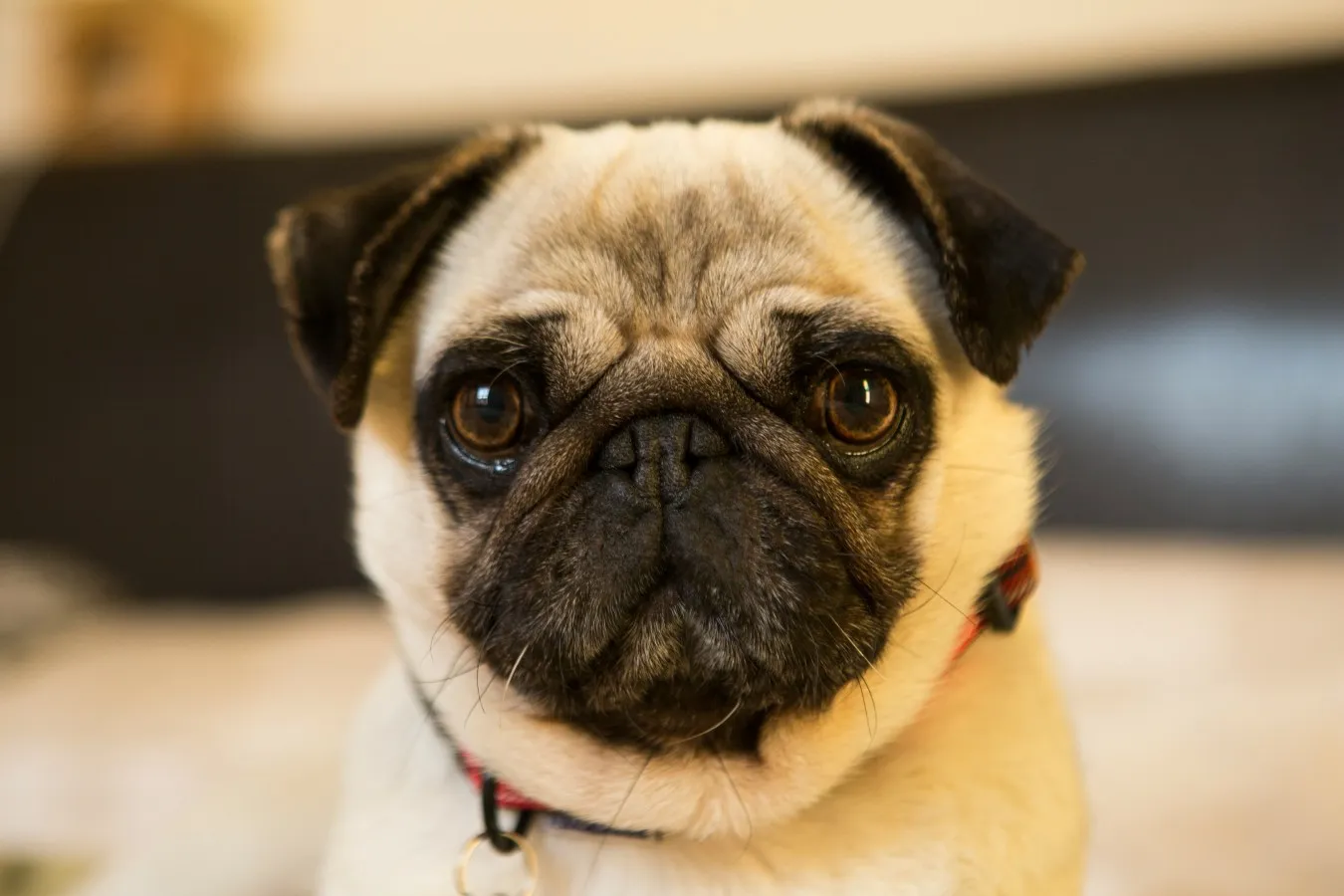
A Pug's large, prominent eyes sit in shallow sockets, which leaves the cornea, the clear front surface of the eye, exposed to scratches and dryness. Pugs are prone to scratched corneas, dry eye, and painful inward-rolling eyelids, and in some cases a bulging eye can pop forward from its socket. Untreated corneal damage can threaten vision. Squinting, excessive tearing, redness, or a cloudy look to the eye means a prompt veterinary visit, not a wait-and-see approach.

Do Pugs Have Skin Fold and Dental Problems?
Moisture and bacteria collect in the deep facial folds, so skin fold dermatitis, an inflammation and infection of skin that rubs together, is a recurring problem. Cleaning the folds daily and drying them thoroughly goes a long way. Their small jaws also crowd the teeth, which trap food and raise the risk of gum disease, so daily brushing and professional cleanings starting around one to two years of age are worth planning for.
What About Hips, Knees, and Brain Disease?
Hip dysplasia, an inherited malformation of the hip joint that leads to arthritis, is common in the breed, and the breed club also recommends checking the kneecaps for patellar luxation, where the kneecap slips out of place. Pug dog encephalitis, an inflammatory brain disease, is less common, affecting roughly 1 to 2 percent of Pugs, and a DNA test is available for breeding dogs. The recommended screening list for the breed covers hips, kneecaps, eyes, and that DNA test.
What Does Managing a Pug's Health Actually Cost?
| Condition or Need | Typical Cost Range | Notes |
|---|---|---|
| Airway evaluation | $150 to $300 | Exam, sometimes imaging |
| Airway corrective surgery | $1,500 to $4,000 | Only if recommended |
| Heatstroke emergency | $800 to $4,000 | Hospitalization, plus $300 to $600 for bloodwork |
| Corneal ulcer | $300 to $2,500 | Medical treatment up to surgery |
| Skin fold infection | $150 to $400 | Medication per episode |
| Dental cleaning | $400 to $900 | Cleaning with extractions if needed |
Questions to Ask a Breeder Before Buying a Puppy
Ask for hip, kneecap, and eye results for both parents, plus the PDE DNA result, since these are the tests on the breed club's recommended list. Look at the parents' noses and listen to how they breathe. Wide nostrils and quiet breathing at rest are a better sign than constant snorting.
Daily Life With a Pug
Pugs do best with several short, easy walks of about 15 to 20 minutes rather than long runs, and with a cool home in summer. The short coat sheds all year and more heavily in spring and fall, so weekly brushing is a minimum, as the grooming guide explains. Their affectionate, people-focused nature comes through in the personality profile, and gentle, food-motivated training works well, with treats counted as part of the daily calories.

Keeping Your Pug Healthy for the Long Run
Weight is the biggest daily lever: pugs gain weight easily, and extra pounds worsen breathing and strain the joints, so feed two or three small measured meals and check your dog's waistline often. Keep cool, clean the folds, schedule dental care, and have any eye change seen quickly. Pet insurance is worth pricing while your dog is young and healthy, because premiums tend to rise as the dog ages.
Final Thoughts From a Veterinarian
Pugs commonly live about 11 to 15 years. Protect their breathing by keeping them lean and cool, wipe facial folds daily, and treat eye squinting as urgent. Budget roughly $80 to $150 a month plus a reserve for veterinary care. Your veterinarian can tailor the plan.
Health & Costs FAQ
How much do Pug cost?
The cost of a Pug typically ranges from $600 to $2,500 from a breeder, while adoption fees are between $100 and $500. Beyond the initial price, owners should budget for significant veterinary expenses and maintenance due to the breed's common respiratory and skin issues.
Purchase cost: 5 / 10
How long do Pug live?
Pugs commonly live about 11 to 15 years, with studies reporting averages from roughly 11 to 13 years. Keeping a lean weight, avoiding heat, caring for the facial folds and teeth, and routine veterinary checkups help them stay comfortable into their senior years.
Life expectancy: 5 / 10
Are Pug healthy dogs?
Pugs face notable health challenges because of their flat faces, which narrow the airway and cause breathing difficulty known as BOAS. They are also prone to eye injuries, skin fold infections, overheating, and obesity. Weight control, heat avoidance, daily cleaning of facial wrinkles, and regular veterinary checkups make a big difference.
Health: 3 / 10
What health problems do Pug have?
Pugs are prone to brachycephalic obstructive airway syndrome (BOAS), heat intolerance, eye injuries and dry eye, skin fold infections, dental crowding, and hip dysplasia. Pug dog encephalitis, an inflammatory brain disease, is less common. Screening of breeding dogs and attentive daily care keep most of these manageable.
Health problem risk: 7 / 10
Are Pug expensive to maintain?
Pugs have moderate upkeep costs. Their small size keeps food and supplies inexpensive, and the short coat needs only weekly brushing, but daily fold care, dental cleanings, and treatment for breathing or eye problems can raise veterinary bills. A reserve for veterinary care is wise.
Maintenance cost: 4 / 10
How much does it cost to own a Pug per month?
Expect to spend roughly $80 to $150 a month to own a Pug, covering food, routine care, and supplies. Veterinary bills for breathing, eye, skin, or dental problems can push costs above this range, so keep a reserve for them.
Monthly ownership cost: 2 / 10
How much does pet insurance cost for a Pug?
Pet insurance for a Pug typically costs about $35 to $60 per month, though premiums rise as the dog ages and depend on your location and coverage. Pricing a policy while your dog is young and healthy is wise, since breathing, eye, and skin treatments can add up quickly.
Pet insurance cost: 3 / 10
Will homeowners insurance cover a Pug?
Yes, most homeowners policies cover Pugs, which are not typically classified as an aggressive or restricted breed. Always disclose your dog to your insurer to confirm your liability coverage.
Homeowners insurance difficulty: 9 / 10
Are Pug on insurance restricted breed lists?
No, Pugs are generally not found on insurance restricted-breed lists, which typically focus on larger breeds seen as higher liability risks. Always disclose your dog to your insurer so your liability coverage stays valid.
Insurance restriction risk: 2 / 10
Can you get renters insurance with a Pug?
Yes, you can typically get renters insurance with a Pug, since the breed is rarely subject to restrictions. Their small size suits rental living, but disclose your dog to the insurer and confirm the policy with your landlord.
Renters insurance difficulty: 8 / 10