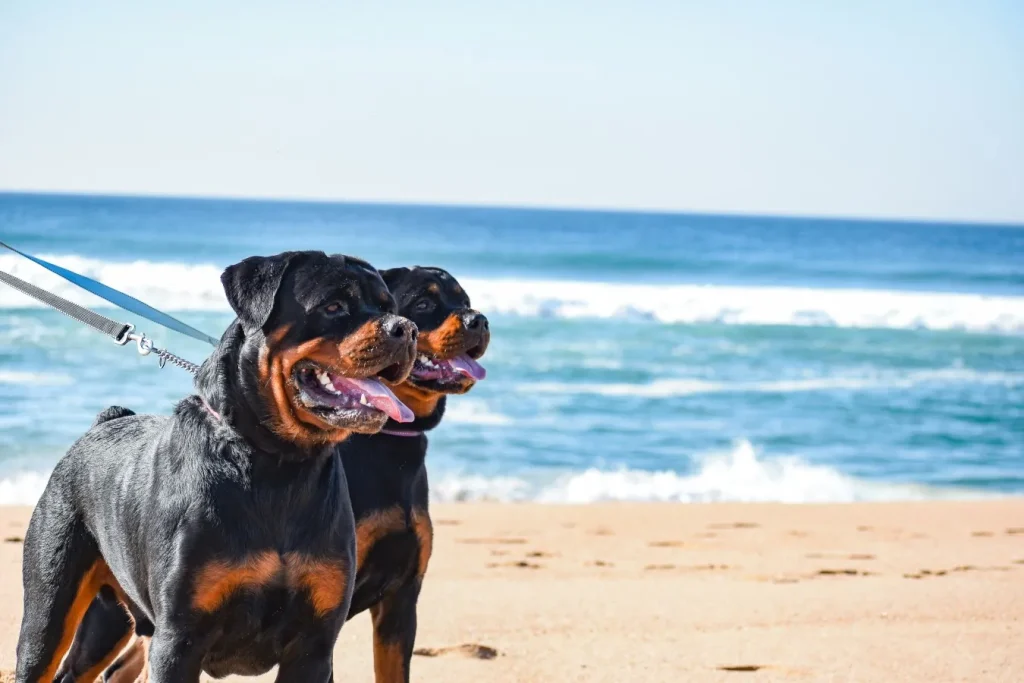
Rottweiler Training Profile
Breed Group
Working Dogs
Country of Origin
Germany
Breed Size
Large
AKC Recognition
Yes, recognized in 1931
FCI Recognition
Yes, recognized in 1955
Mental stimulation needs
High Needs6 / 10
Trainability
10 / 10
Picky eater
Eats Everything10 / 10
Easy to train
Very Easy10 / 10
Training stubbornness
Sometimes Stubborn5 / 10
Puppy training
Very Good9 / 10
Training FAQ
Are Rottweiler easy to train?
Rottweilers are highly intelligent and among the most responsive breeds to structured, positive reinforcement. While they learn quickly and are naturally obedient, their independent streak requires firm, consistent leadership. Success depends on early socialization and clear boundaries to manage their confidence and occasional stubbornness effectively.
Easy to train: 10 / 10
Are Rottweiler stubborn to train?
Rottweilers are highly intelligent but can be independent and stubborn during training. They often test boundaries to see who is in charge. To succeed, owners must provide firm, consistent leadership using positive reinforcement. Keeping sessions fun and engaging prevents them from becoming bored or uninterested.
Training stubbornness: 5 / 10
How do you train a Rottweiler puppy?
Train your Rottweiler puppy using consistency, patience, and positive reinforcement. Prioritize extensive early socialization to manage their natural protective instincts. Use rewards like treats and praise to build trust while establishing clear boundaries. Teaching basic obedience and impulse control early ensures your powerful companion becomes a well-mannered, confident adult.
Puppy training: 9 / 10
How difficult is potty training in Rottweiler?
Potty training a Rottweiler typically takes 4 to 6 months, though some may take longer. These intelligent dogs respond well to consistent schedules and positive reinforcement. Using a crate and taking them outside frequently will speed up the process, ensuring they understand where it is appropriate to go.
Potty training difficulty: 9 / 10
How many walks does a Rottweiler need?
Adult Rottweilers are high-energy working dogs that require about one to two hours of exercise daily. This should ideally be split into at least two brisk walks, supplemented with interactive play and mental stimulation, like training or scent work, to keep them physically fit and satisfied.
Walking need: 8 / 10
What is the best daily routine for a Rottweiler?
A Rottweiler's daily routine should balance 1.5 to 2 hours of physical activity with structured mental work to satisfy their working drive. Split exercise into at least two brisk walks or jogs during cooler morning and evening hours, as they are prone to overheating. Feed adult Rottweilers high-protein meals twice daily to support muscle mass and prevent obesity. Incorporate 15-20 minutes of purposeful training, such as advanced obedience or scent work, and provide interactive puzzle toys to prevent destructive boredom. Ensure early, daily socialization for puppies and prioritize joint protection by avoiding high-impact jumping until they are fully grown.
Routine need: 9 / 10
Vet Insights
Rottweilers are highly intelligent, responsive working dogs that thrive under consistent leadership and positive reinforcement. Their independent streak requires structured training and early socialization to manage confidence. They need significant physical activity and daily mental enrichment to prevent boredom. Housebreaking is generally efficient, and their care routine focuses on joint health and weight management for long-term well-being.