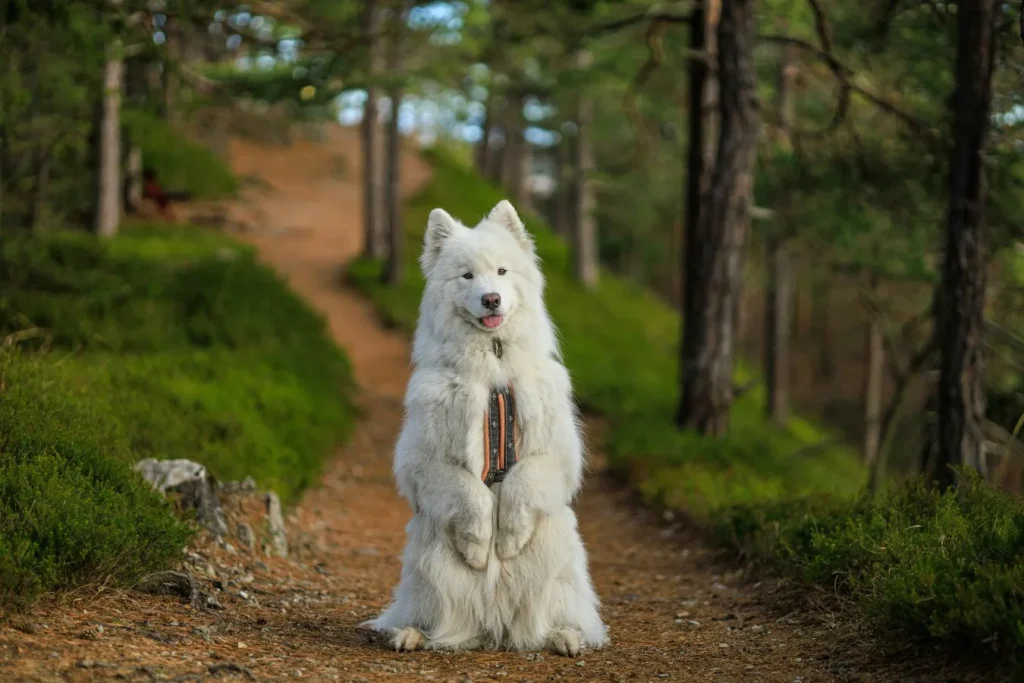
Samoyed Training Profile
Breed Group
Spitz Dogs
Country of Origin
Russia
Breed Size
Medium
AKC Recognition
Yes, recognized in 1906
FCI Recognition
Yes, recognized in 1959
Mental stimulation needs
Moderate Needs6 / 10
Trainability
2 / 10
Picky eater
Moderate5 / 10
Easy to train
Stubborn3 / 10
Training stubbornness
Very Stubborn2 / 10
Puppy training
Difficult2 / 10
Training FAQ
Are Samoyed easy to train?
Train your Samoyed puppy using positive reinforcement and short, engaging sessions to manage their high energy and independent nature. Focus on early socialization and consistent commands. These intelligent dogs thrive on rewards and mental challenges; avoid harsh corrections to maintain their eager-to-please attitude throughout their development.
Easy to train: 3 / 10
Are Samoyed stubborn to train?
Samoyeds are highly intelligent but famously independent, often resulting in a stubborn streak. They may ignore commands if they find something more interesting or lack motivation. Success requires extreme patience, consistent positive reinforcement with high-value treats, and short, varied sessions to keep their busy minds engaged and cooperative.
Training stubbornness: 2 / 10
How do you train a Samoyed puppy?
Train your Samoyed puppy using positive reinforcement and short, engaging sessions to manage their high energy and independent nature. Focus on early socialization and consistent commands. These intelligent dogs thrive on rewards and mental challenges; avoid harsh corrections to maintain their eager-to-please attitude throughout their development.
Puppy training: 2 / 10
How difficult is potty training in Samoyed?
Potty training a Samoyed typically takes 4 to 6 months. While highly intelligent, their independent nature and tendency to become bored can make the process challenging. Success requires a consistent schedule, frequent outdoor breaks, crate training, and high-value rewards to reinforce positive bathroom habits effectively.
Potty training difficulty: 2 / 10
How many walks does a Samoyed need?
Samoyeds are high-energy working dogs that require at least one to two hours of daily exercise. They thrive on long walks, hiking, or vigorous play sessions in a securely fenced area. Without adequate physical activity and mental stimulation, these intelligent dogs can become bored and destructive.
Walking need: 9 / 10
What is the best daily routine for a Samoyed?
A Samoyed's daily routine should be built around high energy and companionship. Provide at least 1 to 2 hours of vigorous exercise, such as long walks, hiking, or play sessions, ideally during cooler morning and evening hours to prevent overheating. Feed adult Samoyeds twice daily and puppies three to four times, using mealtimes for basic obedience reinforcement. Essential daily care requires significant grooming, including brushing several times a week (or daily during shedding seasons) to manage their thick double coat. Incorporate 15-30 minutes of mental stimulation through puzzle toys or trick training to prevent destructive behaviors, and ensure they spend plenty of time interacting with family members to avoid separation anxiety.
Routine need: 10 / 10
Vet Insights
Samoyeds are intelligent yet independent working dogs requiring extreme activity, typically one to two hours of daily exercise. Known for their signature "Sammy smile," these affectionate companions are notoriously stubborn, making training and housebreaking a challenge. Their thick double coats demand significant grooming. Success requires immense patience, consistent positive reinforcement, and a structured routine to manage their vocal, high-energy nature.