Bluetick Coonhound Health and Costs
Breed Group
Hound Dogs
Country of Origin
United States
Breed Size
Large
AKC Recognition
Yes, recognized in 2009
FCI Recognition
No
Rarity
Common3 / 10
Purchase cost
Moderate cost4 / 10
Life expectancy
Moderate Lifespan6 / 10
Health
Generally healthy7 / 10
Health problem risk
Moderate health concerns4 / 10
Maintenance cost
Moderate upkeep cost4 / 10
A Veterinarian's Guide
Bluetick Coonhound Health Problems and Costs
The Bluetick Coonhound is an athletic, mottled-coat scent hound built for long days tracking through rough country, and that working heritage shapes its health as much as any single gene. It is generally hardy, but a few issues repeat in the breed: bloat, ear infections, hip and elbow problems, thyroid and eye disease, and a rare nerve illness named after the coonhound. Knowing them before you bring a puppy home, or while you already share your life with one, makes screening and vet visits much easier to plan.
In this guide
Why Is Bloat Such a Serious Risk for This Breed?
Bloat, medically gastric dilatation-volvulus, happens when the stomach fills with gas and twists on itself, cutting off its own blood supply. The word volvulus comes from the Latin volvere, "to turn." Large, deep-chested dogs are at higher risk, bloat is listed among the concerns for this breed, and surgery is the only way to correct a twisted stomach, so it is worth learning the warning signs before you ever need them.
- 01
Swollen belly
The abdomen looks tight, rounded, or distended.
- 02
Unproductive retching
Straining to vomit with little or nothing coming up.
- 03
Restlessness and drooling
Pacing, drooling, or being unable to settle.
- 04
Weakness or collapse
The dog becomes weak, pale, or collapses.
Feeding smaller, more frequent meals, using a slow-feed bowl for a fast eater, and avoiding vigorous exercise right around mealtimes all help, though no precaution removes the risk entirely. Some owners choose a preventive gastropexy, from the Greek gaster, "stomach," and pexis, "fixing in place." The surgery tacks the stomach to the abdominal wall, often at the same time as a spay or neuter. It does not stop gas from building up, but it should stop the stomach from twisting, which is the life-threatening part.
Why Do Bluetick Coonhounds Get Ear Infections?
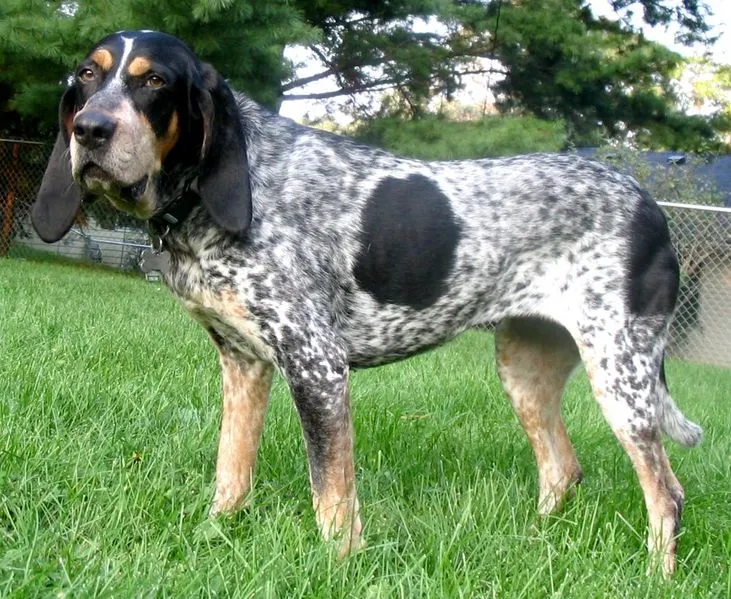
Long, pendant ears trap moisture and reduce airflow to the ear canal, which is exactly what yeast and bacteria need to thrive. A weekly look and a gentle cleaning with a vet-approved ear cleaner, plus a check after swimming or wet fieldwork, prevent many infections before they start. A head tilt, scratching at the ears, redness, or a noticeable odor are reasons to book a visit rather than keep cleaning at home.
Infections that keep returning despite good home care sometimes point to an underlying allergy rather than the ears themselves, and working that through with your veterinarian can break a frustrating cycle.
What Joint Problems Show Up in This Breed?
Hip and elbow dysplasia, inherited malformations in which the joint surfaces do not fit together correctly and wear unevenly, are listed for the breed. The word comes from the Greek dys, "abnormal," and plassein, "to form." Screening radiographs in young adulthood give an early read before arthritis sets in, and a lean body weight slows how quickly any underlying dysplasia progresses. Patellar luxation, a kneecap that slips out of its groove, is also mentioned. Regular, moderate exercise builds the muscle around the joints, which helps a mildly affected dog far more than inactivity does.
Are Thyroid and Eye Problems a Concern?
Hypothyroidism, or low thyroid hormone activity, is listed for the breed. The signs tend to appear in middle age as weight gain, low energy, and coat changes that owners often put down to normal aging. A blood panel confirms it, and daily medication manages it for life.
Cataracts, a clouding of the eye's lens, also occur. They can sometimes be corrected with surgery, and many dogs adjust well to gradual vision loss in a familiar home. A rare inherited nerve disease called neuronal ceroid lipofuscinosis, which usually first shows as weak back legs between about one and three years of age, is also mentioned for the breed, so report an unexplained wobble early.
What Is Coonhound Paralysis?
A stiff gait that turns into weakness or trouble standing, especially a week or two after a raccoon encounter, needs a veterinary exam the same day, because breathing muscles can be affected in severe cases.
Coonhound paralysis is a sudden, progressive weakness caused by inflammation of the nerves. One recognized trigger is an immune reaction to raccoon saliva after a bite or scratch, but it can also follow other triggers, or appear with no known cause, and no breed is more likely than others to develop it without raccoon contact. No medication is proven to reverse it, so treatment is supportive nursing, and most dogs recover fully over weeks to months, though some have mild lingering weakness.
What Does Managing a Bluetick Coonhound's Health Actually Cost?
| Condition or Need | Typical Cost Range | Notes |
|---|---|---|
| Hip and elbow radiographs | $150 to $400 | One-time, ideally in early adulthood |
| Ear infection treatment | $100 to $300 per episode | Higher for dogs that swim often |
| Cataract surgery | $2,500 to $4,000 per eye | Specialist ophthalmology procedure |
| Coonhound paralysis care | $1,500 to $5,000 or more | Severe cases need hospitalization |
| Emergency bloat surgery | $3,000 to $7,500 | Life-threatening, surgical |
Questions to Ask a Breeder Before Buying a Puppy
The AKC's hound group listing shows no breed club recommended health tests for this breed, so ask the breeder directly what they screen for. Request hip and elbow evaluations and thyroid results for the parents, ask about cataracts, chronic ear trouble, and bloat in the puppy's close relatives, and ask how long the adults in the line have lived.
Daily Life With a Bluetick Coonhound
This is an active hunting hound with a strong prey drive. Expect a fair amount of exercise every day, such as long walks or play in a fenced yard, and keep it on a leash or in a secure area where a scent could pull it away. Games, tracking, and other nose work give the mind something to do as well.
The short coat keeps grooming simple, with weekly brushing usually enough, so the extra care goes to the ears, nails, and teeth. The personality profile explains the hunting drive and the affectionate home side, and early training in recall helps with a nose this strong.
Keeping Your Bluetick Coonhound Healthy for the Long Run
Learn bloat's warning signs before you ever need them. Keep the ears dry and checked weekly, screen the joints and eyes on schedule, and watch for slow weight gain and low energy in middle age. Brush the teeth, and keep your dog away from raccoons. Pet insurance is worth pricing while your dog is young and healthy.
Final Thoughts From a Veterinarian
Bluetick Coonhounds usually live 11 to 12 years and reward proactive care. Learn bloat's warning signs, check the ears weekly, screen joints and eyes, and get weakness after raccoon contact seen the same day. Your veterinarian can tailor the plan.
Health & Costs FAQ
How much do Bluetick Coonhound cost?
The cost of a Bluetick Coonhound typically ranges from $500 to $2,000 from a reputable breeder, while adoption fees are around $300. Owners should also budget for initial supplies, vaccinations, and high-quality food to support this athletic breed's active and healthy lifestyle.
Purchase cost: 4 / 10
How long do Bluetick Coonhound live?
Bluetick Coonhounds typically enjoy a lifespan of 11 to 12 years. As an athletic and hardy breed, their longevity is supported by a high-quality diet and regular exercise. While generally healthy, providing consistent veterinary care and maintaining an ideal weight are essential for their well-being.
Life expectancy: 6 / 10
Are Bluetick Coonhound healthy dogs?
Bluetick Coonhounds are generally healthy, athletic dogs with a lifespan of 11 to 12 years. However, they are predisposed to hip and elbow dysplasia, bloat, and hypothyroidism. Regular ear cleanings and dental care are essential to prevent infections and chronic disease in this active breed.
Health: 7 / 10
What health problems do Bluetick Coonhound have?
Bluetick Coonhounds are generally hardy but prone to several conditions. Key concerns include hip and elbow dysplasia, cataracts, and life-threatening bloat. Their long ears are susceptible to infections, while some may face hypothyroidism or dental disease. Regular veterinary screenings and ear care are vital for maintaining their health.
Health problem risk: 4 / 10
Are Bluetick Coonhound expensive to maintain?
Bluetick Coonhounds are inexpensive to groom, since the short coat needs only weekly brushing, but they are active, medium-to-large dogs, so food and routine veterinary care add up. Budget for regular ear care and screening, and set money aside for a possible emergency such as bloat surgery, since those are the larger bills this breed can face.
Maintenance cost: 4 / 10
How much does it cost to own a Bluetick Coonhound per month?
Expect to spend between $200 and $250 per month to own a Bluetick Coonhound. This budget covers high-quality, protein-rich food, routine veterinary care, and preventative medications. Since they are generally hardy and have minimal grooming needs, monthly maintenance remains relatively affordable for most owners.
Monthly ownership cost: 4 / 10
How much does pet insurance cost for a Bluetick Coonhound?
Pet insurance for a Bluetick Coonhound typically costs between $30 and $100 per month, depending on age and location. Because bloat and hip dysplasia can lead to large veterinary bills, a policy is worth pricing while your dog is young and healthy.
Pet insurance cost: 4 / 10
Will homeowners insurance cover a Bluetick Coonhound?
Yes, most homeowners insurance policies cover Bluetick Coonhounds, as they are not typically found on restricted breed lists. Since they are generally non-aggressive, they are viewed as low-risk. However, always disclose your pet to your insurer to ensure your liability coverage remains active and valid.
Homeowners insurance difficulty: 9 / 10
Are Bluetick Coonhound on insurance restricted breed lists?
No, Bluetick Coonhounds are not typically found on insurance restricted-breed lists. Most providers view them as low-risk hunting companions rather than aggressive breeds. However, always disclose your dog to your insurer to ensure full liability coverage remains active and to confirm specific policy details.
Insurance restriction risk: 2 / 10
Can you get renters insurance with a Bluetick Coonhound?
Yes, you can typically get renters insurance with a Bluetick Coonhound, since the breed is rarely on restricted lists. Some insurers ask for details about the dog or set their own liability terms, so always disclose your dog to your provider and confirm the policy with your landlord to ensure full protection.
Renters insurance difficulty: 8 / 10