Great Dane Health and Costs
Breed Group
Working Dogs
Country of Origin
Germany
Breed Size
Giant
AKC Recognition
Yes, recognized in 1887
FCI Recognition
Yes, recognized in 1955
Rarity
Most Common1 / 10
Purchase cost
Moderate5 / 10
Life expectancy
Short Lifespan3 / 10
Health
Notable health concerns3 / 10
Health problem risk
Very high health concerns8 / 10
Maintenance cost
Expensive to maintain9 / 10
A Veterinarian's Guide
Great Dane Health Problems and Costs
The Great Dane is a calm, affectionate giant with a deep chest and a very fast growing frame. Size shapes nearly every health risk in this breed: a stomach that can twist, a heart muscle that can weaken, and hips and neck bones that carry a lot of weight. Knowing what to watch for, and what to budget for, makes a real difference to how comfortably a Great Dane lives.
In this guide
Why Are Great Danes So Prone to Bloat?
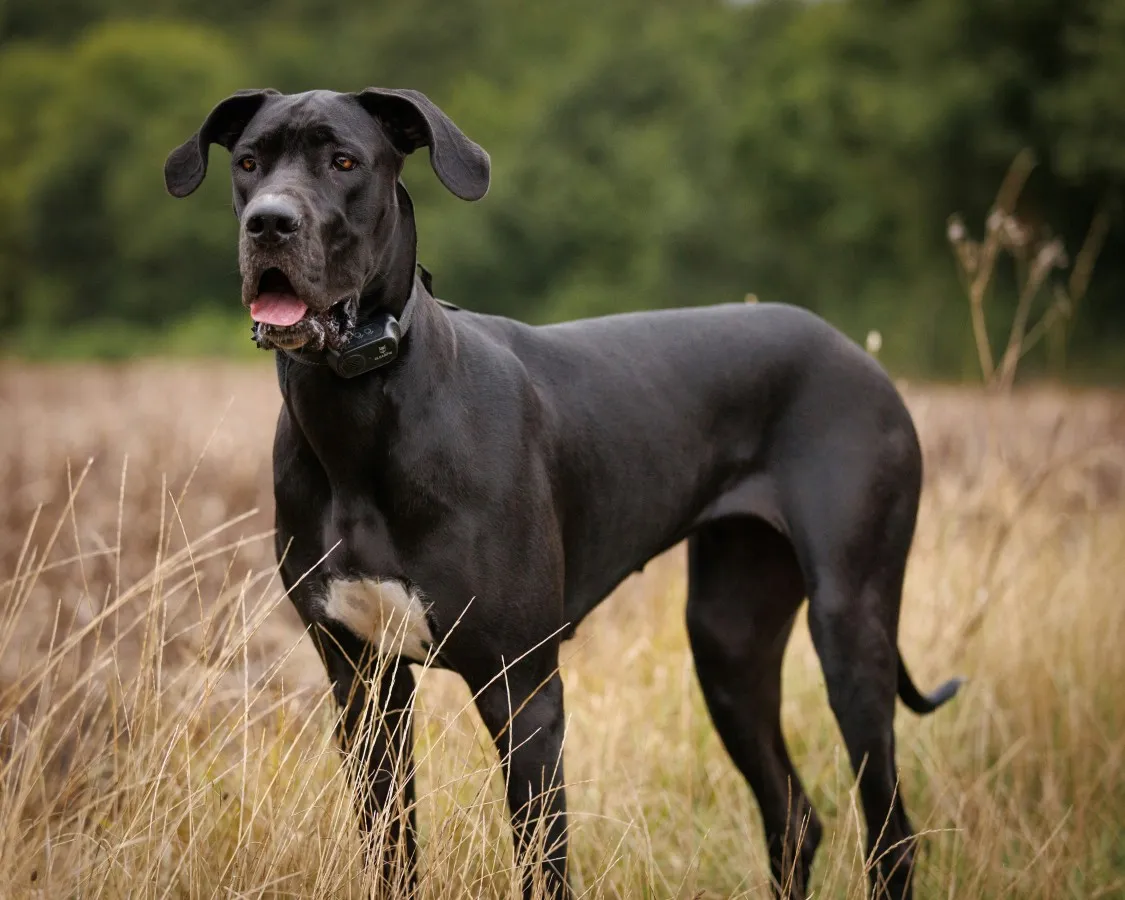
Gastric dilatation-volvulus, or GDV, is what most people call bloat. The stomach fills with gas and then twists, trapping its contents and cutting off blood flow. Volvulus comes from the Latin volvere, "to twist." PetMD notes that it can become life threatening in under 24 hours, and the Merck Veterinary Manual describes it as a condition of large, deep chested dogs.
- 01
Unproductive retching
Your dog heaves or gags but little or nothing comes up.
- 02
A swollen, tight belly
The abdomen looks enlarged or feels hard.
- 03
Restlessness
Pacing, drooling, or unable to settle or lie down.
- 04
Weakness or fast panting
Pale gums, collapse, or heavy breathing without exertion.
PetMD lists several ways to lower the risk: feed two or more smaller meals a day, use a slow feeder, avoid exercise for an hour or two after eating, and skip raised bowls. A gastropexy is a surgery that tacks the stomach to the body wall so it cannot twist, from the Greek gaster, "stomach," and pexis, "fixing." It is often done during a spay or neuter, and it is worth discussing with your veterinarian early.
What Heart Disease Should Great Dane Owners Watch For?
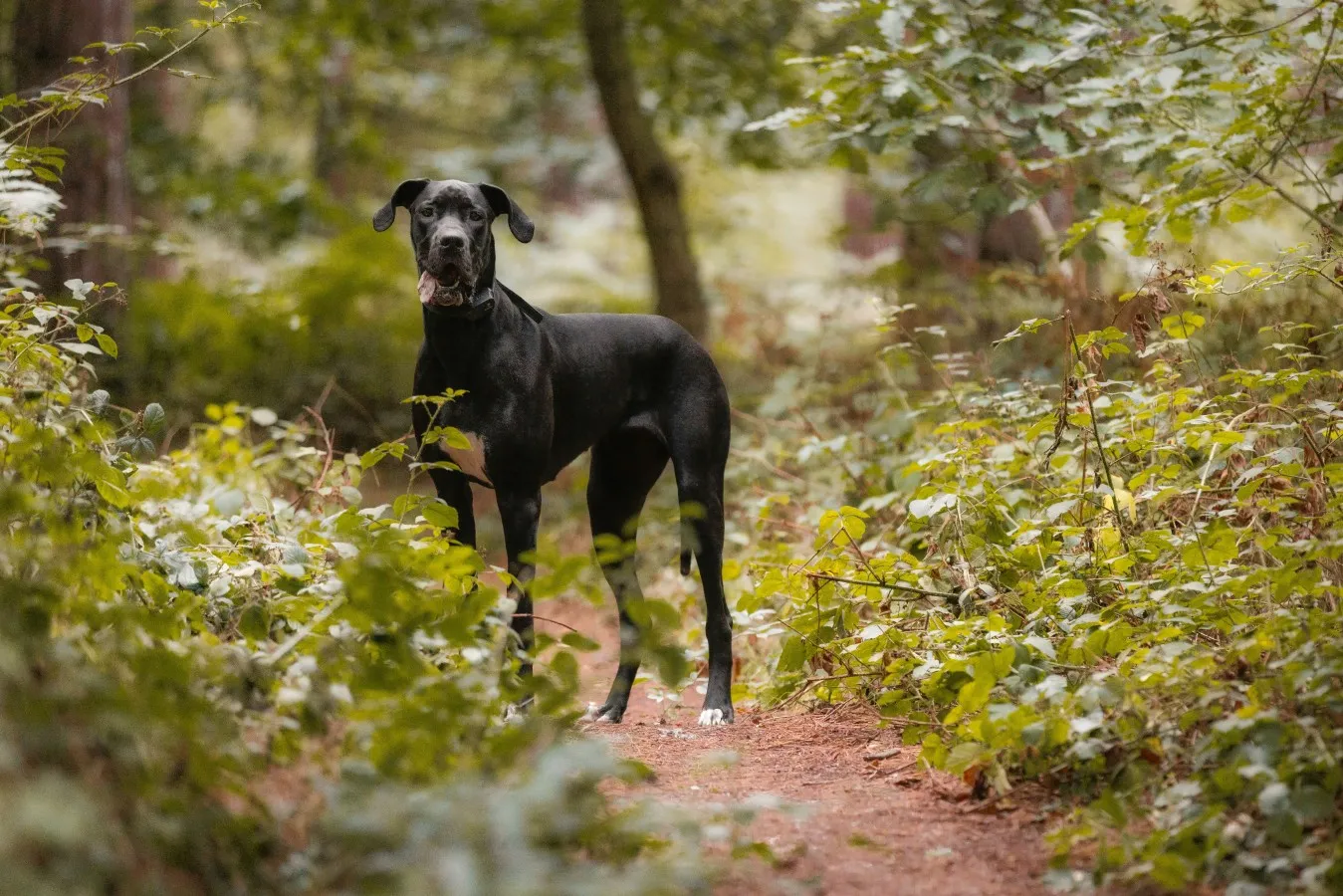
Fainting, collapse, labored breathing, or a new persistent cough needs prompt veterinary care. Heart disease in this breed can stay quiet for a long time and then appear suddenly.
Dilated cardiomyopathy, or DCM, is a disease in which the heart muscle weakens and stretches so it pumps less effectively. The name joins the Greek kardia, "heart," mys, "muscle," and pathos, "suffering." PetMD says genetics are the main factor, with nutrition also playing a role.
The breed club recommends a cardiac exam for breeding dogs, and your veterinarian can advise how often an adult Great Dane should have the heart checked, including whether an ultrasound of the heart is worthwhile.
How Do Growth and Hip Problems Affect Great Danes?
Hip dysplasia is a loose, poorly fitting hip joint that wears down over time and can lead to arthritis. The term comes from the Greek dys, "abnormal," and plasis, "formation." PetMD describes it as genetic, and puppies grow quickly, so diet matters too. It recommends a large breed puppy food until about 18 months, and warns that overfeeding and rapid growth raise the risk of bone and joint disease.
Watch for difficulty rising, a bunny hopping gait, or reluctance to climb stairs. A hip evaluation is on the breed club's list of recommended tests, so ask to see the parents' results.
What Is Wobbler Syndrome?
Wobbler syndrome, formally cervical spondylomyelopathy, is a squeezing of the spinal cord in the neck. Spondylos is Greek for "vertebra" and myelos for "marrow." PetMD lists neck pain and an unsteady gait as its signs and links it to nutrition. The hind legs are often affected first, so a wobbly, crossing or scuffing walk deserves a prompt veterinary exam, since treatment depends on how severe the compression is.
What Does Managing a Great Dane's Health Actually Cost?
| Condition or Need | Typical Cost Range | Notes |
|---|---|---|
| Preventive gastropexy | $800 to $2,500 | One time, often with spay or neuter |
| Emergency bloat surgery | $3,000 to $8,000 | More with hospital stay |
| Heart exam or ultrasound | $300 to $600 | Per visit |
| Joint supplements | $200 to $500 | Per year, if advised |
Costs vary by region and clinic. Because several of these conditions are both likely and expensive, pet insurance is worth pricing while your dog is a healthy puppy.
Questions to Ask a Breeder Before Buying a Puppy
The breed club recommends hip, cardiac, eye and thyroid tests, listed on the working group health testing page. Ask to see the paperwork for both parents rather than relying on a verbal promise. It is also fair to ask whether any relatives had bloat or heart disease, and at what age, and how the puppies are fed while they grow. A breeder who raises these topics without being asked is usually well informed about the rest.
Daily Life With a Great Dane
PetMD suggests long walks at least twice a day, and a dog this size needs room to stretch out and a bed that supports the joints. The personality profile explains why most of them are gentle, people loving companions despite their size.
The short coat needs only weekly brushing, as the grooming guide describes, along with regular ear cleaning. Eager to please but large, they benefit from early, reward based training before they are too big to manage on a lead.
Keeping Your Great Dane Healthy for the Long Run
PetMD puts the average lifespan at 7 to 10 years, shorter than most breeds because of their size. Keep your dog lean, since extra weight stresses the joints, keep meals small and calm, and have the gait, heart and hips reviewed at routine visits.
Final Thoughts From a Veterinarian
Great Danes usually live 7 to 10 years, and size drives most of their risks. Ask about gastropexy, heart screening and large breed puppy feeding, and treat a swollen belly with retching as an emergency. Your veterinarian can tailor the plan.
Health & Costs FAQ
How much do Great Dane cost?
The cost of a Great Dane typically ranges from $600 to $3,000 from a breeder, though show-quality dogs can reach $6,000. Potential owners must also prepare for high maintenance costs, including $80 to $150 monthly for food and significant veterinary expenses for this giant breed.
Purchase cost: 5 / 10
How long do Great Dane live?
Great Danes typically have a lifespan of 7 to 10 years.
Life expectancy: 3 / 10
Are Great Dane healthy dogs?
Great Danes are affectionate giants, but size brings notable health concerns. The main ones are bloat (GDV), which is an emergency, dilated cardiomyopathy, hip dysplasia and Wobbler syndrome. Large breed puppy feeding, a gastropexy discussion and heart and hip screening all help.
Health: 3 / 10
What health problems do Great Dane have?
Great Danes are prone to bloat (GDV), which needs emergency care, along with dilated cardiomyopathy, hip dysplasia and Wobbler syndrome. PetMD also lists degenerative myelopathy, elbow dysplasia and happy tail. Regular checkups and steady, controlled growth as a puppy are essential.
Health problem risk: 8 / 10
Are Great Dane expensive to maintain?
Great Danes are expensive to maintain due to their giant size. Owners should budget significantly for high-quality food, which can cost $80 to $150 monthly. Additionally, veterinary care, medications, and specialized gear like colossal crates and beds further increase the ongoing financial commitment for this breed.
Maintenance cost: 9 / 10
How much does it cost to own a Great Dane per month?
Many owners spend roughly $330 to $600 per month on a Great Dane, with food, veterinary care and insurance making up most of it.
Monthly ownership cost: 7 / 10
How much does pet insurance cost for a Great Dane?
Pet insurance for a Great Dane typically averages $60 to $80 per month, though premiums for this giant breed can exceed $200. Due to their size and susceptibility to expensive health issues like bloat and heart disease, insuring them early is highly recommended.
Pet insurance cost: 5 / 10
Will homeowners insurance cover a Great Dane?
Most homeowners insurers will cover a Great Dane, but some weigh the dog's size and may charge more or exclude it. Policies differ by company and state, so confirm liability coverage with your provider before you buy.
Homeowners insurance difficulty: 6 / 10
Are Great Dane on insurance restricted breed lists?
Great Danes appear on some insurers' restricted lists, mostly because of their size rather than temperament. Many companies still insure them, so disclose your dog and compare providers.
Insurance restriction risk: 6 / 10
Can you get renters insurance with a Great Dane?
Many renters policies cover a Great Dane, but some insurers and landlords limit large breeds. Check the policy and your lease first, and ask about liability limits.
Renters insurance difficulty: 5 / 10