
Kerry Blue Terrier Health and Costs
Breed Group
Terrier Dogs
Country of Origin
Ireland
Breed Size
Medium
AKC Recognition
Yes, recognized in 1922
FCI Recognition
Yes, recognized in 1954
Rarity
Fairly Common4 / 10
Purchase cost
Moderate to Expensive6 / 10
Life expectancy
Long Lifespan8 / 10
Health
Generally healthy7 / 10
Health problem risk
Moderate health concerns4 / 10
Maintenance cost
Moderate upkeep cost4 / 10
A Veterinarian's Guide
Kerry Blue Terrier Health Problems and Costs
The Kerry Blue Terrier is a sturdy, curly-coated Irish terrier originally bred to control vermin and work as a general farm dog. It is usually a hardy breed, but a few inherited problems repeat in it: clotting disorders that matter at surgery time, two nerve conditions, eye trouble, hip and knee issues, and a coat that needs steady care. Knowing them before you bring a puppy home, or while you already share your life with one, makes screening and vet visits much easier to plan.
In this guide

Why Should Every Vet Know About This Breed's Clotting Disorders?
Tell every veterinarian treating your Kerry Blue Terrier that the breed can carry inherited clotting disorders before any surgery, spay, neuter, or dental procedure, and ask whether clotting screening makes sense first.
Von Willebrand disease and Factor XI deficiency are inherited problems with blood clotting, and both are described in the breed. Wisdom Panel notes that the type 1 form of von Willebrand disease typically causes only mild bleeding tendencies, which is exactly why it can go unnoticed until a procedure. A dog that looks perfectly healthy can still bleed more than expected after surgery.
- 01
Bleeding that will not stop
Even from a minor cut, a torn nail, or after a procedure.
- 02
Unexplained bruising
Bruises or small red spots on the skin or gums.
- 03
Blood in urine or stool
Red or dark urine, or bloody or black stool.
- 04
Sudden weakness or collapse
Can signal significant blood loss.
Dogs with a confirmed clotting disorder can usually still have necessary surgery. The veterinary team simply plans around it with precautions chosen for the individual dog, instead of being caught off guard mid-procedure.

What Nerve Conditions Affect This Breed?
Cerebellar abiotrophy and degenerative myelopathy both occur in Kerry Blue Terriers and both cause loss of coordination, but at different ages and in different places. Cerebellar abiotrophy affects puppies. The word comes from the Greek a-, "without," and trophe, "nourishment," because cells in the cerebellum, the brain's balance center, slowly die off, and a young dog may look wobbly and uncoordinated. Degenerative myelopathy is a disorder of the spinal cord that, according to Wisdom Panel, usually affects dogs in their senior years, with slowly worsening weakness in the hind legs.
Neither condition has a known cure, but supportive care such as physical therapy, mobility harnesses, and weight management can help many dogs stay comfortable and mobile for a time. A veterinary neurologist can help tell the two apart and rule out causes of weakness that are treatable.
What Eye Problems Show Up in Kerry Blues?
Dry eye, medically keratoconjunctivitis sicca, happens when the eyes do not make enough tears, and PetMD notes it can lead to corneal ulcers. Entropion, an eyelid that rolls inward so the lashes rub the surface of the eye, is also described in the breed. Both can cause squinting, excessive tearing, redness, or discharge, and untreated irritation can damage the cornea. The AKC lists an ophthalmologist evaluation among the recommended health tests, and any new squinting or tearing deserves an eye exam rather than a wait-and-see approach.
Skin, Ears, and Teeth: What Does This Coat Mean for Health?
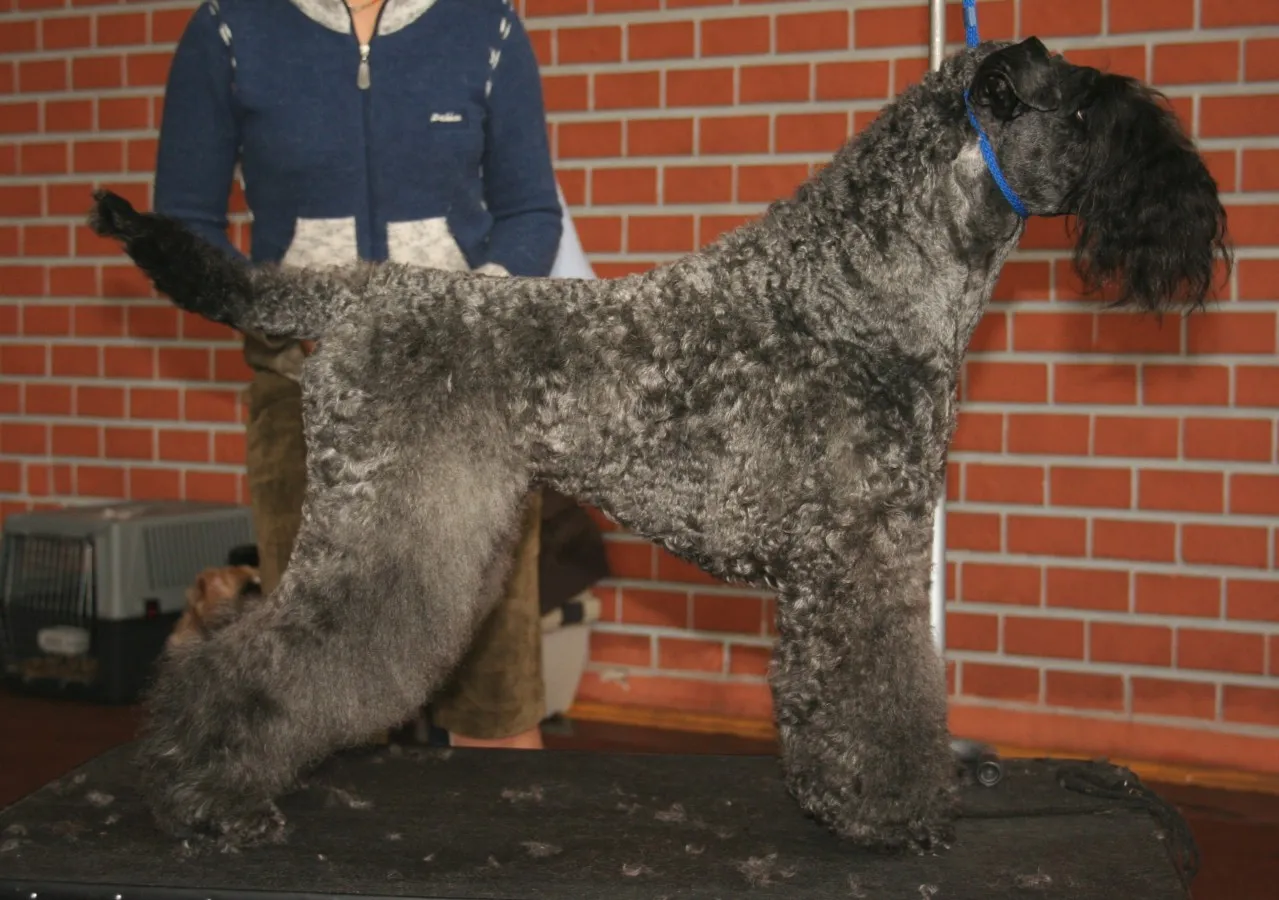
PetMD lists skin allergies, lumps and bumps, corns on the foot pads, a dry and cracked nose, and dental disease among the breed's common problems. Wikipedia adds that the breed is predisposed to hair follicle tumors and to a painful condition called spiculosis, a coat and skin problem reported only in this breed. Any new lump is worth a veterinary look, and a dense, curly coat that traps moisture or mats can make skin and ear trouble worse, so ear checks and steady grooming matter.
Why Do Hips and Knees Matter in This Breed?
Hip dysplasia, an inherited malformation of the hip joint that leads to a loose joint, pain, and arthritis over time, occurs in the breed, and patellar luxation, a kneecap that slips out of place, is also described. The AKC lists a hip evaluation among the recommended tests for breeding dogs. Keeping a lean body weight throughout life helps protect joints that may already carry some structural risk.
What Does Managing a Kerry Blue Terrier's Health Actually Cost?
| Condition or Need | Typical Cost Range | Notes |
|---|---|---|
| Pre-surgical clotting panel | $100 to $200 | Ask before any elective surgery |
| Hip evaluation and certification | $250 to $400 | X-rays plus certification fee |
| Entropion correction surgery | $500 to $1,500 | Often per eye, varies by clinic |
| Professional grooming | $60 to $100 | Roughly every 6 weeks |
| Dental cleaning | $300 to $700 | Annual or as your vet advises |
Questions to Ask a Breeder Before Buying a Puppy
Ask for the parents' hip and eye results, since the AKC lists hip and ophthalmologist evaluations for the breed, and ask whether the parents have been tested for clotting disorders and the nerve conditions that have DNA tests. Ask whether any relatives or littermates have shown wobbliness, bleeding problems, or eye trouble.
Meeting the parents in person, when possible, shows how they move and behave. A breeder who welcomes detailed health questions is a far better sign than one who treats testing as an unnecessary expense.
Daily Life With a Kerry Blue Terrier
This is a working terrier at heart. PetMD describes the breed as having a lot of energy and needing about an hour of exercise a day, plus mental stimulation, and a bored Kerry may find its own entertainment by digging or chasing small animals. Kerry Blues can also be reserved with strangers and unfamiliar dogs, so early socialization and consistent training pay off, and the personality profile explains what to expect from their affectionate, spirited side.

The non-shedding coat is not low maintenance. PetMD advises brushing at least once a week to prevent matting, a professional trim about every six weeks, and ear cleaning every two to four weeks, and the grooming guide covers the routine in detail. Skipping it invites the skin and ear problems this breed is already prone to.
Keeping Your Kerry Blue Terrier Healthy for the Long Run
Mention the breed's clotting risk before any procedure, keep up eye exams and hip screening, and keep your dog lean. Have unexplained bleeding, new lumps, squinting, or wobbly movement checked promptly. Pet insurance is worth pricing while your dog is young and healthy.
Final Thoughts From a Veterinarian
Kerry Blue Terriers often live 12 to 15 years. Ask about clotting disorders before any surgery, keep up eye, hip, and coat care, and see a vet for unexplained bleeding or wobbliness. Your veterinarian can tailor the plan.
Health & Costs FAQ
How much do Kerry Blue Terrier cost?
Purchasing a Kerry Blue Terrier puppy from a reputable breeder typically costs between $1,000 and $3,500. Adoption is a more affordable option, usually ranging from $50 to $300. Owners should also budget for initial supplies and ongoing costs for high-quality food and professional grooming services.
Purchase cost: 6 / 10
How long do Kerry Blue Terrier live?
Kerry Blue Terriers typically live 12 to 15 years. A healthy weight, regular exercise, dental care, and routine veterinary checkups help them stay active into their senior years.
Life expectancy: 8 / 10
Are Kerry Blue Terrier healthy dogs?
Kerry Blue Terriers are generally healthy, long-lived dogs, often reaching 12 to 15 years, but they are not problem-free. Inherited clotting disorders, two nerve conditions, dry eye, entropion, hip problems, and skin and coat issues all occur in the breed. Screening, grooming, and regular checkups catch most issues early, and your veterinarian can tailor a plan.
Health: 7 / 10
What health problems do Kerry Blue Terrier have?
Kerry Blue Terriers can inherit von Willebrand disease and Factor XI deficiency, both clotting disorders, as well as cerebellar abiotrophy and degenerative myelopathy, two nerve conditions. Dry eye, entropion, hip dysplasia, skin allergies, lumps, and ear and dental problems also occur. Tell your veterinarian about the clotting risk before any surgery.
Health problem risk: 4 / 10
Are Kerry Blue Terrier expensive to maintain?
Kerry Blue Terriers have a moderate upkeep cost. The non-shedding coat needs brushing at least weekly and professional grooming about every six weeks, which is the main recurring expense. Food, routine veterinary care, and eye, hip, and clotting screening add to the budget, and it helps to set money aside for unexpected bills.
Maintenance cost: 4 / 10
How much does it cost to own a Kerry Blue Terrier per month?
Expect to spend between $200 and $250 per month to own a Kerry Blue Terrier. This covers premium food, routine veterinary visits, and frequent professional grooming for their unique coats. Budgeting for these consistent expenses is vital to support the health and distinctive appearance of this active, medium-sized breed.
Monthly ownership cost: 4 / 10
How much does pet insurance cost for a Kerry Blue Terrier?
Pet insurance for a Kerry Blue Terrier typically costs between $35 and $60 per month. A policy is worth pricing while your dog is young and healthy, since inherited conditions, eye or joint problems, and surgery can add up to thousands of dollars. Check how a policy treats pre-existing conditions.
Pet insurance cost: 3 / 10
Will homeowners insurance cover a Kerry Blue Terrier?
Yes, most homeowners insurance policies cover Kerry Blue Terriers, as they are not typically found on restricted breed lists. Always disclose your dog to your insurer to ensure your liability protection remains fully active.
Homeowners insurance difficulty: 9 / 10
Are Kerry Blue Terrier on insurance restricted breed lists?
No, Kerry Blue Terriers are not typically found on insurance restricted-breed lists. Most insurers view them as low-risk, medium-sized companions. Policies vary by carrier and state, so always disclose your dog to your provider to keep liability coverage active.
Insurance restriction risk: 2 / 10
Can you get renters insurance with a Kerry Blue Terrier?
Yes, you can typically get renters insurance with a Kerry Blue Terrier, since the breed is rarely on restricted lists. Always disclose your dog to your provider and check your lease, as some landlords have their own pet rules.
Renters insurance difficulty: 8 / 10